In this timeless folktale, the nightingale stands as a voice of truth amid deception and despair. Once, in a distant kingdom, three sisters sat together one evening, each boasting of what she would do if she married the king. The eldest claimed she would weave robes finer than the stars, the second promised to bake bread fit for angels, and the youngest vowed to bear the king twin children with golden hair and silver tears. By chance, the king overheard and, moved by curiosity and admiration, chose the youngest sister for his bride.
When the queen gave birth to the promised twins, jealousy brewed among her sisters. Consumed by envy, they conspired to destroy her happiness. As the queen lay weak after childbirth, they replaced the newborns with animals and ordered the true infants to be cast away. The devastated king, deceived by the cruel act, banished his queen to a remote corner of the palace, believing she had dishonoured him. The real children, however, were found and raised by a kind-hearted gardener in a quiet village beyond the city’s walls.
Years passed, and the twins grew into radiant youths, their grace and intelligence reflecting noble blood. One day, the boy heard tales of a little nightingale, a magical bird whose song revealed hidden truths. Drawn by destiny, he set out to find it, believing it might explain the strange dreams that haunted him and his sister. After days of perilous wandering through forests and mountains, he finally captured the mystical bird. Its feathers shimmered like moonlight, and its voice rang with both sorrow and hope.
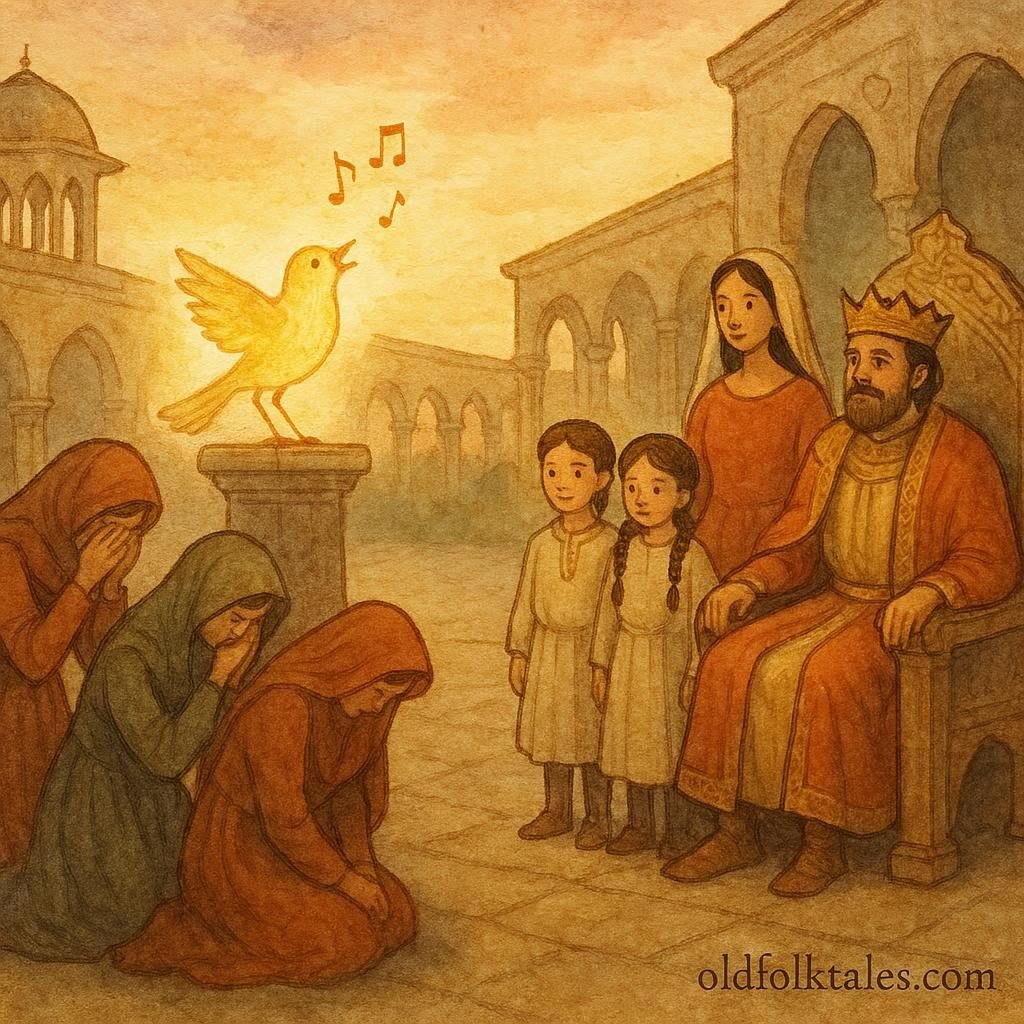
When the youth brought the bird home, it sang before the king, revealing every secret: the treachery of the jealous sisters, the innocence of the queen, and the royal birth of the twins. The palace fell silent as the truth echoed through its halls. Overcome with remorse, the king rushed to free his wife, who had borne her suffering with quiet dignity. The family was reunited, and justice restored. The false sisters faced punishment, while the nightingale was honoured as a symbol of divine truth.
Moral Lesson
This tale teaches that truth, though buried by envy and deceit, will always rise again. Patience and virtue are never in vain, and justice—guided by divine wisdom, finds its way in the end.
Knowledge Check
-
Who is the main symbol of truth in this Israeli folktale?
The little nightingale represents truth and divine justice. -
What caused the queen’s misfortune?
Her jealous sisters deceived the king by replacing her newborns with animals. -
Where were the royal twins raised?
They were raised by a kind gardener in a distant village. -
What truth did the nightingale reveal?
It exposed the sisters’ deceit and proved the queen’s innocence. -
What is the main theme of the story?
Truth’s triumph over envy and the restoration of justice. -
What cultural tradition preserves this tale?
It belongs to the Jewish-Oriental storytelling tradition, preserved in the Israeli Folktale Archive.
Source: Adapted from the Jewish-Oriental folktale “Little Nightingale, the Crier” in the Israeli Folktale Archive, and from Jewish Stories One Generation Tells Another by Peninnah Schram.
Cultural Origin: Israel (Jewish-Oriental folklore)