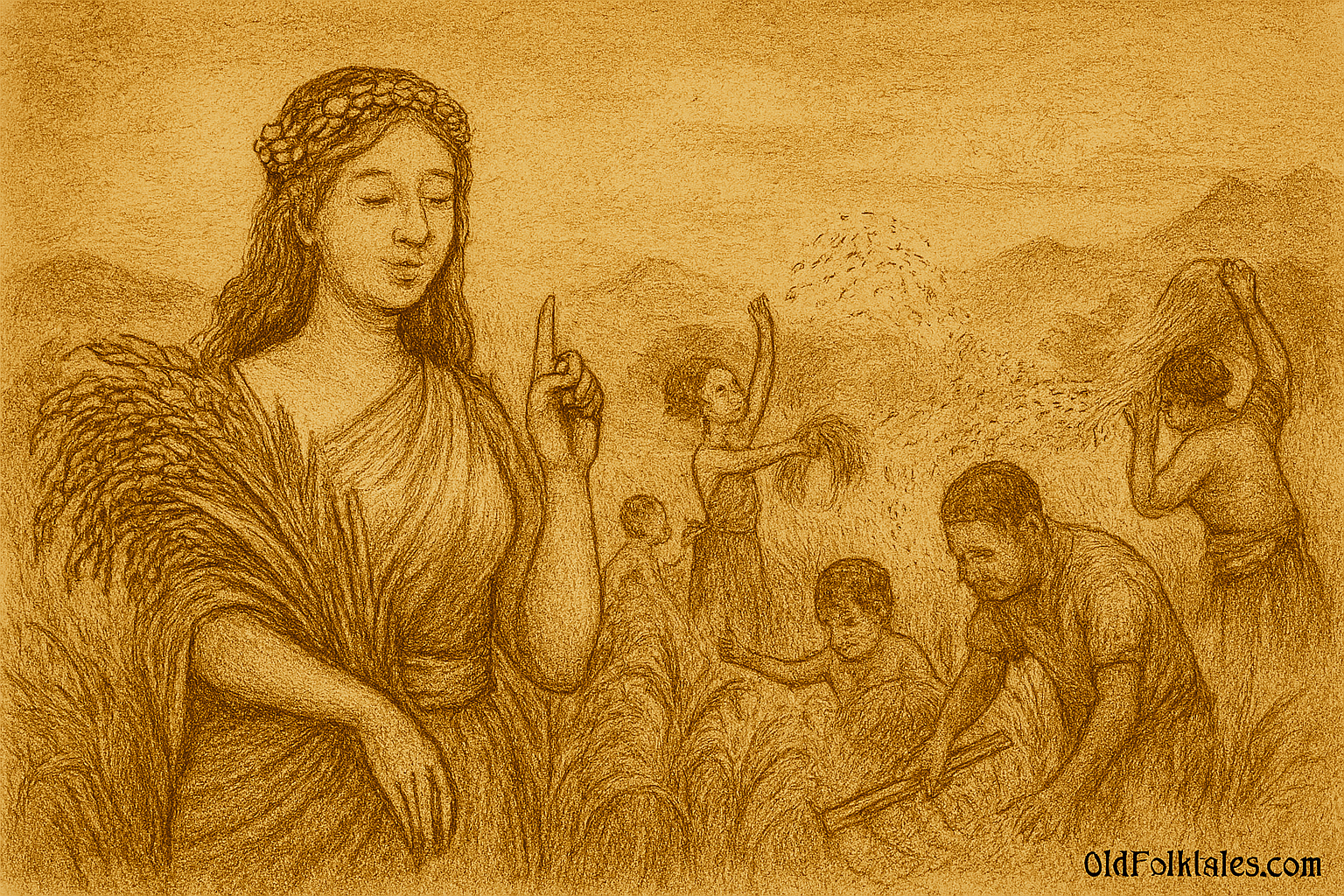
In the fertile valleys of Laos, where the Mekong River winds like a great serpent through emerald rice paddies and the morning mist clings to the earth like a blessing, the people have always understood one essential truth: rice is not merely food. Rice is life itself, the golden grain that sustains families, binds communities, and connects the living to the spirits of the land. And dwelling within every stalk, every grain, every sheaf of rice is a soul the gentle, nurturing spirit known as Mae Phosop, the Rice Mother.
Mae Phosop is not distant or abstract like some spirits. She is as real to the farmers of Laos as the soil beneath their feet, as present as the rain that falls on their fields. She tends the rice from the moment the seeds are pressed into the wet earth until the golden harvest is gathered into granaries. She watches over the growing plants with a mother’s tireless devotion, protecting them from disease and pests, coaxing them toward the sun, ensuring that each grain swells with nourishment. When the rice grows tall and healthy, it is because Mae Phosop has blessed it with her presence. When children grow strong and families prosper, it is because the Rice Mother has deemed them worthy of her gifts.
Click to read all East Asian Folktales — including beloved stories from China, Japan, Korea, and Mongolia.
There was once a village nestled in a valley so beautiful that travelers would stop just to marvel at the sight. The rice paddies stretched in every direction, their waters reflecting the sky like countless mirrors. The village had known prosperity for generations. Their granaries were always full, their children healthy, their festivals joyous. The people attributed this abundance to their own hard work and skill, to the strength of their backs and the wisdom of their farming methods.
Year after year, the harvests came in heavy and golden. The villagers grew accustomed to this plenty. They began to take their blessings for granted, forgetting the reverence their grandparents had shown toward the rice and the spirit who dwelled within it. They handled the harvested grain carelessly, allowing precious rice to spill onto the ground and be trampled underfoot. They stored it haphazardly, leaving some to spoil while they consumed vast quantities at their feasts. During the harvest, they worked roughly and complained constantly, treating the rice not as a sacred gift but as a mere commodity to be exploited.
The children mimicked their parents’ attitudes, playing games in the granaries, scattering rice like worthless chaff, laughing as they threw handfuls at each other. The elderly who remembered the old ways spoke up cautiously, reminding the younger generation about Mae Phosop, about the proper rituals and offerings, about the respect that must always be shown to the Rice Mother. But their warnings fell on deaf ears.
“Those are just old superstitions,” the younger farmers scoffed. “We don’t need rituals and ceremonies. We have our own strength and knowledge. The rice grows because we work hard, not because of some imaginary spirit.”
They abandoned the traditional harvest ceremonies that had been performed for centuries. They stopped making offerings of flowers and incense at the edge of their fields. They ceased whispering prayers of gratitude when the first shoots appeared. They treated Mae Phosop as if she did not exist, as if the rice had no soul, as if abundance was something they could claim by right rather than receive as a gift.
And Mae Phosop, the gentle Rice Mother who had blessed them so faithfully for so long, was heartbroken.
One night, as the village slept in their comfortable homes, full of food they had not properly honored, Mae Phosop made her decision. If they did not value her presence, if they did not respect the life she embodied, then she would withdraw. She would leave them to face the consequences of their ingratitude.
Silently, like mist evaporating under the morning sun, Mae Phosop departed from the rice fields. She took with her the living essence that made rice more than just a plant, the sacred spirit that transformed simple grain into sustenance and blessing. She left behind only empty husks, rice that still looked like rice but had lost its soul.
When the next planting season arrived, the villagers followed their usual practices. They prepared the fields, planted the seeds, and waited for the shoots to emerge. But something was wrong. The seeds that sprouted grew weak and spindly. The plants that managed to survive produced only withered, empty grains. Where once there had been lush green paddies rippling like water in the wind, now there were only struggling plants that seemed to gasp for life like fish out of water.
The villagers worked harder, assuming they had simply been unlucky or had made some technical error. They replanted. They tried different irrigation methods. They prayed to various spirits and made scattered, desperate offerings. But nothing worked. Season after season, the harvests failed. The granaries that had once overflowed now sat empty, their walls echoing with silence. The children who had been plump and healthy grew thin. The adults who had been strong began to weaken.
Hunger arrived like an unwelcome guest and made itself at home. Families began to ration their dwindling stores of old rice, measuring out each grain as if it were gold. The village that had once hosted generous feasts now struggled to provide a single meal each day. Mothers wept as they watched their children cry from hunger. Fathers stared at their barren fields with despair clouding their eyes.
It was the village elders, those who had never forgotten the old ways, who finally spoke the truth that everyone had been avoiding. They gathered the villagers together, and the oldest among them, a grandmother whose back was bent from decades of farming, addressed the community with tears streaming down her weathered face.
“We have driven away Mae Phosop,” she said, her voice trembling but clear. “We treated the rice as if it had no soul. We showed no respect, no gratitude. We believed our own pride instead of honoring the Rice Mother who blessed us. And now she has left us, taking her spirit with her. We are reaping exactly what we have sown emptiness because we offered emptiness, barrenness because we were spiritually barren.”
The villagers listened in silence, and slowly, understanding dawned. They began to remember how things used to be the ceremonies, the offerings, the prayers of gratitude. They recalled their grandparents’ gentle reverence when handling rice, the way they would pick up even a single grain that had fallen and press it to their foreheads before setting it aside properly. They understood now what they had lost, and shame washed over them like cold water.
They decided to seek Mae Phosop’s forgiveness, though they had no guarantee she would return. For three days and three nights, they fasted, consuming only water, allowing their bodies to feel the hunger they had inflicted through their disrespect. Then they performed the traditional rituals that had been neglected for so long.
They prepared the most beautiful offerings they could manage flowers woven into intricate patterns, incense that filled the air with fragrant smoke, candles that flickered like prayers made visible. They went to the edges of their barren fields and knelt in the mud, pressing their foreheads to the earth in humble supplication. Each person, from the oldest elder to the youngest child, spoke their apology aloud, their voices mingling with the wind.
“Mae Phosop, gentle mother, we have wronged you,” they chanted together. “We took your gifts for granted. We treated your sacred presence with contempt. We forgot that rice is not merely grain, but life itself, imbued with your spirit. Please, forgive us. Return to us, and we promise we vow to never again forget. We will honor you with every planting and every harvest. We will teach our children to revere you. We will treat every grain of rice as the precious gift it is.”
They performed the old ceremonies exactly as their ancestors had taught them, with careful attention to every detail, every gesture, every word. They made promises about how they would change their ways, how they would restore the practices that honored the Rice Mother properly. And then they waited, hardly daring to hope.
On the morning of the fourth day, as the sun rose over the valley, someone noticed it first a change in the air, a softness, a sense of presence returning. The children ran to the fields and shouted with joy. The first green shoots were emerging from the earth, but these were different from the sickly sprouts they had seen in recent seasons. These shoots glowed with health and vigor. They stood straight and strong, reaching toward the sun with unmistakable vitality.
Mae Phosop had returned.
The rice grew as it had in the old days, perhaps even more abundantly, as if the Rice Mother wanted to show them what true blessing looked like when received with proper gratitude. When harvest time came, the villagers worked with gentle hands and reverent hearts. They gathered each stalk carefully, whispering thanks. They stored the grain properly, treating every handful as precious. And they held the harvest ceremonies with joyful devotion, making offerings to Mae Phosop, singing songs of gratitude, teaching their children the importance of honoring the Rice Mother who blessed them with life itself.
From that year forward, the village never again forgot. The ceremonies became the most important events in their calendar. Before every planting, they called upon Mae Phosop. After every harvest, they thanked her. They taught each new generation that rice is sacred, that it carries a living soul, and that prosperity comes not from human effort alone but from the grace of the Rice Mother who chooses to dwell among those who honor her.
And so it remains in Laos to this day. The farmers still perform the rituals for Mae Phosop, still make their offerings, still teach their children to treat rice with reverence. Because they know they will never forget again that abundance is a gift, not a right, and that the greatest harvests come to those who remember to be grateful.
Click to read all Southeast Asian Folktales — featuring legends from Thailand, Indonesia, Vietnam, and the Philippines.
The Moral Lesson
The legend of Mae Phosop teaches us that abundance and blessing are not entitlements but gifts that require our reverence and gratitude. When we take our blessings for granted whether material prosperity, natural resources, or the sustenance that keeps us alive we risk losing them entirely. The villagers’ suffering came not from lack of skill or effort, but from their failure to honor the sacred dimension of their daily sustenance. This Lao tale reminds us that everything we receive from nature carries a spiritual essence deserving of respect. True prosperity flows not from exploitation but from reciprocal relationship, from recognizing that we are part of a larger web of mutual obligation between humans and the natural/spiritual world.
Knowledge Check
Q1: Who is Mae Phosop in Lao folklore and what is her role?
A1: Mae Phosop is the Rice Mother or Rice Goddess in Lao folklore, a spirit believed to dwell within every rice plant and grain. She is the embodiment of the living soul of rice, responsible for nurturing and protecting the rice from planting to harvest. She ensures healthy crops, protects against disease and pests, and blesses communities with abundant harvests when they show proper respect. In Lao culture, Mae Phosop represents the sacred relationship between people and their most essential food source.
Q2: How did the villagers in the Mae Phosop story mistreat the rice harvest?
A2: The villagers showed disrespect in multiple ways: they handled harvested rice carelessly, allowing it to spill and be trampled; they stored grain haphazardly, letting some spoil; they worked roughly during harvest while complaining; children played games scattering rice like worthless material; and most importantly, they abandoned traditional harvest ceremonies, stopped making offerings, and ceased prayers of gratitude. They treated rice as a mere commodity rather than a sacred gift with a living soul.
Q3: What happened when Mae Phosop abandoned the village?
A3: When Mae Phosop withdrew from the village, she took the living essence that made rice truly nourishing. The rice fields became barren, producing only weak, spindly plants with withered, empty grains. Season after season, harvests failed completely. The once-prosperous village experienced severe famine granaries emptied, children grew thin, families weakened from hunger, and despair replaced the former abundance. The land could no longer sustain them because the spiritual essence of the rice had departed.
Q4: How did the villagers seek forgiveness from the Rice Mother?
A4: The villagers performed sincere acts of atonement: they fasted for three days and three nights, consuming only water to experience the hunger their disrespect had caused; they prepared beautiful offerings of flowers, incense, and candles; they knelt at the edges of their barren fields pressing their foreheads to the earth in humility; each person from eldest to youngest spoke apologies aloud; they performed the old traditional ceremonies exactly as their ancestors had taught; and they made solemn vows to honor Mae Phosop properly forever.
Q5: What traditional rice harvest ceremonies does the Mae Phosop legend explain?
A5: The Mae Phosop legend forms the foundation for traditional Lao rice harvest ceremonies that persist today. These include: offerings of flowers and incense at field edges before planting; prayers of gratitude when first shoots appear; careful, reverent handling of every grain during harvest; proper storage treating rice as precious; harvest festivals with offerings to Mae Phosop; teaching children to revere rice and pick up fallen grains; and ceremonies acknowledging rice as sacred rather than merely utilitarian. These practices maintain the spiritual relationship between farmers and the Rice Mother.
Q6: What does Mae Phosop symbolize in Lao culture and agricultural tradition?
A6: Mae Phosop symbolizes the sacred dimension of agriculture and the spiritual essence within nature’s gifts. She represents the principle that food especially rice, the staple of life is not merely a material resource but carries a living soul deserving reverence. In Lao culture, Mae Phosop embodies the reciprocal relationship between humans and nature: blessings flow when respect is shown, but abundance withdraws when gratitude is forgotten. She symbolizes the importance of maintaining traditional practices that honor the spiritual world, and teaches that prosperity depends not just on labor but on proper reverence for the sources of life.
Source: Adapted from the National Library of Laos folklore collections
Cultural Origin: Laos (Lao PDR), Southeast Asia