In the towns and villages of Palestine, where evenings once unfolded in coffeehouses filled with smoke, laughter, and strong tea, the name of Nasreddin Hodja was spoken with affection. Known locally as Juha, he was neither king nor scholar by title, yet his words traveled farther than those of many learned men. To some he appeared foolish, to others irritatingly clever, but to all he was unforgettable. His stories were brief, often absurd, and always carried a truth that revealed itself only after laughter had passed.
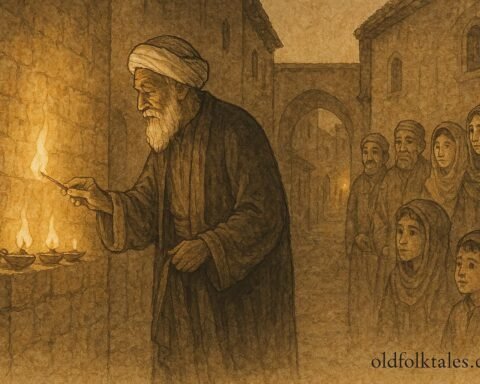
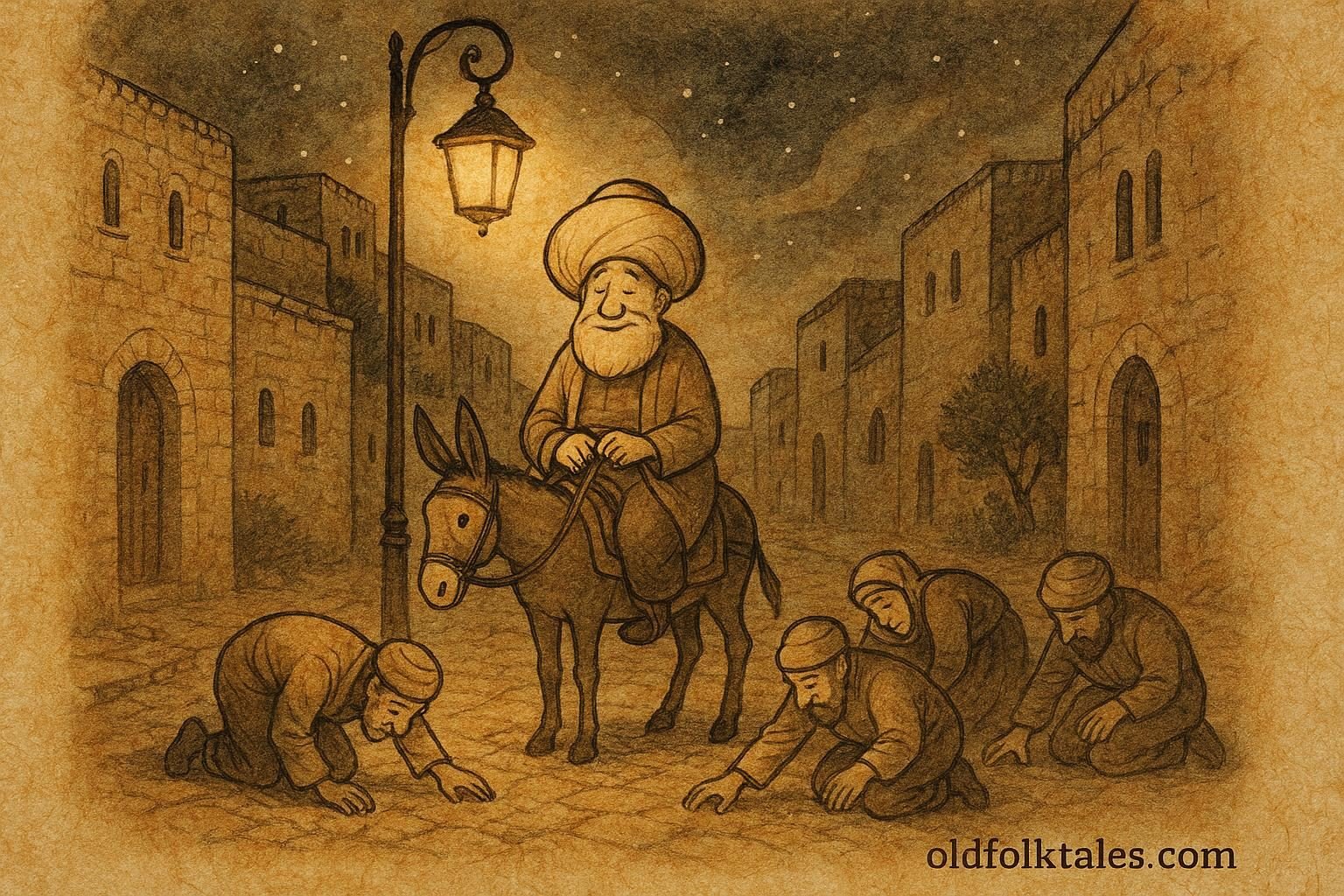
One evening, villagers found Nasreddin crouched beneath a lamppost, patting the ground with anxious care. His turban sat crooked on his head, and his brows were drawn together in great concern. A passerby stopped and asked what troubled him.
“I have lost my key,” Nasreddin replied gravely.
Moved by sympathy, the man knelt beside him and began to search. Soon others joined, forming a small circle beneath the glowing lamplight. After some time, one man asked the question that seemed obvious.
“Nasreddin, where exactly did you drop the key?”
“Over there,” Nasreddin said, pointing toward a dark alley several steps away.
The men stared at him in disbelief. “Then why are we searching here?”
Nasreddin looked up, entirely calm. “Because the light is better here.”
The men laughed, some shaking their heads, others smiling thoughtfully. For while Nasreddin’s answer was absurd, it carried a sting. Many recognized themselves in it, seeking truth where it was comfortable rather than where it truly lay.
Another story often told in Palestinian homes concerned a banquet hosted by a wealthy man who delighted in status but neglected generosity. Nasreddin arrived wearing a simple coat, patched and faded. At the door, servants barely acknowledged him, offering no greeting and seating him far from the table. When food was served, he received only scraps.
Nasreddin left without complaint. Later that evening, he returned wearing a fine coat borrowed from a friend. This time the servants bowed, ushered him forward, and seated him among honored guests. Plates heavy with meat and sweets were placed before him.
Instead of eating, Nasreddin dipped the sleeve of his coat into the dish.
“Eat, my coat,” he said softly. “Drink, my coat.”
The guests stared in confusion. The host demanded an explanation.
“It is clear,” Nasreddin replied, “that the honor is not for me, but for my coat. Let it enjoy the meal.”
Shame fell over the table. The laughter that followed was uneasy, for Nasreddin had exposed the hunger for appearances that ruled the gathering.
In another tale, Nasreddin was seen riding his donkey backward, facing the animal’s tail while the donkey walked forward. Children ran after him, laughing loudly.
“Nasreddin,” they called, “you are riding the wrong way.”
Nasreddin turned his head slightly and said, “The donkey is walking the right way. It is the world that insists on moving backward.”
The children laughed even harder, but the elders nearby nodded quietly. They understood that Nasreddin was speaking of a world that often confused direction with progress.
These stories were told not to glorify cleverness alone, but to teach discernment. Nasreddin did not confront rulers directly nor preach from pulpits. Instead, he used humor as a mirror, inviting listeners to see themselves without anger or fear. His foolishness disarmed pride, making wisdom easier to accept.
In Palestinian tradition, these tales were passed down orally, shared during long evenings when storytelling was both entertainment and education. Children learned to laugh at logic turned upside down. Adults learned to question their assumptions. Nasreddin belonged to no single place, yet his voice felt local, shaped by the rhythms of everyday life.
He was a man who appeared to misunderstand the world, yet understood it too well. His keys, coats, and donkeys were ordinary objects, but in his hands they became tools for revealing hypocrisy, misplaced values, and shallow reasoning.
Though centuries have passed, Nasreddin’s stories remain alive. They endure because human nature has changed little. People still search where the light is easiest. They still honor appearances over substance. And they still need laughter to hear difficult truths.
Moral Lesson
Nasreddin Hodja’s tales teach that wisdom often arrives disguised as folly. By laughing at his actions, listeners are invited to examine their own habits, assumptions, and moral shortcuts, learning humility, honesty, and clear thinking.
Knowledge Check
-
Who is Nasreddin Hodja in Palestinian folklore?
He is a trickster figure known as Juha, famous for humorous stories that reveal moral and philosophical truths. -
What does the lost key under the lamppost symbolize?
It represents the tendency to seek answers where it is convenient rather than where truth actually lies. -
Why does Nasreddin feed his coat at the banquet?
To expose social hypocrisy and the preference for appearance over character. -
What role does humor play in Nasreddin stories?
Humor disarms listeners, making criticism and wisdom easier to accept. -
Where were these stories traditionally shared?
In coffeehouses, family gatherings, and village settings across Palestine. -
What is the lasting lesson of Nasreddin Hodja tales?
That self awareness and moral clarity often come through questioning accepted logic.
Source
Adapted from Palestinian oral folktale traditions featuring Nasreddin Hodja, as documented in Palestinian Journeys folktale collections and regional storytelling archives.