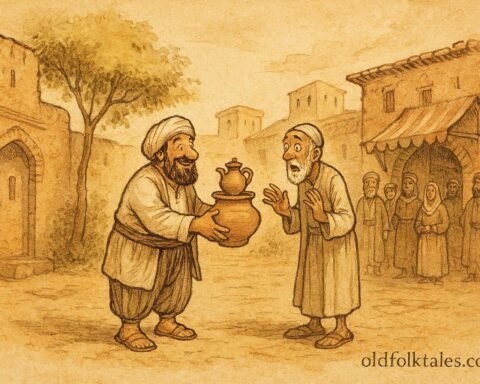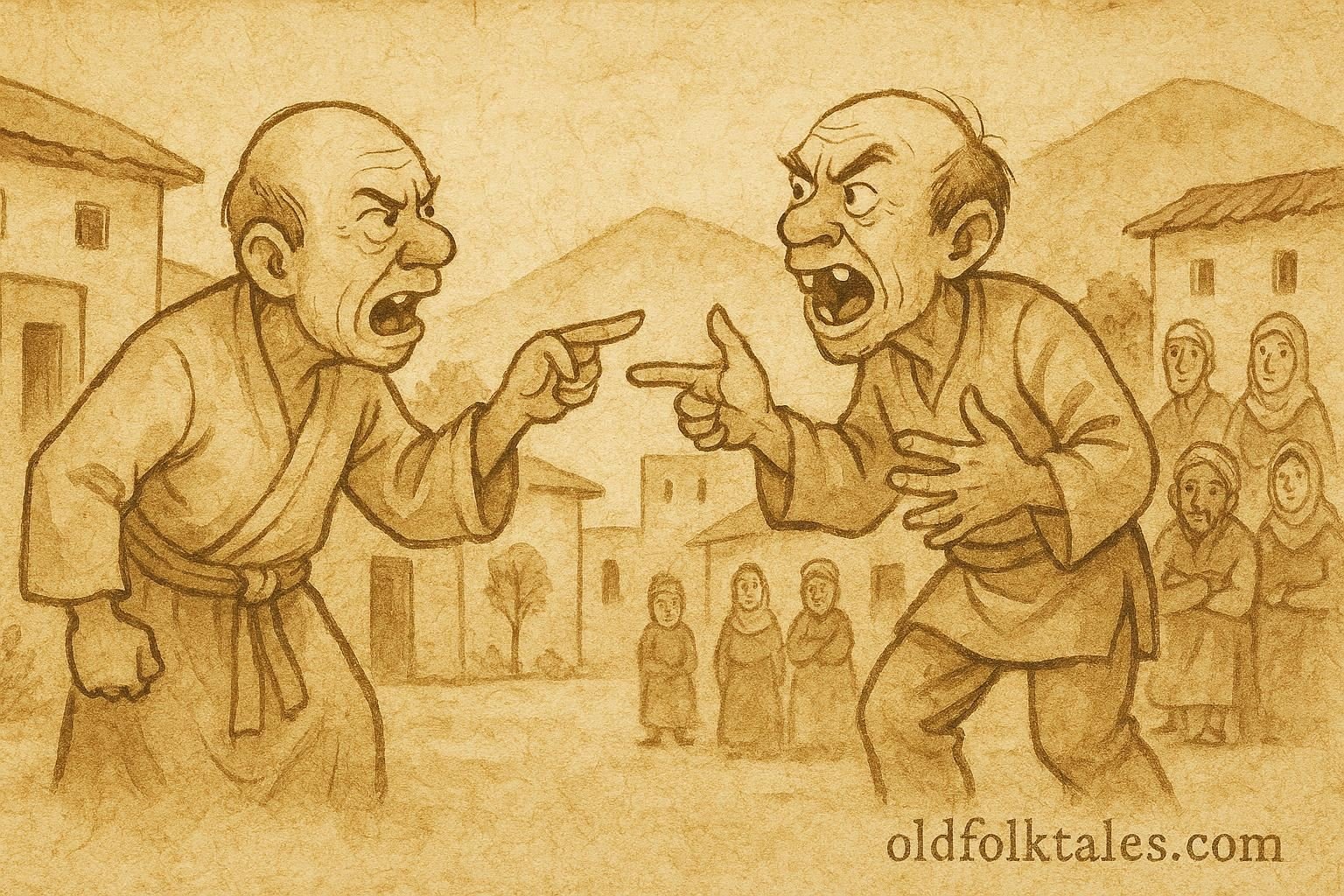
In the towns and villages of Syria, where stories were shared in courtyards, coffeehouses, and family gatherings, there lived two men known not by their given names but by nicknames that everyone remembered. One was called One-Tooth, for he had lost all but a single tooth in his mouth. The other was known as Two-Teeth, having only two left, which he displayed proudly whenever he laughed. These names were not meant as cruelty, but as part of the playful language of folk humor, where physical quirks often became symbols of character.
One-Tooth was sharp-minded, quick with words, and fond of schemes. Two-Teeth, by contrast, was boastful and easily impressed with himself, convinced that having one more tooth made him superior in every way. Wherever they went, they competed. If One-Tooth told a story, Two-Teeth claimed his was better. If Two-Teeth bought new clothes, One-Tooth insisted he looked finer. Their rivalry amused everyone who knew them.
One day, the two men heard that a wealthy merchant was offering a reward to anyone clever enough to solve a small problem for him. The merchant was known for enjoying riddles and tests of wit, and he promised food and coins to whoever impressed him. At once, One-Tooth and Two-Teeth set out, each determined to outshine the other.
As they walked together along the dusty road, Two-Teeth laughed loudly and said that the merchant would surely favor him. He claimed that a man with two teeth was clearly wiser and more capable than one with only one. One-Tooth smiled and said nothing, already forming a plan in his mind.
When they reached the merchant’s house, they were invited inside and offered water. The merchant asked them to wait while he finished his meal. On the floor nearby sat a large tray of bread and dates, placed there for later. Two-Teeth eyed the food greedily but said nothing, afraid of appearing rude. One-Tooth, however, leaned close to him and whispered that the merchant was testing their manners, and that only a truly clever man would eat before being told.
Believing this, Two-Teeth quickly grabbed bread and began eating. At that moment, the merchant returned and scolded him sharply for his lack of restraint. Embarrassed and angry, Two-Teeth blamed One-Tooth, but the merchant dismissed them both, laughing at their foolishness. Outside, Two-Teeth accused One-Tooth of tricking him, but One-Tooth replied calmly that cleverness was about thinking, not teeth.
On another occasion, the pair found work helping villagers harvest olives. The villagers promised payment at the end of the day. During the work, Two-Teeth boasted loudly about his strength and skill, while One-Tooth worked quietly. When the baskets were weighed, One-Tooth’s was heavier. Two-Teeth protested, claiming trickery, but the villagers paid according to results, not words. Again, Two-Teeth felt humiliated.
In yet another episode, they were invited to a wedding feast. Two-Teeth dressed in bright clothes and laughed loudly, showing off his teeth to everyone. One-Tooth remained modest. When food was served, Two-Teeth ate too much and became ill, while One-Tooth ate sparingly and enjoyed the evening. The guests whispered that pride had clouded Two-Teeth’s judgment.
Sometimes, however, One-Tooth’s cleverness led him into trouble as well. Once, he tried to trick a shopkeeper by confusing him with clever speech, but the shopkeeper saw through the scheme and chased him away with harsh words. Two-Teeth laughed then, pleased to see his rival fail. These moments reminded listeners that cleverness, when used carelessly, could turn against its owner.
Over time, the people came to see One-Tooth and Two-Teeth not merely as rivals, but as lessons made flesh. One represented sharp thinking and restraint, the other vanity and overconfidence. Their misadventures were retold again and again, especially to children, who laughed at the humor while learning to look beyond appearances.
In the end, the two men remained inseparable. They argued, competed, failed, and succeeded together. Wherever One-Tooth went, Two-Teeth followed, and wherever Two-Teeth boasted, One-Tooth was ready with a reply. Their stories lived on because they reflected ordinary human weaknesses in an amusing and memorable way.
Moral Lesson
This folktale teaches that intelligence and humility matter more than outward advantages, and that pride and vanity often lead to embarrassment, while cleverness must be guided by wisdom.
Knowledge Check
-
Why are the characters called One-Tooth and Two-Teeth?
They are nicknamed for their physical quirks, a common feature in comic folktales. -
What kind of relationship do the two characters share?
They are rivals whose constant competition drives the story. -
How does One-Tooth usually outwit Two-Teeth?
Through quick thinking, clever speech, and understanding human behavior. -
What flaw often causes Two-Teeth trouble?
His vanity and belief that he is superior to others. -
Do One-Tooth’s tricks always succeed?
No, some of his schemes fail, showing the limits of cleverness. -
What cultural purpose do these stories serve?
They teach social lessons through humor and exaggerated characters.
Cultural Source
Source: Adapted from Syrian variants recorded in Arab Folktales by Inea Bushnaq, collected from pan-Arab oral traditions and preserved in regional collections, Internet Archive.