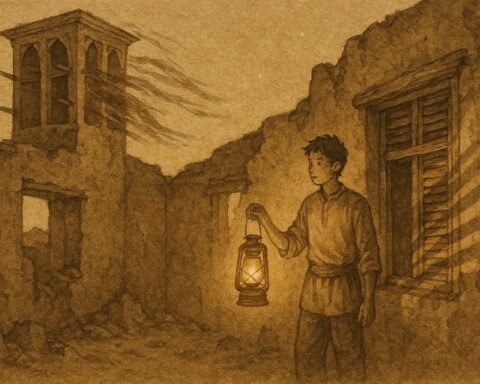
In the bustling heart of old Lebanon, where silk merchants shouted in the souk and gold threads glimmered under the sun, there lived a poor tailor and his daughter. Her name was Leila, graceful, sharp-witted, and known for her quiet patience, the virtue her father always praised. Though they had little, their home was filled with laughter, honesty, and a simple pride in hard work.
One day, as Leila walked through the market carrying a bundle of cloth, a young prince passed by with his entourage. His robe shimmered with silver, and his eyes, full of pride, scanned the crowd like a man expecting worship. When his horse’s hoof splashed mud onto Leila’s dress, she looked up and said calmly, “Your robe shines, my lord, but not brighter than humility.”
The words stung the prince’s vanity. Never had anyone, especially a poor tailor’s daughter, dared speak to him so boldly. “We shall see,” he muttered. “A woman’s tongue can be silenced, but her pride must first be tested.”
The Prince’s Test
A few weeks later, the prince sent word to the tailor, asking for his daughter’s hand in marriage. The tailor, trembling between joy and disbelief, accepted, seeing the union as a miracle. But the prince’s heart burned not with love, but with vengeance.
Their wedding was grand, yet hollow. Gold filled the palace halls, but no laughter warmed its walls. Soon after the ceremony, the prince stripped Leila of her jewels and fine silks and sent her to live alone in a remote hut by the fields. “You wanted humility,” he sneered. “Now live as humbly as you please.”
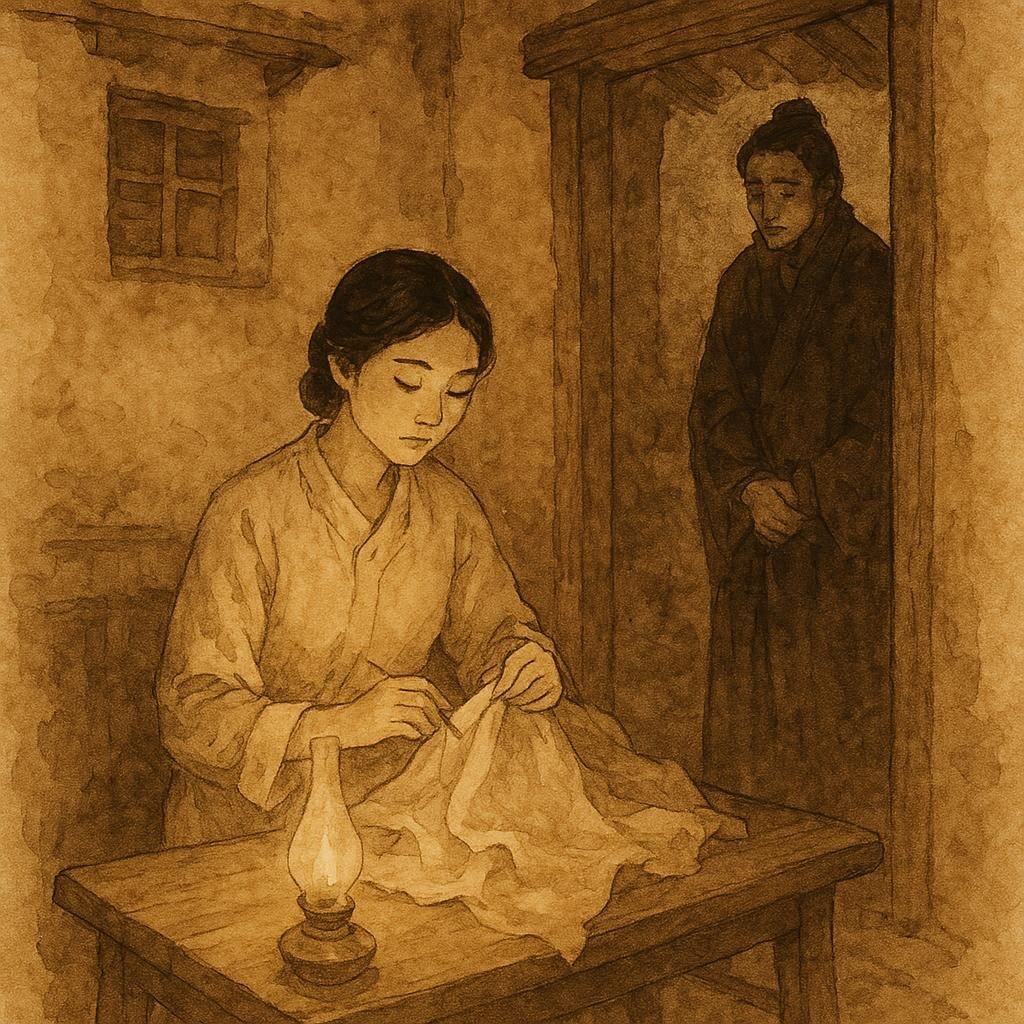
Leila wept the first night, but she did not curse her fate. Instead, she lit a small oil lamp and began sewing. “Patience,” she whispered. “Even thread too fine can mend what is torn.”
The Years of Endurance
Seasons turned to years. Leila earned her bread by sewing garments for the villagers. Her skill and kindness won their affection, and her words carried quiet wisdom. When storms destroyed crops, she reminded them, “The earth sleeps before it blooms.” When children quarrelled, she taught, “A gentle hand can stitch torn hearts.”
Meanwhile, the prince’s life at court grew empty. Though he commanded respect, he felt a quiet unease each time he saw humble people smiling, a peace he could not buy.
One evening, while hunting near the outskirts of his realm, he stopped at a cottage to ask for water. There, by the glow of a flickering lamp, sat Leila, spinning golden thread from raw flax. She rose, bowed gracefully, and offered him a clay cup without bitterness.
Recognition struck him like lightning. Her eyes, once tearful, now held calm strength. The prince was ashamed. “You should hate me,” he said. “Why do you not?”
Leila replied softly, “Hatred darkens the heart that carries it. I have learned that patience is lighter to bear.”
The Lesson of Redemption
Moved by her words, the prince knelt before her. “Leila,” he whispered, “I thought to humble you, but I was the one in need of humbling.” He took her hands, calloused yet gentle, and said, “Come home. Teach me the peace that pride could never give.”
When they returned to the palace, the courtiers whispered in disbelief. Yet Leila, dressed in simple linen, carried herself like a queen. Her quiet dignity transformed the prince’s heart, and under her guidance, he became a wiser and humbler ruler.
Years later, he built a fountain in the palace courtyard where clear water forever flowed beneath a carved inscription:
“Patience conquers pride, and gentleness endures longer than gold.”
Moral Lesson
This Lebanese folktale teaches that patience and dignity can transform suffering into strength. True nobility lies not in wealth or rank but in one’s ability to endure injustice without losing compassion.
Knowledge Check
-
Who is the main character in “The Tailor’s Daughter”?
Leila, the humble and patient daughter of a Lebanese tailor. -
What causes the prince to mistreat Leila?
Her witty remark that challenges his arrogance and pride. -
How does Leila survive her hardship?
Through patience, work, and faith, earning love and respect from her community. -
What transformation does the prince undergo?
From prideful arrogance to humility and repentance after witnessing Leila’s virtue. -
What is the story’s main moral lesson?
That patience and dignity can overcome cruelty and redeem even the hardest hearts. -
Where does this folktale originate?
Lebanon , from oral traditions among Lebanese artisan families.
Source & Cultural Origin
Source: Adapted from Abu Jmeel’s Daughter & Other Stories: Arab Folk Tales from Palestine and Lebanon by Jamal S. Nuweihed (Interlink Books, 2002).
Cultural Origin: Lebanon (Levantine folklore)