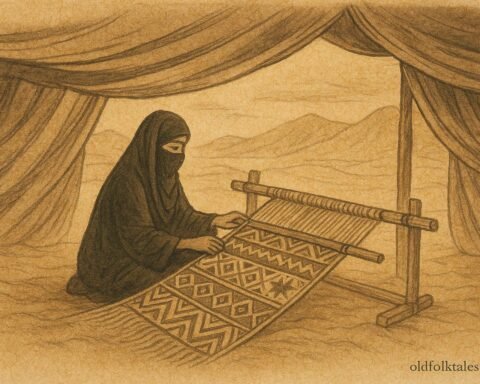
In the heart of the golden desert, where the wind carried songs of courage and honour, lived Alia Al Hilaliya, a woman renowned across the Bedouin tribes for her beauty, wisdom, and love of poetry, the cherished art of her people. Her world was woven from the rhythm of the sands and the spirit of chivalry, where bravery and pride shaped the destiny of men and women alike.
Alia was blessed with a brother named Salem, whose reputation spread far and wide. He was known for his courage, intelligence, and noble bearing, yet shadowed by a streak of selfishness and narcissism. Despite his pride, Alia admired him deeply, and when she married a man from her tribe, she prayed for a son who would inherit her brother’s admirable qualities, his bravery, his wit, and his poetic soul.
In time, her prayer was answered: she bore three sons and three daughters, each one radiant with the promise of their noble lineage. Her sons grew strong and capable, their spirits echoing the honour of their mother’s tribe. Yet fate was not done weaving its tale of love, envy, and sorrow.
One day, as Salem prepared for one of his adventurous journeys across the desert, he asked his sister Alia to allow one of her sons to accompany him. Though hesitant, she agreed and sent her eldest son. Along the journey, Salem tested his nephew’s intelligence and found it lacking, dismissing him with disdain. On his next voyage, Alia sent her second son, only for Salem to judge him just as unworthy.
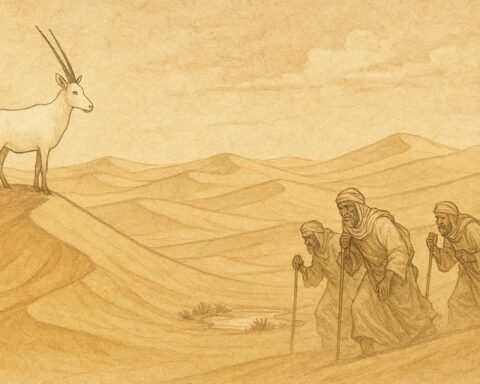
At last, Salem persuaded her to send her youngest son, a boy whose courage and wisdom far surpassed his years. As they travelled together through vast dunes and scorching winds, Salem grew envious of the boy’s sharp mind and fearless heart. His jealousy, once a flicker, grew into a consuming fire. In his pride, he could not bear the thought that this young man might one day outshine him.
When they came upon an abandoned well, Salem’s envy took form. He ordered his nephew to climb down into the darkness to retrieve something lost. Trusting his uncle, the boy obeyed. But within the shadows of that pit slithered death itself, venomous snakes, coiled in silence. Their fangs struck, and the brave young man fell, his final breath mingling with the echoes of betrayal. Salem buried the body in the desert’s lonely heart, leaving no trace but guilt and the haunting whisper of conscience.
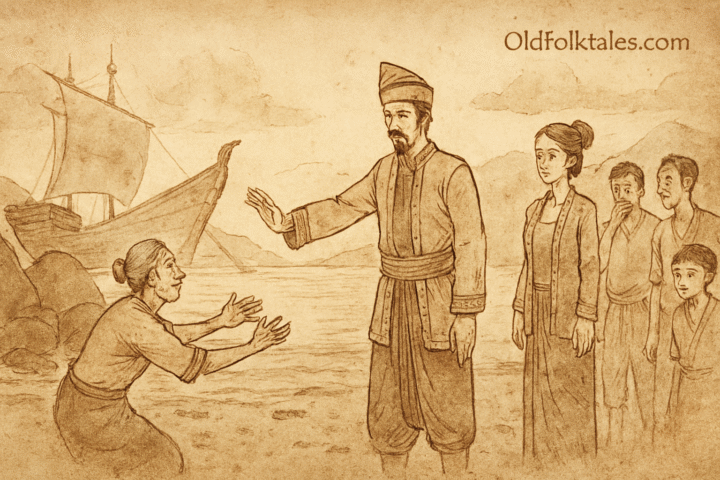
On his journey home, Salem met a navigator and gave him a cruel message to deliver:
“Tell Alia,” he said, “that I bring news of her sons, one is lost, and only the ‘grey-haired man’ remains.”
When the messenger reached Alia’s home and repeated those words, grief tore through her soul like a desert storm. The depth of her sorrow was unbearable, her cries filled the air, and in her anguish, she struck the messenger, breaking his leg, and hurled her servant from the rooftop in despair.
Soon after, Salem returned, spinning tales to hide his sin. He told Alia’s eldest daughter that her brother Aziz was alive, working as a trader in Basra. The elder and middle daughters clung to his lie, but the youngest, wise beyond her years, saw through the deceit. She cried out:
“By God, my uncle! If Aziz were alive, I would have heard it through the birds of the sky. My brother is dead.”
Time proved her right. The desert itself seemed to remember the boy, for verses of poetry he had inscribed upon his camel’s saddle began to echo among the tribes, verses of farewell, pain, and eternal honour. His words lived on, immortal as the desert wind:
“The Hilali’s bucket fell when the well rope broke,
And the serpents’ bite brought me to rest.
Bury me in the barren land where only owls cry,
For my sword remains pure, and my name unstained.”
Through those verses, the truth of Salem’s treachery endured, carried on the tongues of poets and the hearts of wanderers. Alia’s sorrow became legend, her son’s death a reminder that envy destroys even the bonds of blood, and that courage and truth never perish, even in the silence of the sands.
Explore desert legends and palace tales in our Western Asian Folktales archive.
Moral Lesson
The tale of Alia Al Hilaliya teaches that pride and jealousy corrode honour, while courage and truth transcend death. The poetry of the heart outlives deceit and preserves the dignity of the righteous.
Knowledge Check
1. Who is Alia Al Hilaliya in Emirati folklore?
She is a noble Bedouin woman known for her beauty, wisdom, and love of poetry in Emirati folktales.
2. What is the main theme of Alia Al Hilaliya’s story?
The story explores jealousy, betrayal, and the endurance of truth through poetic remembrance.
3. Who was Salem in the tale of Alia Al Hilaliya?
Salem was Alia’s brother, brave yet selfish, whose envy led to the tragic death of his nephew.
4. How did Alia’s youngest son die?
He was sent into a snake-filled well by his jealous uncle, Salem, and died from their venom.
5. What role does poetry play in this Emirati folktale?
Poetry serves as a vessel for truth, immortalising the nephew’s courage and exposing his uncle’s deceit.
6. What moral lesson does Alia Al Hilaliya teach?
The story warns that pride and envy destroy even family bonds, but honour and truth endure.
Source:
Adapted from “The Folk Tale: Alia Al Hilaliya” , Abu Dhabi Culture (UAE Government Folklore Archive).
Cultural Origin:
United Arab Emirates (Emirati Bedouin Folklore)