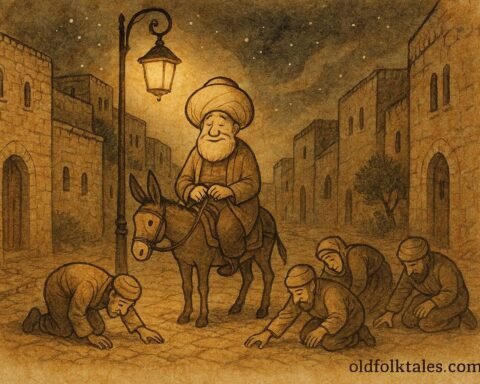
In the old quarters of a Syrian town, where narrow streets wound between stone houses and evening prayers drifted softly through the air, there lived a sheikh unlike any other. He was not known for wealth or authority, nor for loud sermons or public debate. Instead, people called him the Sheikh of the Lamps. His small dwelling was always filled with the glow of oil lamps, their flames steady and calm, casting warm light onto walls darkened by time.
The sheikh lived simply. His clothes were clean but plain, his food modest, and his voice gentle. Yet travelers, merchants, and villagers alike sought him out, for it was said that his lamps revealed what the eye alone could not see. Some claimed the light exposed lies. Others believed it protected the community from unseen harm. No one fully understood the truth, but all agreed that the sheikh’s presence brought reassurance.
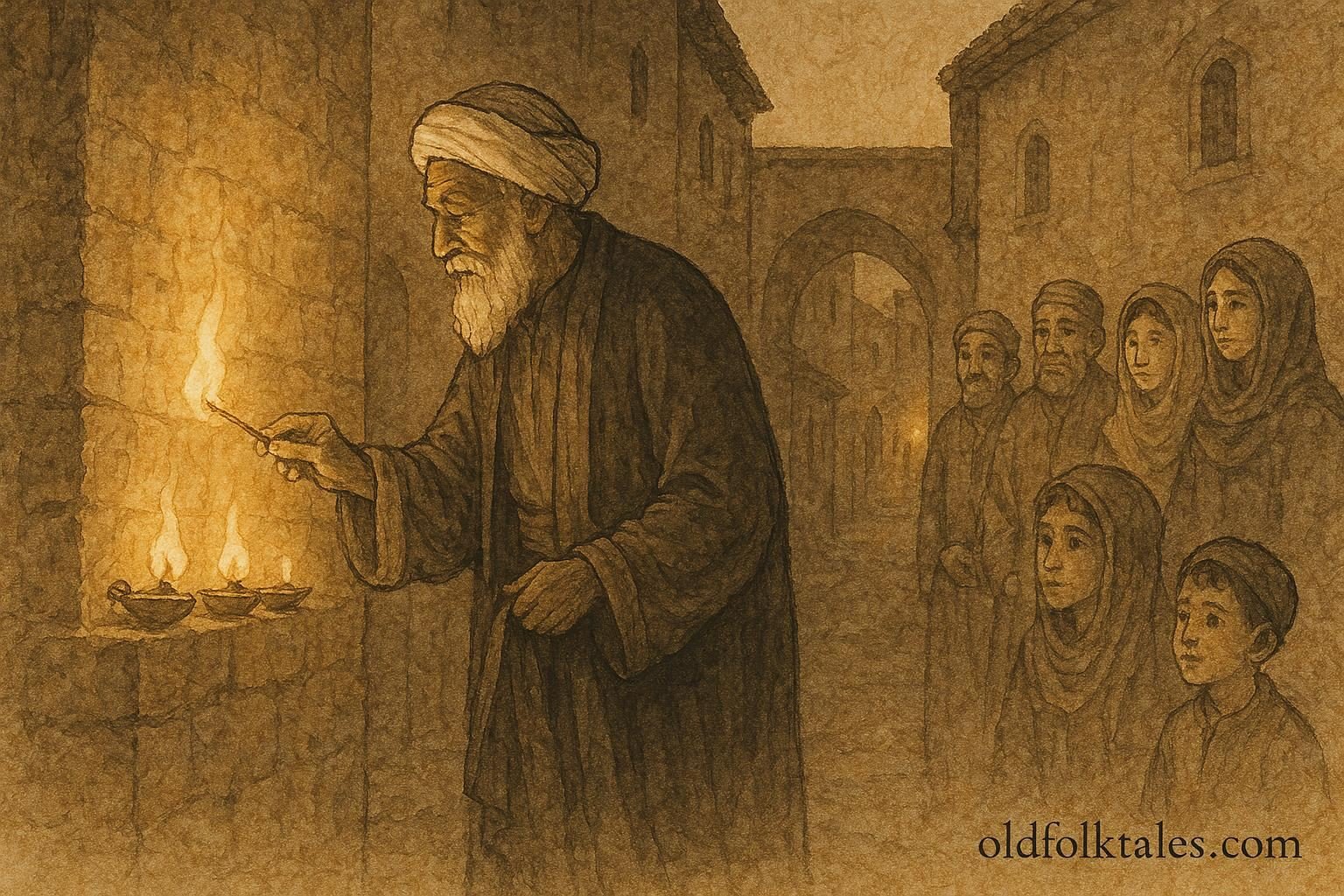
Each evening, as the sun slipped behind the rooftops, the sheikh would light his lamps one by one. He treated each flame with care, whispering prayers as he worked. Neighbors noticed that when these lamps burned, disputes softened and restless hearts grew calm. Children slept without fear, and the sick felt comforted by the quiet glow.
One year, hardship struck the town. Misfortune spread quietly at first. Goods went missing from shops. Arguments broke out between neighbors who had once trusted one another. Whispers of dishonesty and hidden wrongdoing filled the marketplace. The people grew uneasy, suspecting that something unseen was disturbing their harmony.
The elders agreed to seek the counsel of the Sheikh of the Lamps. They came to him at dusk, just as he was lighting his lamps. After listening carefully, the sheikh nodded and said that light, when used with sincerity, reveals truth, but when misused, it can wound as sharply as darkness.
That night, he placed a lamp in the window facing the street. Its glow was brighter than usual, steady and unwavering. As people passed beneath it, some felt comforted, while others felt uneasy. A merchant known for honest dealings paused and smiled, warmed by the light. Another man, who had been secretly cheating his neighbors, turned away quickly, shielding his face.
Word spread that the sheikh’s lamp was showing people their own actions reflected in their hearts. Fear and awe filled the town. Some demanded that the sheikh explain his power. Others begged him to use the lamps to punish wrongdoers.
The sheikh gathered the people and spoke calmly. He said that the lamps themselves held no magic. Their light symbolized knowledge and conscience. Those who feared the light did so because they feared the truth within themselves. He warned that knowledge must guide, not dominate, and that light should heal, not humiliate.
Despite his words, a group of men insisted that the sheikh use his lamps to identify and expose every dishonest person. Reluctantly, he agreed to demonstrate, but with a lesson attached. He invited the entire community to gather in the square at night and brought a single lamp with him.
He placed the lamp on the ground and lit it. Its glow was no brighter than before, yet the silence that followed was heavy. The sheikh asked each person to step forward and look into the flame. One by one, they did. Some stepped back peacefully. Others trembled. A few refused altogether.
When it was over, the sheikh extinguished the lamp and addressed the crowd. He said that the lamp had revealed nothing new. It merely reflected what each person already carried inside. The unrest in the town, he explained, was born not from unseen forces, but from neglected conscience and forgotten responsibility.
Shamed and thoughtful, the people returned home. In the days that followed, stolen goods quietly reappeared. Disputes were settled with fewer harsh words. Trust slowly returned, not because of fear of the lamp, but because of renewed awareness.
The Sheikh of the Lamps returned to his quiet life. His lamps continued to glow each evening, no brighter than before, yet their meaning had deepened. People no longer spoke of magic, but of guidance. They understood that light, whether from a flame or from wisdom, must be handled with humility.
The sheikh grew old, and when he passed from this world, his lamps were distributed among the town. Families lit them on special nights, not to expose others, but to remind themselves to act with integrity. Thus, the legacy of the Sheikh of the Lamps endured, not as fear, but as illumination.
Moral Lesson
This folktale teaches that knowledge and insight are forms of light that must be used with humility. True wisdom guides conscience rather than exposing others, and light fulfills its purpose only when it brings understanding, not fear.
Knowledge Check
-
Why was the sheikh known as the Sheikh of the Lamps?
He was associated with oil lamps that symbolized guidance, truth, and conscience. -
What troubles affected the town?
Dishonesty, mistrust, and hidden wrongdoing disrupted community harmony. -
Did the lamps possess supernatural power?
No, they symbolized inner truth and awareness rather than magic. -
Why did some people fear the light of the lamps?
They feared facing their own dishonest actions and conscience. -
What lesson did the sheikh teach about knowledge?
That knowledge should guide and heal, not shame or dominate. -
How did the community change after the gathering?
People corrected their behavior and restored trust voluntarily.
Cultural Source
Source: Adapted from Syrian and Levantine oral traditions recorded in Arab Folktales by Inea Bushnaq, preserved in regional anthologies and the Internet Archive.