The mountain passes between the villages of western Afghanistan are rugged places, narrow paths sunk between stone walls, where winds whistle like flutes and shadows fall early. It was along one such path that a young bride named Shireen travelled, seated upon a mule, surrounded by her family and escorting relatives. She was being taken from her home village to the home of her new husband. Her dowry was modest but precious: bracelets of silver, a woollen bundle, and a beautifully woven carpet shimmering with deep reds and indigos.
The procession moved slowly, singing old wedding verses to lighten the long journey. But as the sun reached its highest point, the group approached a tight bend in the path where two cliffs met. It was here that trouble often struck travellers, for this pass was rumored to be watched by a man known in whispers as Qarachor, a mountain bandit feared for his cruelty.
Just as the travellers reached the bend, Qarachor stepped out with several armed men. Dust streaked his clothing, and his eyes glinted with arrogance. Raising a hand, he commanded the procession to stop.
“Leave the bride,” he said. “It is the right of the mountains. She will come with me.”
The men accompanying Shireen froze. They were outnumbered, their weapons few, and a single fight could mean needless bloodshed. Fear tightened the air, and the bandits knew it.
But before panic could take hold, Shireen herself spoke.
Still veiled, she stepped forward with calm composure. Her voice was soft but steady.
“If you intend to take me,” she said, “then allow me the dignity of preparing myself. A bride taken without honour is a shame upon both men and mountains.”
Qarachor, flattered by the bride’s apparent submission, smirked proudly.
“Very well. Prepare yourself. Do not delay.”
Shireen bowed her head. “All I need is a moment, my mirror, my henna, and the small stone hut nearby. Let me enter alone.”
The bandit chief agreed. His arrogance made him careless.
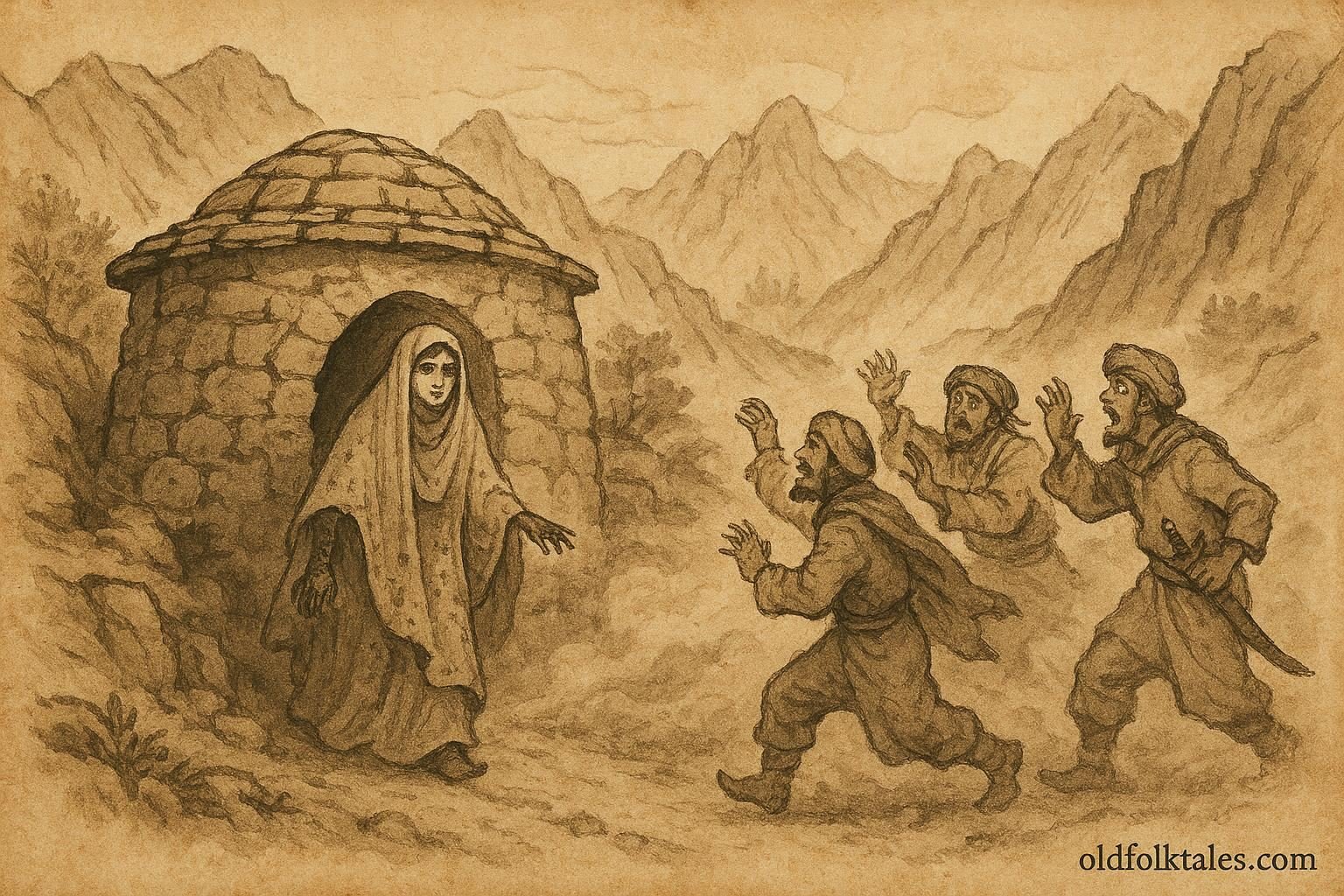
Shireen entered the rough shepherd’s hut, little more than stacked stones and an old wooden door. Inside, her hands moved quickly. She mixed her henna with water from a jar, creating a thick, dark paste. Then, with steady resolve, she poured the henna across her veil, her sleeves, and her arms. The dye soaked into her clothes like deep red stains, resembling blood in the dim interior.
When she was ready, she let out a long, piercing scream.
Qarachor and his men rushed toward the hut, thinking she was being attacked. As Shireen crawled out, her veil dripping with red, she cried out:
“Do not enter! A demon struck me, its hunger is not sated! It waits for the next soul who enters!”
The bandits recoiled instantly.
Superstition was common among raiders of the passes, and Qarachor himself was known to fear spirits and jinn. Seeing Shireen’s apparent wounds, he stumbled backward, shouting for his men to retreat.
“Leave this place!” he shouted. “There is evil within that hut!”
Within moments, the group of fierce bandits fled down the mountain path, abandoning their ambush entirely.
When the dust settled, Shireen calmly wiped her arms, revealing the familiar orange-red glow of henna beneath the false stains.
Her relatives stared at her in awe.
“You saved us,” one of the warriors whispered. “With no weapon except your wits.”
The procession continued on their journey, spirits lifted, their fear replaced with admiration. Shireen rode with quiet dignity, knowing she had prevented the shedding of innocent blood, through courage, intelligence, and quick thinking.
By the time she reached her husband’s village, her tale had already outrun her. People gathered to hear the story of the bride who outsmarted Qarachor of the mountains. They spoke of how she acted with the calm of a leader and the cunning of a seasoned traveller. Her husband welcomed her not just as a bride but as a woman whose wisdom had protected many.
And long after that day, the stone hut in the mountain pass became known as the Bride’s Hut, a reminder to all that strength is not always carried in the hands; sometimes it shines brightest in the mind.
Moral Lesson
The tale of Shireen teaches that bravery and wit can prevent violence, and that women’s wisdom holds power equal to, and often greater than, physical strength.
Knowledge Check
1. Who is the main character in this Afghan folktale?
Shireen, a young bride whose cunning and courage save her wedding procession from a bandit attack.
2. What cultural theme does the story highlight?
The tale celebrates Afghan respect for intelligence, calm thinking, and women’s wisdom in moments of danger.
3. Why does the bandit Qarachor flee the hut?
He believes the hut contains a demon after seeing Shireen covered in henna stains resembling blood.
4. What lesson does Shireen’s cleverness teach?
That intelligence and strategic thinking can resolve threats more safely than violence.
5. What does the pass in the story symbolize?
A place of vulnerability and challenge, representing how wisdom guides people through danger.
6. From which region does this tale originate?
Western Afghanistan, particularly the culture around Herat and the mountain passes linking rural villages.
Source Tradition: Afghan folktales, Herat-region oral storytelling.
Cultural Origin: Afghanistan (Herat / Western Afghanistan)