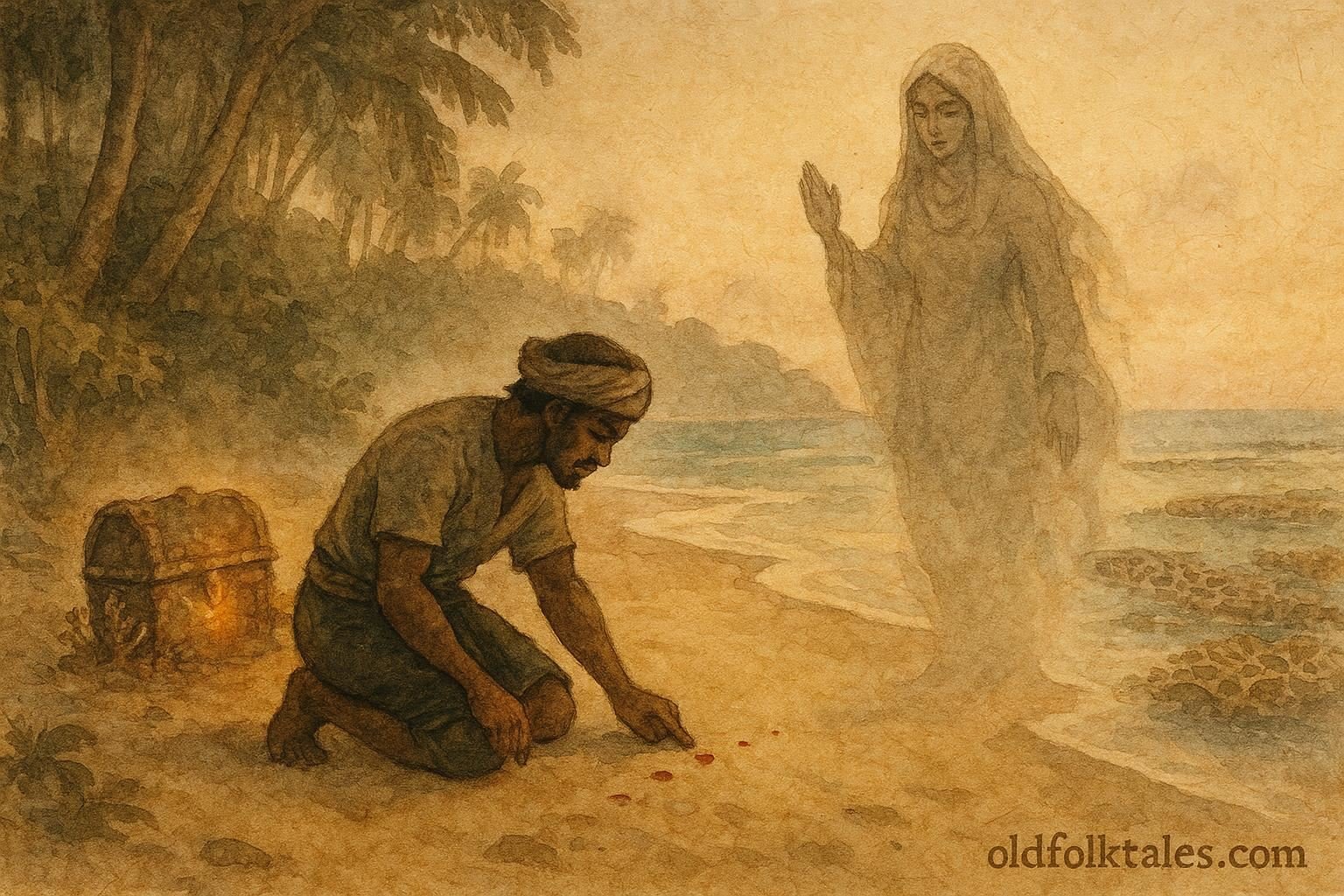
In a small Maldivian village, nestled between white sandy beaches and the vibrant coral reefs, there lived a humble fisherman. One day, while tending to his nets at the edge of the lagoon, he noticed tiny droplets of blood leading from the shoreline into the forest. Curious, yet cautious, he followed the trail, which led to a hidden grove of fruit-bearing trees, their fruits glowing in the golden sunlight.
At the center of the grove lay an ancient chest, bound with seaweed and coral. From it emerged a series of strange occurrences: birds flinched, and the wind seemed to whisper warnings. The fisherman, driven by curiosity and the faint glimmer of treasure, ignored the signs. As he touched the chest, a small cut opened on his finger, and blood dripped onto the sand. Instantly, the environment shifted; the once calm lagoon grew restless, and shadows stretched unnaturally among the trees. Each droplet of blood seemed to multiply, echoing into the wind, marking a warning he failed to heed.
Over the next days, the fisherman’s greed began to unfold. He took more from the grove, plucking golden fruits and rare shells, always leaving behind tiny stains of blood from scratches and cuts. The villagers, noticing his unusual acquisitions, warned him: “Small drops of blood bring great consequences.” But he laughed, believing himself cleverer than the forest spirits and sorcerers of old.
Then came the night when the sea turned black, and the reefs shimmered with a spectral glow. From the depths, a Fanḍita, a mystical sorcerer known for protecting sacred sites, appeared. He spoke softly but firmly: “The blood of carelessness stains the earth and awakens the unseen. Respect the signs, or pay dearly.” Terrified, the fisherman tried to explain, but the Fanḍita waved his hand, and the blood droplets leapt from his wounds, forming spectral chains that bound him in place. He realized, too late, that ignoring small warnings could lead to peril beyond imagination.
By dawn, the fisherman had learned the hard way. The Fanḍita, seeing his repentance, gently removed the chains, leaving the fisherman with a single, enduring scar and a lesson etched into his memory. From that day forward, he shared the story with others, teaching that even the smallest oversight or injury could summon consequences if treated without care. The droplets of blood, small yet potent, had carried the weight of warning across body, earth, and sea, a lesson in mindfulness, humility, and respect for the natural and spiritual world.
Moral Lesson
Even the smallest mistakes or careless acts can have large consequences. Respect signs, heed warnings, and act with mindfulness in both everyday life and interaction with the natural and spiritual world.
Knowledge Check
-
Who is the central character in Small Drops of Blood?
The humble fisherman who discovers the grove and learns the consequences of greed and carelessness. -
What do the small drops of blood symbolize?
They represent early warnings, consequences, and the unseen spiritual effects of human actions. -
What role does the Fanḍita play in the story?
The Fanḍita is a mystical sorcerer who enforces spiritual laws and teaches lessons on caution and respect. -
What is the moral lesson of the tale?
Even minor negligence or greed can lead to serious consequences if warnings are ignored. -
How does this folktale reflect Maldivian culture?
It incorporates island life, reef and forest settings, and the belief in spirits and Fanḍita, showing the interplay of daily life and spiritual awareness. -
Why is this story categorized as an everyday-life morality tale?
It teaches practical and ethical lessons about greed, caution, and respect through relatable village scenarios.
Source: Adapted from Romero-Frias, Folk Tales of the Maldives.
Cultural Origin: Maldives (Maldivian folklore)