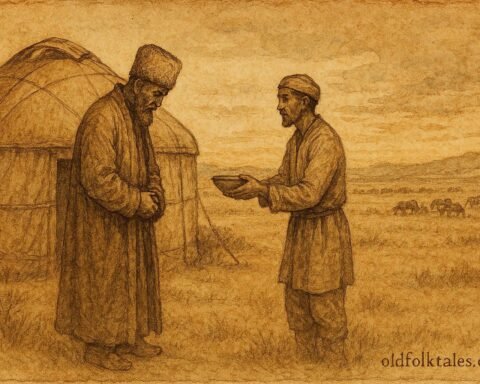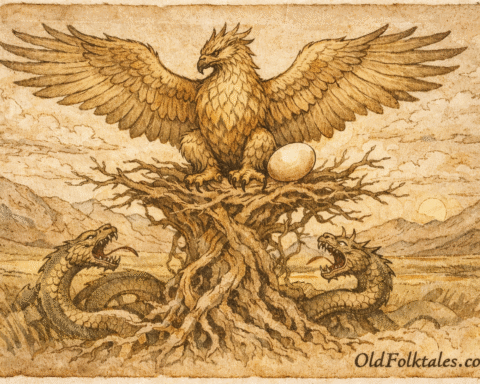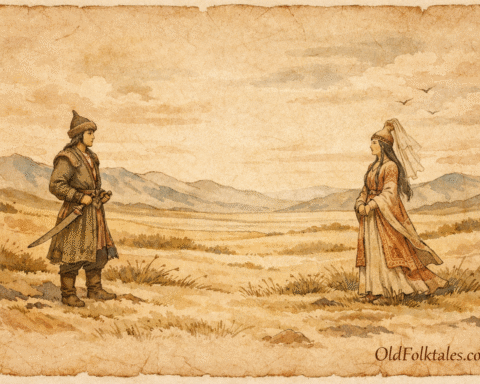
Long time ago, in the wide, windswept steppes of western Kazakhstan, where golden grasses swayed like waves across an endless sea, there lived a young archer named Timur. Though born into humble beginnings, his skill with the bow was unmatched, and his heart was known far and wide for honesty and purity. One night, beneath a canopy of countless stars, Timur dreamed of a radiant bird with feathers of shimmering gold and eyes like twin suns. The bird soared across the heavens, bathing the steppe in a divine glow. Though it spoke without words, its presence filled Timur’s heart with awe, purpose, and a quiet sense of destiny.
The next morning, Timur was summoned to the royal court. The king, a stern yet proud ruler, declared, “This bird of golden fire brings eternal light and prosperity. Whoever brings it to me shall be honored beyond measure.” The young archer was tasked to capture the bird, accompanied by two fellow archers. Though they were skilled, jealousy and ambition often shadowed their hearts, for each wished to claim glory and wealth for themselves.
Explore ancient tales from Thailand, Cambodia, and the Philippines in Southeast Asian Folktales.
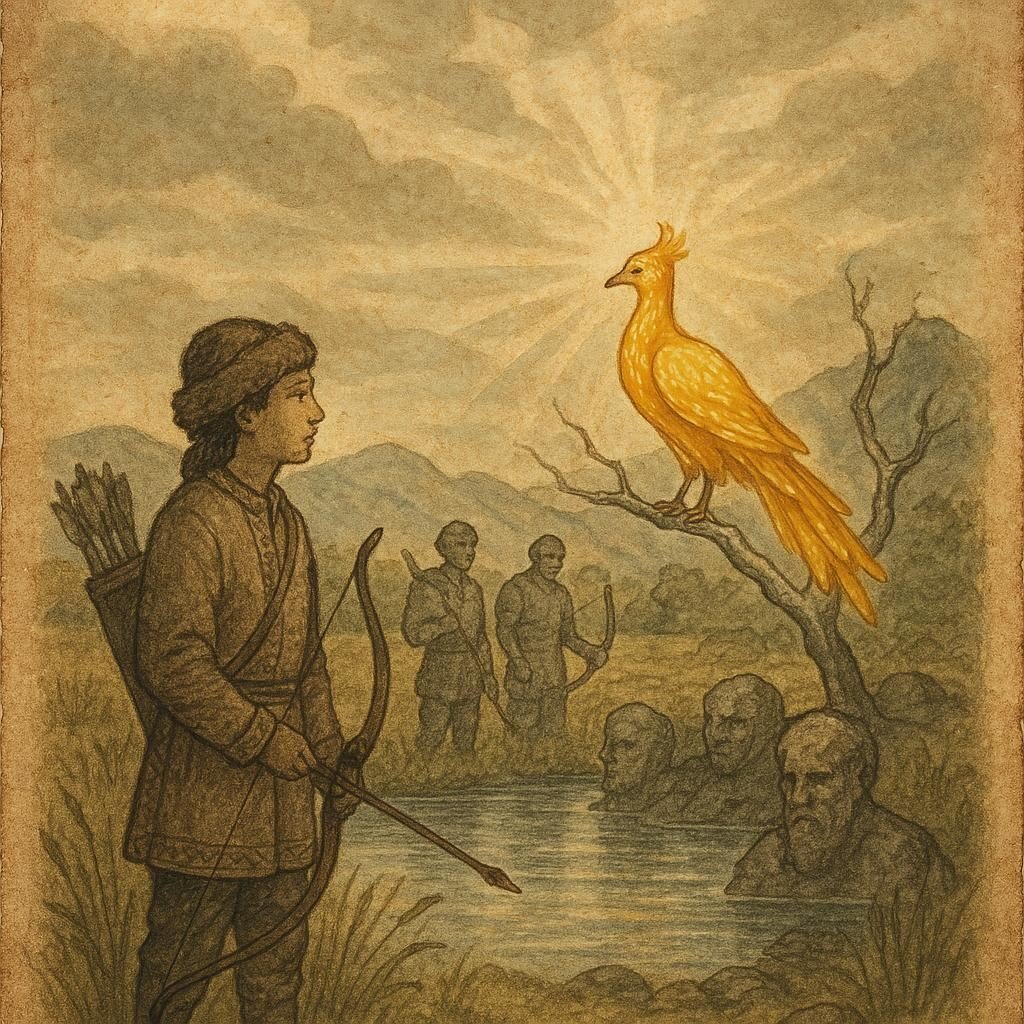
The three set forth at dawn, crossing plains dotted with tamarisk and wildflowers, following the faint glow that only Timur seemed to sense. Days passed, and the companions grew weary. Finally, Timur reached a crystal-clear lake at the edge of a hidden valley, where the legendary bird perched upon a silver branch. Its golden plumage reflected the sun, casting beams like molten fire across the water. The bird looked directly at Timur and spoke in a voice as gentle as the wind: “Take only one feather, for greed will steal that which you hold most dear.”
The two jealous archers, blinded by ambition, attempted to seize the bird with brute force. In an instant, the air thickened with magic. Stone crept over their arms, their legs, and their chests, freezing them forever in silent testament to their envy. Timur, mindful of the bird’s warning, approached slowly, bow lowered and heart steady. He plucked a single golden feather, careful to touch it with reverence. Immediately, the feather glowed with holy fire, warm and radiant, yet gentle to his touch.
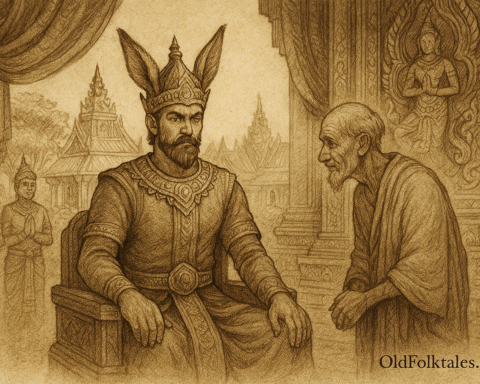
Timur returned to the capital, the golden feather cradled carefully. Word of his success spread like wildfire, and the king summoned him to present his prize. Expecting all to hail the king’s wisdom, Timur laid the feather before him. But as the monarch reached to claim it, the feather’s glow dimmed and flickered. Only in Timur’s hands did it blaze forth, illuminating the throne room with a light so pure it chased shadows from every corner. The king, humbled and amazed, recognized that true merit resides not in position or wealth, but in a heart guided by virtue and restraint.
The people celebrated Timur’s courage and wisdom, and the land prospered under the renewed light. The golden feather remained a sacred symbol of purity, a reminder that obedience, moral restraint, and the courage to resist envy lead to enduring harmony and honor. Timur continued to serve as the king’s advisor, not for power or reward, but for the betterment of his people, revered as both a hero and a moral exemplar.
Moral Lesson
True virtue lies in restraint, honesty, and obedience. Greed and envy lead only to ruin, while purity of heart illuminates paths to honor and prosperity.
Knowledge Check
-
Who is the main character of the folktale?
Timur, the young Kazakh archer known for his skill and pure heart. -
What does the magic bird symbolize?
The golden bird represents virtue, purity, and divine guidance in Kazakh folklore. -
What warning does the bird give Timur?
“Take only one feather, or you will lose what you love most,” teaching restraint. -
What happens to Timur’s jealous companions?
They are turned to stone as punishment for greed and envy. -
What does the golden feather do in Timur’s hands?
It glows with holy fire, symbolizing that true merit shines through virtue. -
Where does this folktale originate?
It is a traditional Kazakh legend from the steppe regions of western Kazakhstan, linked to the Simurgh motif in Turkic mythology.
Source & Cultural Origin
Source: Folk Tales from the Soviet Union: Central Asia and Kazakhstan (Raduga Publishers, 1983).
Cultural Origin: Kazakh oral storytelling tradition, western Kazakhstan.