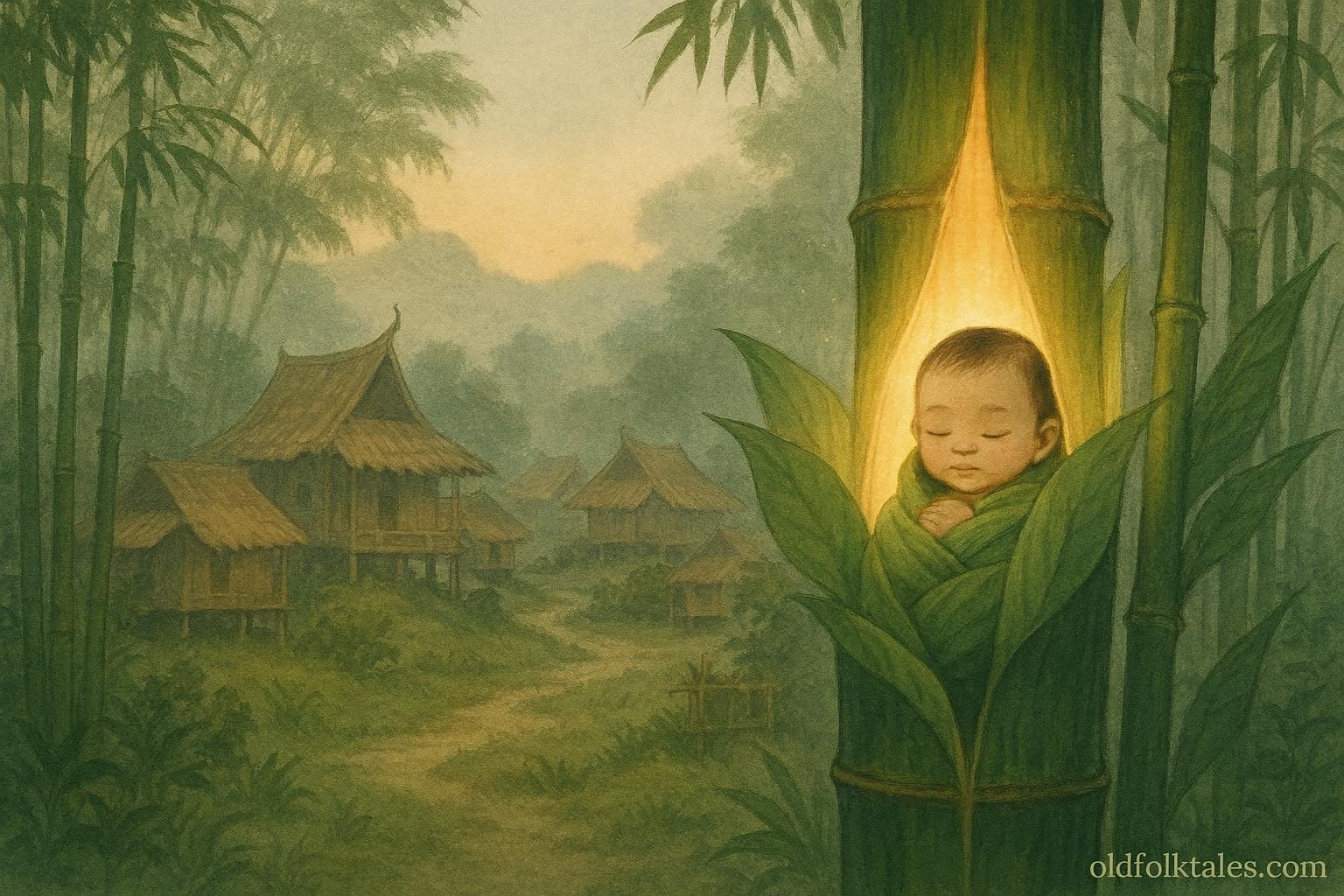
Morning mist clung to the hills like a soft veil, wrapping the bamboo groves in silver silence. Dew gathered on long green leaves, and the distant call of birds echoed through the valleys. In a small hill village nestled between ridges, a humble couple began their day as they always had, with steady hands and unspoken hope.
U Ba Thein and his wife Daw Mya had lived together for many years. Their home was simple, built of wood and woven bamboo, with a hearth that rarely went cold. Though they worked hard and treated others kindly, sorrow followed them quietly. They had no child to carry their name or fill their home with laughter. In the hills, children were blessings not only of joy but of continuity, and the couple felt the absence deeply, though they rarely spoke of it.
Each morning U Ba Thein cut bamboo from the grove above the village. The bamboo provided food, tools, shelter, and trade, and it was respected as a gift from the land. He never cut without offering thanks. Daw Mya would prepare rice and herbs, sometimes humming old songs passed down from her mother, songs that spoke of spirits dwelling in leaves and wind.
Discover more East Asian Folktales from the lands of dragons, cherry blossoms, and mountain spirits.
One morning, as sunlight broke through the mist, U Ba Thein heard a sound that was not wind or bird. It was a soft cry, fragile and trembling. He followed it deeper into the grove until he reached a young bamboo stalk, split open from root to node. Inside, wrapped in pale green leaves, lay a baby girl.
She was warm and breathing, her skin smooth as polished rice, her eyes closed as if sleeping. U Ba Thein stood frozen, heart pounding. No footprints marked the ground. No cloth or basket lay nearby. Only the bamboo, gently swaying, as though it had exhaled.
He lifted the child carefully and ran home. Daw Mya gasped when she saw the baby, then wept, not from fear but from a joy so sudden it shook her body. They bathed the child, fed her rice water, and wrapped her in cloth. When she opened her eyes, they were calm and deep, reflecting light like still water.
The villagers gathered when they heard the news. Some whispered of spirits. Others feared misfortune. The village elder examined the bamboo stalk and declared that no harm lingered. He reminded them of old tales in which blessings arrived unannounced and tested the hearts of those who received them.
The couple named the child Hnin Wai, meaning gentle fragrance. From the moment she entered their home, peace followed. Arguments softened. Illness eased. Crops grew fuller without explanation. The bamboo grove itself flourished, sending up strong shoots even during dry weeks.
Hnin Wai grew quickly but quietly. She rarely cried and often smiled at nothing at all. She seemed to listen to the wind and watch the leaves as if understanding them. When she walked, birds did not flee. When she laughed, the sound carried gently, never sharp or loud.
As years passed, the village prospered. Travelers commented on the calm of the place. Hunters found game without waste. Rain came when needed. Yet Hnin Wai never sought praise. She helped her parents, fetched water, swept the hearth, and bowed to elders with sincere respect.
One year, greed crept into the hills. Outsiders heard of the fertile land and came to cut bamboo recklessly. They ignored rituals and took more than needed. Streams grew cloudy. The grove thinned. Unease returned.
Hnin Wai walked alone into the bamboo one evening. The villagers searched for her when she did not return. At dawn, they found her standing where she had first been discovered. The bamboo around her glowed softly in the early light.
She spoke then, her voice calm but clear. She said the land gave life when treated with humility. She said blessings fade when taken without gratitude. She asked them to restore balance, not for her sake but for their own.
As the sun rose fully, Hnin Wai stepped back into the bamboo stalk. The leaves closed gently around her, leaving no trace but a lingering warmth in the air. The grove rustled softly, as though breathing out.
The villagers stood in silence. No one cried out. They understood that the gift had returned to its source.
From that day, the hills regained harmony. The bamboo grew strong again. The couple lived their remaining years respected and cared for by all. Children were taught the story of the bamboo princess, not as a miracle to demand, but as a reminder that blessings come quietly and stay only where humility lives.
Even now, villagers say that when the wind moves gently through the bamboo, it carries a familiar fragrance, and those who listen closely feel a deep calm settle in their hearts.
Moral Lesson
Blessings are not possessions to claim but responsibilities to honor. When gifts are met with humility, respect, and gratitude, they bring harmony to individuals and communities alike. Greed and carelessness cause even the greatest miracles to fade, while quiet respect allows peace to endure.
Knowledge Check
- Why were U Ba Thein and Daw Mya respected despite their sorrow?
They lived humbly and treated others kindly - Where was the child discovered?
An’ Inside a split bamboo stalk - How did Hnin Wai affect the village?
She brought peace and prosperity - What caused imbalance in the hills?
Greed and reckless harvesting - Why did Hnin Wai return to the bamboo?
To restore balance and remind villagers of humility - What lesson did the villagers pass to their children?
That blessings remain only where gratitude exists
Source
Adapted from Myanmar Traditional Oral Literature Documentation Project, 2011.
Cultural Origin
Hill region Burmese village folklore.