In a small Levantine village nestled between olive-covered hills and the long shadow of an ancient caravan road, lived a widowed mother and her only child, a bright and spirited boy named Sami. Though young, Sami possessed a quick mind and a talent for observing what others missed, a trait that often brought a knowing smile to his mother’s face.
Their village was peaceful, but travelers often passed through, and not all who came carried good intentions. Rumors had spread of a band of unruly youths from a nearby tribe who mocked strangers and occasionally harassed lone children on the road. For this reason, Sami’s mother often worried. He was her only son; she feared anything that might bring harm or shame to him.
One morning, she sent him on an errand to deliver bread and herbs to an elderly aunt living at the far end of the village. Concerned for his safety along the busier midday road, she made an unusual decision.
“Sami,” she said gently, “today you will wear your cousin’s dress. Those boys never trouble girls, they boast too much to bother them.”
Sami laughed at first, thinking it a joke, but seeing her worried eyes, he agreed. Soon he found himself wrapped in a long embroidered dress, a scarf draped neatly over his head. The disguise was simple but convincing. His mother watched him leave with both confidence and worry.
As Sami walked through the village, he discovered the disguise changed more than his appearance, it altered the way people treated him. Women smiled warmly and greeted him as if he were one of their daughters. Elderly men nodded politely. The group of troublesome boys passed him by with barely a glance. The experience felt strange, almost like stepping into someone else’s life.
When he reached his aunt’s home and delivered the goods, she immediately recognized him beneath the scarf. She chuckled and said, “Your mother is wise. But remember, my son, disguises reveal as much as they hide.”
On his way back, an unexpected problem arose. The village headman’s son, Kareem, a boastful but not cruel young man, saw Sami and mistook him for a visiting girl. He rushed forward, eager to show hospitality.
“Where is your family from?” he asked with exaggerated charm. “Do you need help carrying anything? I can escort you through the market.”
Sami tried to avoid him, but Kareem insisted, proudly announcing that no girl should walk alone. Before he knew it, Sami was being shown around the market as if he were an honored guest. Women giggled approvingly at Kareem’s sudden politeness, surprised by his unusual generosity.
But soon the teasing began. Some young men noticed Kareem’s behavior and whispered to each other:
“Look at him! One pretty scarf and he loses his senses!”
“Let him find out who she really is!”
Kareem, irritated by their laughter, grabbed Sami’s arm and declared loudly, “You all are just jealous because she prefers my company!”
Sami’s face burned behind the scarf. The situation was growing humiliating, and the disguise had gone far beyond what he or his mother had intended. He gently pulled his arm free and murmured, “I should go home.”
But before he could leave, one of the mocking youths shouted, “Let us see her face then!”
The crowd drew closer. Kareem, now feeling challenged, lifted a hand as if to remove the scarf.
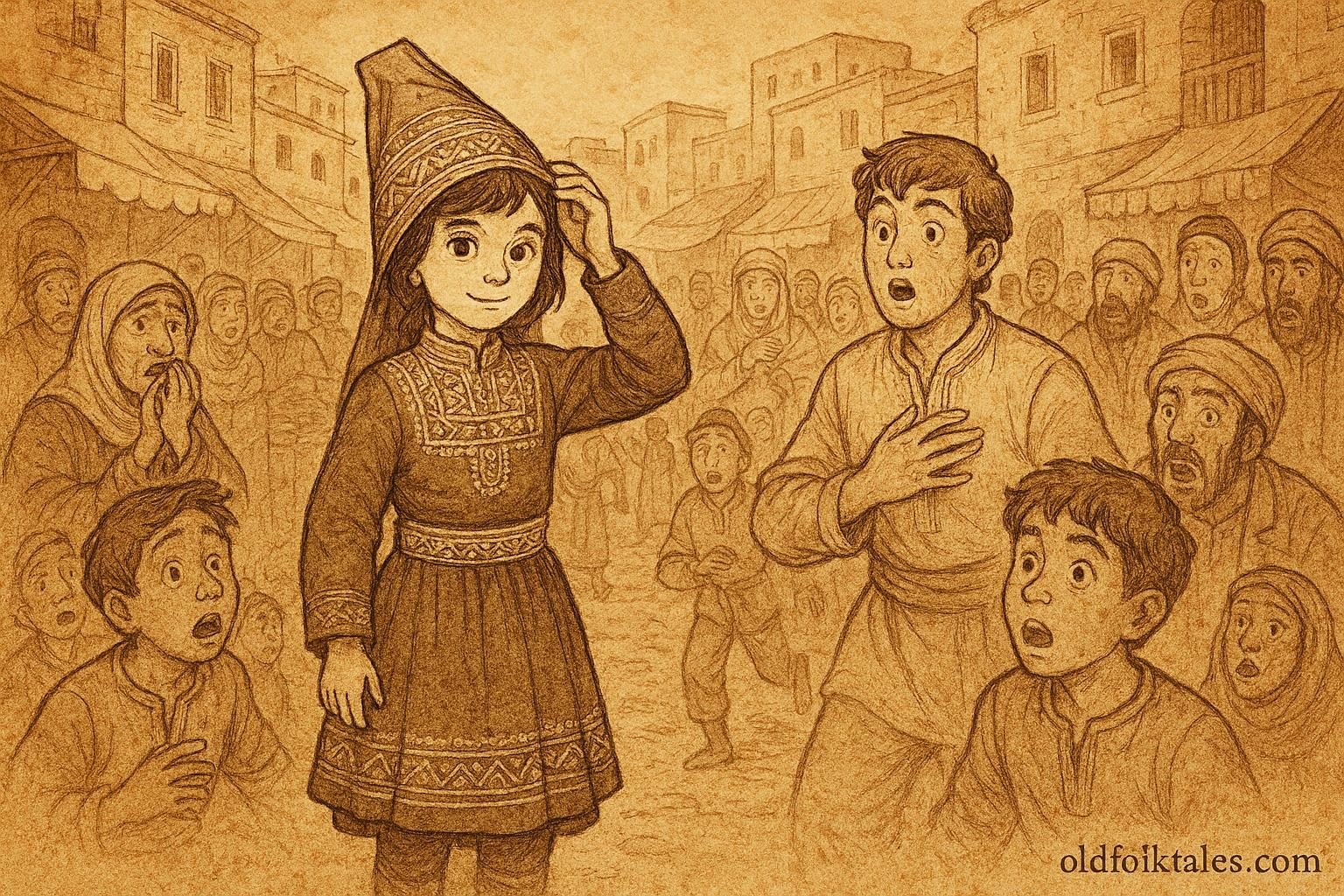
Sami froze. He knew revealing the truth in front of everyone might embarrass Kareem badly. But if he resisted, things might become worse. So, with a calmness that surprised even himself, Sami stepped back and removed the scarf.
A stunned silence spread across the market. Then came a burst of shocked laughter.
“It’s Sami!” someone shouted.
“The headman’s son was escorting a boy!”
Kareem’s face turned crimson.
But before humiliation could turn to anger, Sami raised his hands and spoke clearly:
“I never meant to deceive anyone. My mother asked me to dress this way so I could walk safely. Kareem meant only to show kindness, and kindness is no reason for mockery.”
His simple words carried unexpected weight. The teasing youths quieted. Kareem, still embarrassed, looked at Sami with a mixture of annoyance and reluctant respect.
Finally, the village headman himself approached, having heard the commotion. He listened carefully, then addressed the crowd.
“Let this be a lesson,” he said. “Kindness is honorable, whether shown to a boy or a girl. And ridicule is shameful, whether directed at a son of a headman or the poorest child.”
Turning to Sami, he added, “You showed courage and honesty today, and you spared my son needless shame.”
Kareem exhaled in relief. “Sami,” he said quietly, “you have more bravery than I showed wisdom.”
From that day forward, the incident became a gentle reminder within the village, a story parents told their children about humility, kindness, and the unexpected truths revealed through disguise. And Sami, though he never again wore his cousin’s dress, carried the lesson with him into adulthood.
Moral Lesson
True character is revealed not by appearance, but by actions. Humility, honesty, and the courage to speak truth with kindness can turn embarrassment into understanding and ridicule into wisdom.
Knowledge Check
1. What lesson does “The Boy in Girl’s Dress” teach in Syrian folklore?
It teaches humility, empathy, and the importance of judging others by their character rather than appearance.
2. Why does Sami wear a girl’s dress in the story?
He does so for safety on the road, reflecting a traditional concern in Levantine communities.
3. How does the disguise create conflict in the tale?
It leads to mistaken identity, social misunderstanding, and public embarrassment in the village market.
4. What does Kareem’s reaction symbolize?
His confusion and pride highlight social expectations surrounding gender and honor in Syrian village life.
5. Why is the story culturally meaningful in Arab folklore?
It reflects values of modesty, community reputation, and how quick judgments can be misleading.
6. How does the story resolve the tension created by the disguise?
Through Sami’s honesty and the headman’s wisdom, turning ridicule into a moral teaching moment.
Source
Adapted from the Syrian folktale description “The Boy in Girl’s Dress,” referenced in Arab Folktales by Inea Bushnaq (Internet Archive).