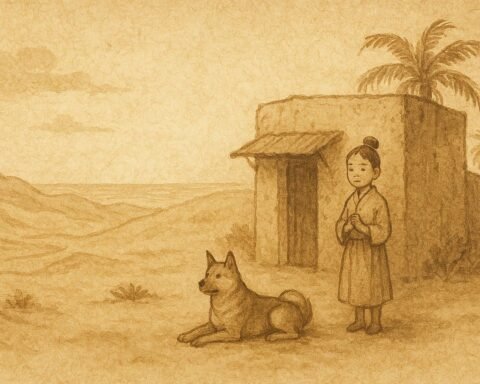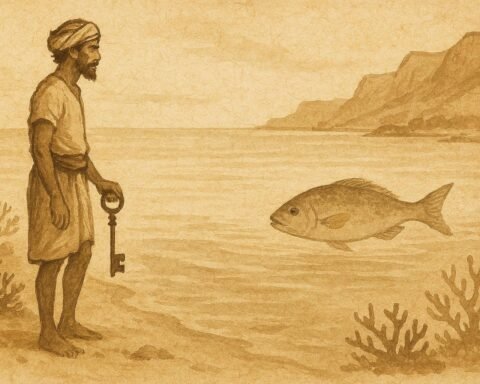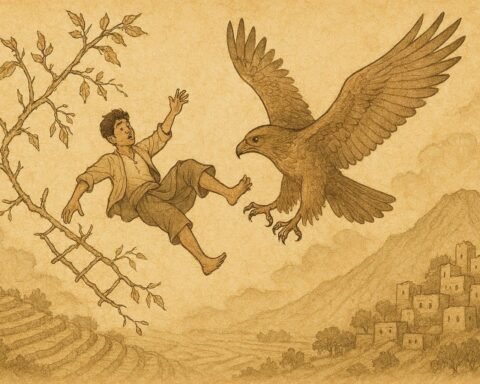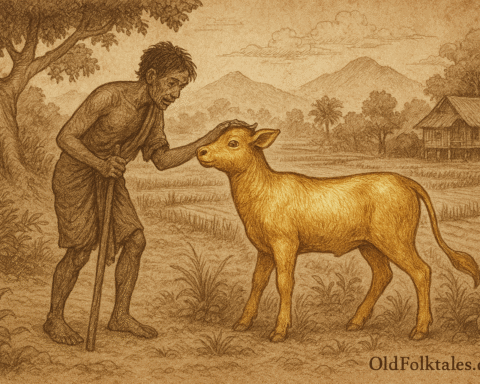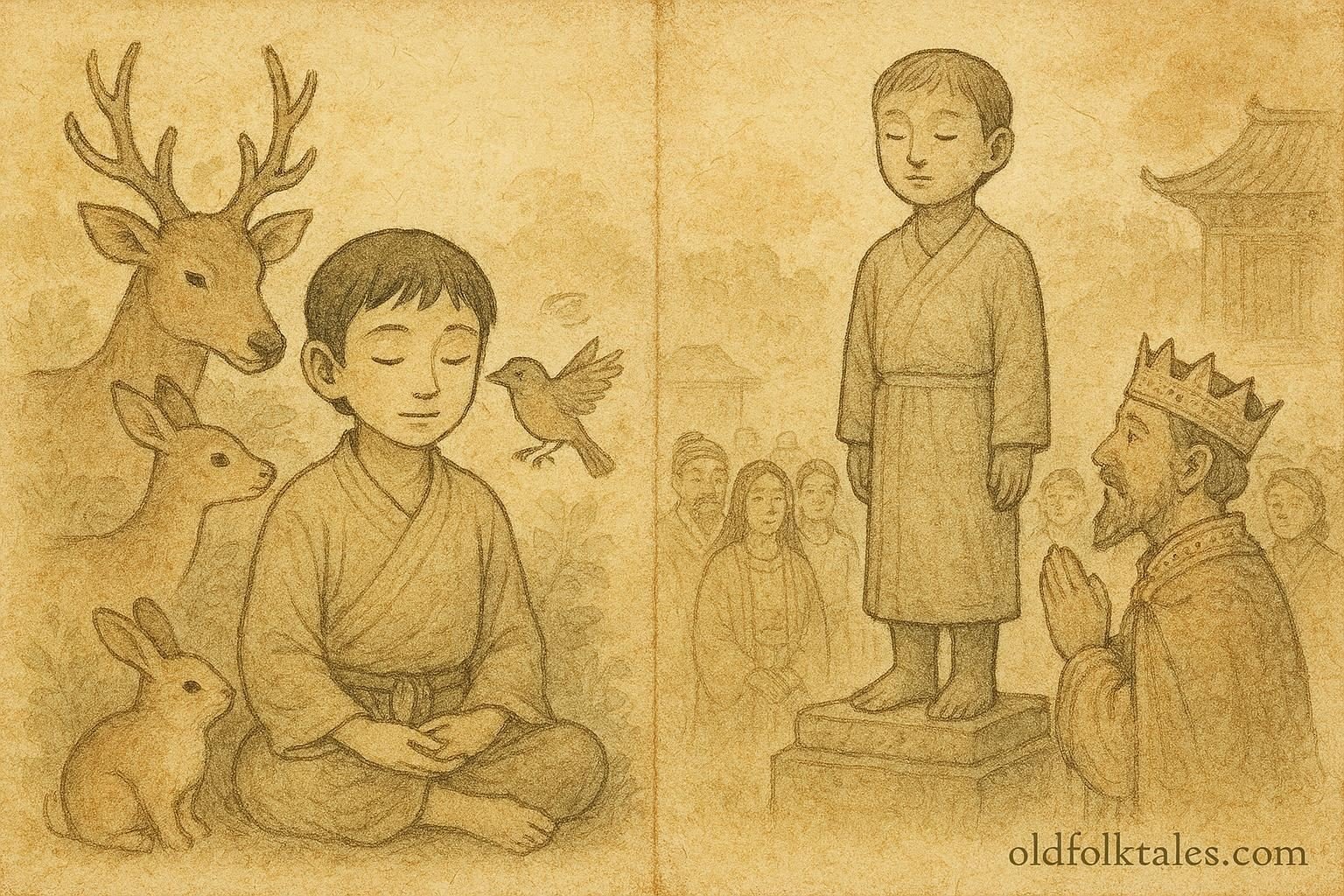
In a land shaped by desert winds and ancient paths, there lived a boy known not for wealth or lineage, but for his piety and compassion. From early childhood, he showed care for all living creatures. He rescued birds caught in nets, returned lost animals to their owners, and gave water to beasts weakened by heat and thirst. His actions were quiet and sincere, offered without expectation of reward. Those who knew him said his heart was guided by reverence and restraint.
One day, after saving several animals from harm, the boy was granted an extraordinary gift. Through divine favor, he was given the ability to understand the language of animals. He could hear their speech as clearly as human words and grasp their concerns, warnings, and wisdom. Yet this gift was bound by a strict covenant. He was warned that he must never reveal the source of his knowledge or the means by which he understood animal speech. If he broke this oath, he would immediately turn to stone.
The boy accepted the condition without hesitation. He understood that sacred gifts carried sacred limits. He kept the secret carefully, allowing no hint of its origin to escape his lips.
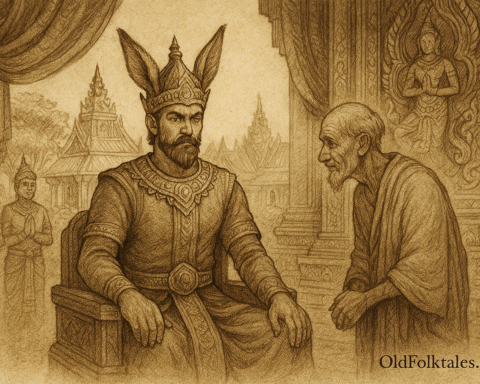
As time passed, his ability brought him recognition. When disputes arose that no human counsel could resolve, he listened quietly to the animals involved and offered guidance shaped by truth. His insight was precise and wise, and his reputation spread. Before long, the king summoned him to court and appointed him an advisor. Though young, he spoke with calm authority, and his counsel brought prosperity and stability to the kingdom.
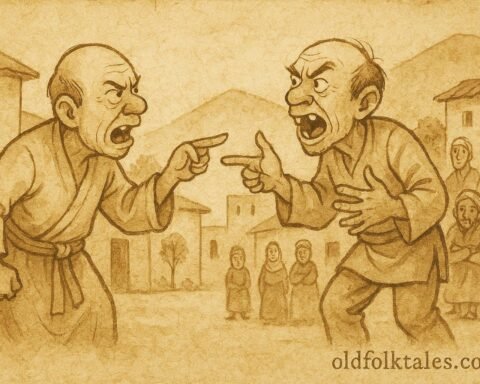
Despite his success, envy grew around him. Others at court, resentful of his influence, accused him of deception and sorcery. They claimed he possessed forbidden knowledge and demanded that he reveal how he gained it. The boy refused, knowing the price of betrayal. His silence was taken as guilt.
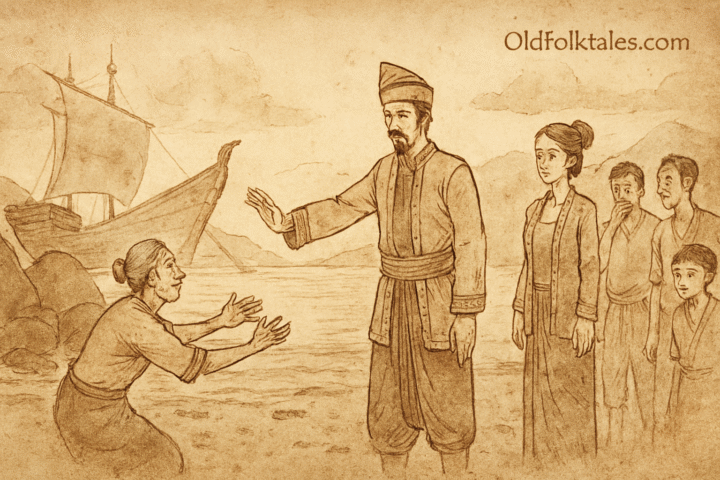
He was arrested and brought before the king. Though the king respected him, the pressure of public accusation and fear of unrest forced a judgment. The boy was sentenced to death unless he confessed the truth behind his powers.
On the day of execution, the boy stood before the gathered crowd. He knew that remaining silent would lead to death under false accusation, while speaking the truth would break his covenant. He reflected deeply and chose neither self preservation nor concealment, but absolute truth. He revealed the source of his gift, knowing fully what the consequence would be.
As his final words left his mouth, his body stiffened. His limbs hardened, his breath ceased, and before the eyes of the king and the people, he turned entirely to stone.
The crowd fell silent. The king, witnessing the transformation, understood at once the depth of the boy’s integrity. He realized that the boy had chosen truth over life itself and had honored a sacred covenant even unto destruction. Struck with awe and remorse, the king ordered that the stone statue be preserved and placed in a place of honor.
There it stood, not as a warning, but as a testament. The statue reminded all who saw it that truth bound by divine promise is greater than earthly survival, and that integrity carries a weight beyond reward.
Moral Lesson
This folktale teaches that sacred covenants demand unwavering faithfulness, and that absolute truth may require profound sacrifice. Integrity, once proven, transcends life itself.
Knowledge Check
1. Why was the boy granted the ability to understand animals?
Because of his piety and compassion toward living creatures.
2. What condition was attached to the gift?
He must never reveal the source of his knowledge or he would turn to stone.
3. How did the gift affect his life?
It made him a respected advisor to the king and brought him prosperity.
4. Why was the boy accused?
Others envied his wisdom and suspected him of forbidden knowledge.
5. What choice did the boy face at his execution?
To remain silent and die falsely accused or speak truth and break the covenant.
6. What did the king do after witnessing the transformation?
He honored the boy by enshrining his stone form.
Source
Adapted from Yemenite Jewish folktales archived in the Israel Folktale Archives, IFA 4017. Collected from Sarah Friedman, born in Yemen, recorded in Rosh HaAyin, Israel, 1960. University of Haifa.