In the sweeping, wind-swept steppes of Kazakhstan, where the horizon seems endless and the sun turns the grasses into waves of gold, animals roamed freely under the vast sky. Among them was a proud camel, towering and strong, whose confidence in his size and power made him boastful. He believed no creature could match his endurance or carry burdens as well as he could, and he often flaunted his strength to anyone who would watch.
Not far away, a small, unassuming goat grazed quietly. Tiny in stature and modest in demeanor, he drew no attention to himself. While the camel strutted and preened, the goat moved with care and alertness, watching the plains and learning from every sound and shadow.
The camel loved to mock the goat. “Look at you, little one,” he would bellow. “You cannot carry heavy loads, and you cannot walk for days across the endless steppe. You are nothing compared to me!” The goat would simply lower his head and chew on the sweet grass, saying nothing, for he knew that pride often led to folly.
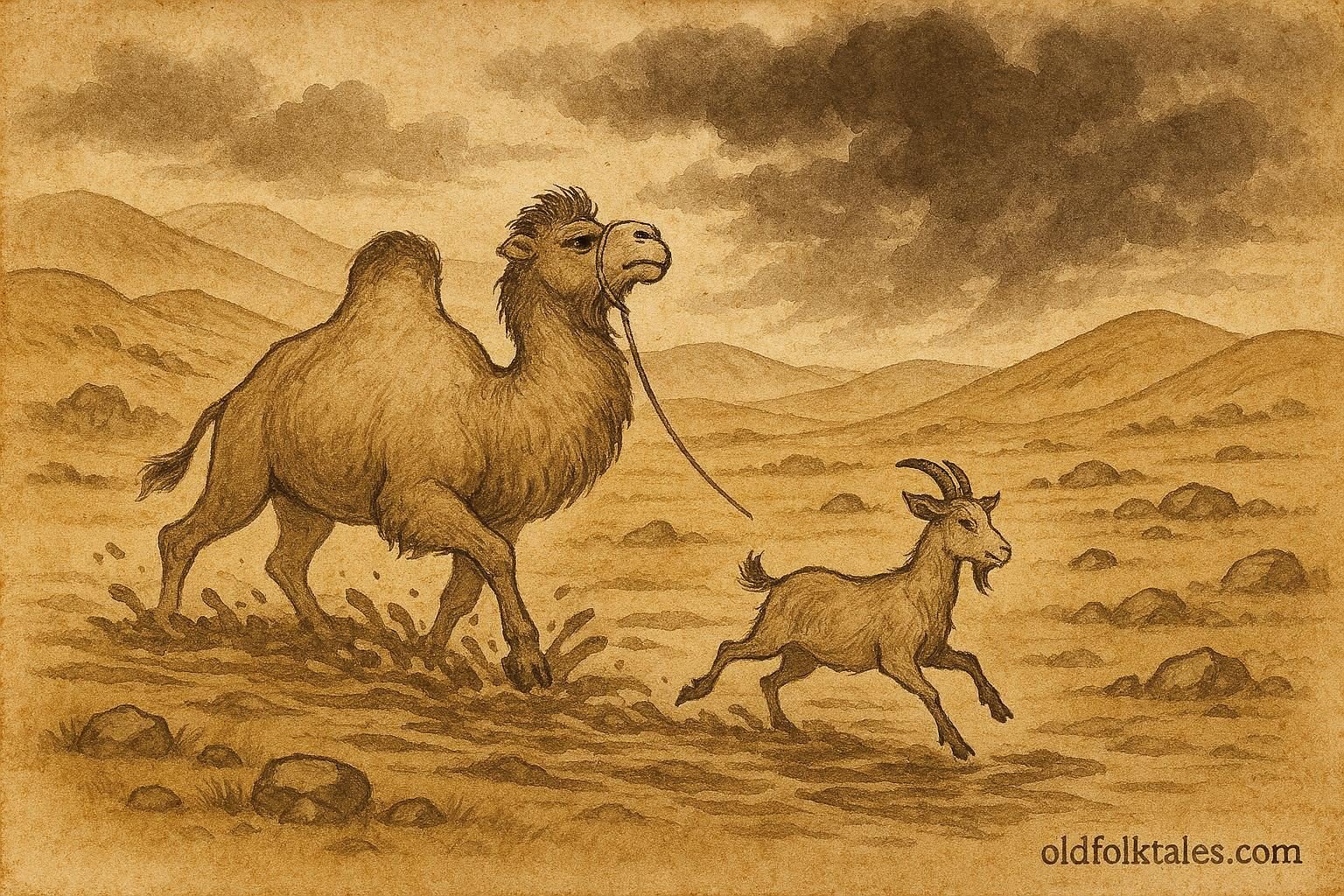
One summer afternoon, the camel was called to help the herders carry a large bundle of supplies across the open steppe. He strutted confidently, eager to show off his strength. “Watch me!” he said to the goat. “No storm or river can stop me!” The goat followed quietly at a distance, patient and careful, stepping lightly over the rocks and soft soil.
As they journeyed, dark clouds began to gather on the horizon, and the wind picked up, stirring the grasses into waves that seemed almost alive. The herders hurried the camel along, pressing him to move faster, while the goat remained steady and observant, noting the hidden crevices and uneven ground. Suddenly, a fierce storm struck. The wind howled, carrying dust and hail, and the ground became slippery and treacherous.
The camel, proud and unthinking, stumbled into a deep ditch hidden by the tall grass. His heavy weight made it difficult to free himself, and panic overtook his pride. The goat, nimble and alert, quickly moved around the ditch, guiding the camel with bleats and nudges toward a safer path. Using his small size and agility, the goat found a narrow passage that allowed both him and the camel to escape the danger, leading them to shelter behind a rocky ridge.
When the storm subsided, the camel hung his head in shame. He had underestimated the value of patience, observation, and humility. The goat looked at him calmly, and in that quiet gaze, the camel understood that strength alone did not ensure survival. Cleverness, nimbleness, and a steady mind were equally important.
From that day on, the camel no longer mocked the goat. Instead, he walked with more respect, learning to appreciate the unique strengths of others. The goat, though still modest and quiet, had proven that even the smallest and humblest creatures could possess wisdom and courage that surpassed brute force. Together, they traversed the steppe, each complementing the other, a living testament to the virtues of patience, humility, and respect.
Moral Lesson
This folktale teaches that pride and arrogance can blind us to hidden strengths, while humility, patience, and cleverness allow even the smallest to succeed. Every individual has unique gifts, and recognizing them leads to mutual respect and harmony.
Knowledge Check
-
Who are the main characters in the story?
The proud camel and the humble goat are the main characters, each representing contrasting traits. -
What qualities does the camel display at the start?
The camel is proud, boastful, and overconfident in his strength.
-
How does the goat demonstrate his value?
Through patience, observation, and cleverness, the goat navigates dangers and helps the camel escape the storm.
-
What does the storm symbolize?
The storm represents challenges in life that test strength, patience, and wisdom.
-
What cultural lesson does this tale convey about animals in Kazakh folklore?
Animals are portrayed with human-like qualities to teach virtues such as humility, cleverness, and respect.
-
What is the key moral lesson of the story?
Humility, patience, and recognizing the strengths of others are more valuable than arrogance or brute force.
Source: Turkic steppe animal tales; included in Kazakh fable collections.
Cultural Origin: Kazakhstan (Kazakh folklore)