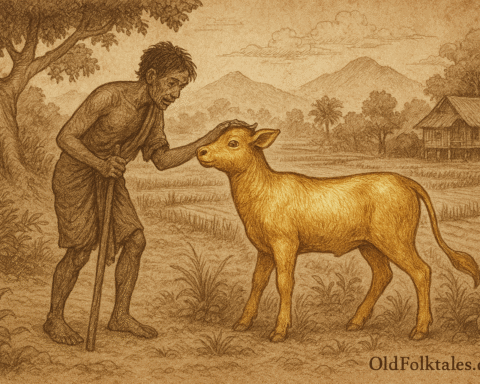
In the verdant rice fields of Cambodia, where the mighty Mekong River wound its way through fertile plains and ancient temples rose above the jungle canopy, there lived a poor farmer and his daughter named Sophea. Their home was a modest bamboo house on stilts, surrounded by green paddies that stretched toward the horizon. Though they possessed little wealth, Sophea’s father had given her something more valuable than gold: he had taught her to read, to think, and to question the world around her.
While other village girls spent their days learning to weave silk and prepare elaborate meals, Sophea would sit beneath the shade of a sugar palm tree, reading whatever scrolls and texts she could borrow from the village temple. The monks noticed her keen mind and began to share their knowledge with her, teaching her riddles, philosophy, and the art of clear reasoning. Her father, despite being mocked by neighbors for wasting time on a girl’s education, encouraged her curiosity with pride.
Click to read all East Asian Folktales — including beloved stories from China, Japan, Korea, and Mongolia.
“Knowledge is a treasure that cannot be stolen or lost,” he would tell her as they worked together in the fields. “Wisdom will serve you better than beauty, and intelligence will open doors that status cannot.”
News spread throughout the kingdom that the young King Ponhea, newly crowned and eager to prove himself a wise ruler, had issued an unusual proclamation. He invited all subjects, regardless of birth or station, to present themselves at the royal palace in Angkor if they believed they possessed exceptional wisdom. The king would pose riddles and moral questions, and those who answered well would receive rewards and recognition.
Wealthy merchants prepared their sons, dressing them in fine silk sampots and coaching them in courtly manners. Noble families sent their most educated children, confident that their privileged upbringing would ensure success. But when Sophea’s father heard the proclamation, he looked at his daughter with knowing eyes.
“You should go,” he said simply.
Sophea hesitated, looking down at her simple cotton clothes and calloused hands. “Father, I am just a farmer’s daughter. The king seeks wise counselors from noble families.”
Her father shook his head gently. “The king seeks wisdom, not noble blood. Wisdom dwells in the mind, not in silk garments or golden jewelry. Go and show him what you have learned.”
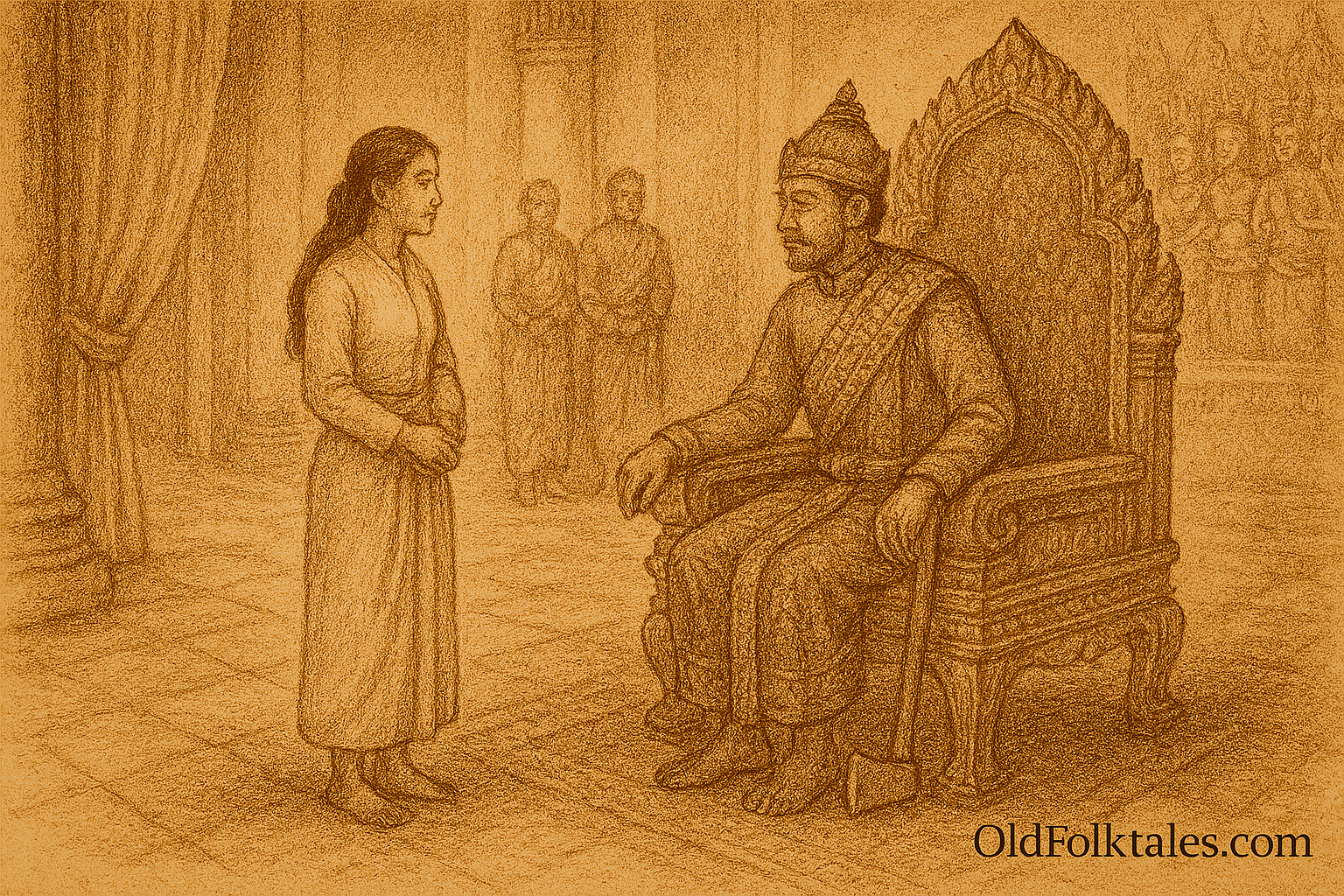
And so Sophea made the long journey to the magnificent palace, its golden spires gleaming in the tropical sun, its walls adorned with intricate carvings of apsara dancers and mythical creatures. She arrived dusty and travel-worn, standing among dozens of well-dressed candidates in the great audience hall. Courtiers whispered and pointed at the poor girl who dared present herself alongside their children.
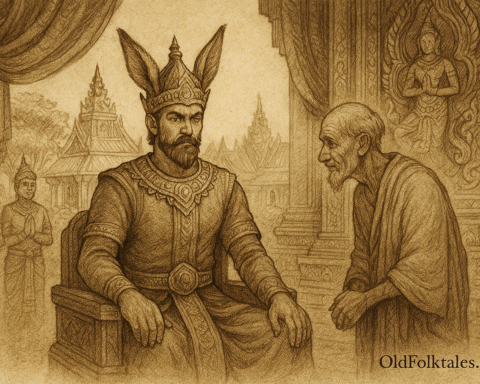
King Ponhea sat upon his throne, young but carrying himself with careful dignity. His eyes were intelligent and searching as they moved across the assembled crowd. “I seek true wisdom,” he announced, his voice echoing through the chamber. “Not flattery, not memorized texts, but genuine understanding. I will pose questions, and those who answer truthfully and wisely will remain. Those who fail will depart.”
The first question was a riddle: “What is more powerful than the gods, more evil than demons, the poor possess it, the rich need it, and if you eat it, you will die?”
Many candidates offered elaborate answers involving precious gems, magical herbs, and ancient curses. One by one, they were dismissed. When the king’s gaze finally fell upon Sophea, she met his eyes steadily and answered with quiet confidence: “Nothing, Your Majesty. Nothing is more powerful than the gods, nothing is more evil than demons, the poor have nothing, the rich need nothing, and if you eat nothing, you will die.”
A smile touched the king’s lips. “Remain,” he said.
The questions continued, growing more complex. “If you had to choose between saving a kingdom through a single lie or watching it fall while telling the truth, what would you do?”
Many answered quickly, choosing one extreme or the other. But Sophea took her time, her brow furrowed in thought. “Your Majesty, this question has no perfect answer, which is perhaps why you ask it. A wise ruler must understand that truth and responsibility sometimes conflict. I would seek a third path: find a way to speak truth that serves the kingdom’s needs, or accept the consequences of honesty while working to rebuild what falls. The easy lie corrupts the liar and sets precedent for future deceptions. The kingdom built on lies is already fallen, though it may not yet know it.”
The king leaned forward, his interest clearly kindled. Around the hall, others had been dismissed until only Sophea and two nobleman’s sons remained.
“Final question,” King Ponhea announced. “What is the difference between a king and a tyrant?”
The first nobleman’s son answered confidently: “A king is born to royal blood and ordained by heaven. A tyrant seizes power through force.”
The second added: “A king rules with strength and decisiveness. A tyrant is weak and indecisive.”
Both answers seemed reasonable to the assembled court. Then Sophea spoke, her voice calm but firm.
“Your Majesty, the difference lies not in birth or strength, but in purpose and method. A king serves his people, even when it requires personal sacrifice. A tyrant serves himself and demands his people sacrifice for him. A king listens to voices of the humble and the great alike. A tyrant hears only those who praise him. A king builds prosperity that outlasts his reign. A tyrant extracts wealth that dies with him. The same man, on the same throne, can be either, depending on the choices he makes each day.”
Silence filled the great hall. The courtiers held their breath. King Ponhea rose from his throne and descended the steps until he stood directly before the farmer’s daughter.
“You understand what many who are born to power never learn,” he said. “Wisdom is not inherited with wealth or title. It is cultivated through thought, observation, and honest engagement with difficult truths.” He gestured to his advisors. “This young woman will join my council. Her counsel will be valued equally with any minister or noble.”
The court erupted in whispers of shock and admiration. The two nobleman’s sons departed with barely concealed resentment, but Sophea bowed deeply, her heart swelling with gratitude not for the position but for the recognition of what she had always known: that wisdom had worth regardless of its vessel.
From that day forward, Sophea served King Ponhea as a trusted advisor. She never forgot her humble origins or her father’s teachings. When she counseled the king, she spoke not with the voice of nobility but with the voice of the common people she had come from, reminding him always of the true measure of leadership. Her presence in the palace inspired other families, both poor and wealthy, to educate their daughters as well as their sons.
And King Ponhea, true to his word, valued wisdom wherever he found it, knowing that the most profound insights often came from the most unexpected sources.
Click to read all Southeast Asian Folktales — featuring legends from Thailand, Indonesia, Vietnam, and the Philippines.
The Moral Lesson
This tale teaches us that true worth lies in wisdom and character, not in wealth, birth, or social status. Intelligence and education are treasures available to all who pursue them earnestly, and a just society recognizes merit regardless of gender or class. The story emphasizes that wisdom requires careful thought, honest reflection, and the courage to speak truth even to power. It reminds us that leaders who seek genuine wisdom rather than flattery create stronger kingdoms, and that the most valuable advisors are those who understand both the struggles of common people and the complexities of leadership.
Knowledge Check
Q1: Who was Sophea and what made her different from other village girls?
A1: Sophea was a poor farmer’s daughter in Cambodia who, unlike other village girls learning traditional domestic skills, spent her time reading and studying. Her father encouraged her education despite social mockery, and the village monks taught her riddles, philosophy, and reasoning, cultivating her exceptional intelligence and wisdom.
Q2: What was King Ponhea’s purpose in issuing his royal proclamation?
A2: King Ponhea, a young and newly crowned ruler eager to prove himself wise, issued a proclamation inviting all subjects regardless of birth or social status to present themselves at the palace if they possessed exceptional wisdom. He wanted to find genuine wise counselors through riddles and moral questions rather than relying solely on nobles and the privileged.
Q3: What was Sophea’s answer to the riddle about what is more powerful than gods?
A3: Sophea answered that “nothing” was more powerful than the gods, more evil than demons, possessed by the poor, needed by the rich, and deadly if consumed. Her simple but profound answer demonstrated her ability to think clearly and recognize that the riddle’s solution lay in the concept of absence itself.
Q4: How did Sophea’s final answer about kings and tyrants demonstrate her wisdom?
A4: Sophea explained that the difference between a king and a tyrant lies in purpose and method, not birth or strength. She articulated that a king serves his people, listens to all voices, and builds lasting prosperity, while a tyrant serves himself, hears only praise, and extracts wealth. Her answer showed deep understanding of leadership’s moral dimensions and practical application.
Q5: What does this Cambodian folktale teach about gender and education?
A5: The tale promotes gender equality in education and opportunity, showing that intelligence and wisdom are not limited by gender. It challenges traditional gender roles by depicting a girl whose education proves more valuable than conventional domestic training, and demonstrates that societies benefit when they educate and value both daughters and sons equally.
Q6: What cultural values does this story reflect about Khmer society?
A6: The story reflects Cambodian cultural values emphasizing wisdom over material wealth, merit over inherited status, and the importance of just leadership that serves the people. It shows the Buddhist influence of valuing knowledge and right action, while also promoting social mobility and the idea that a wise ruler should recognize and reward genuine merit regardless of social class or gender.
Cultural Origin: Cambodia