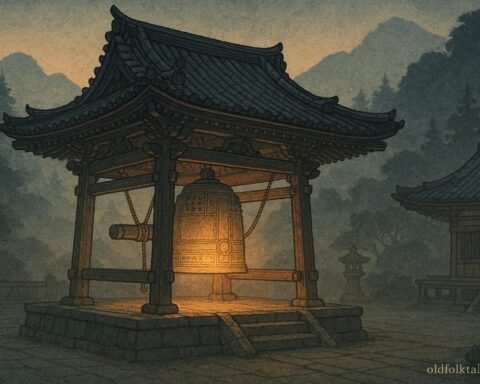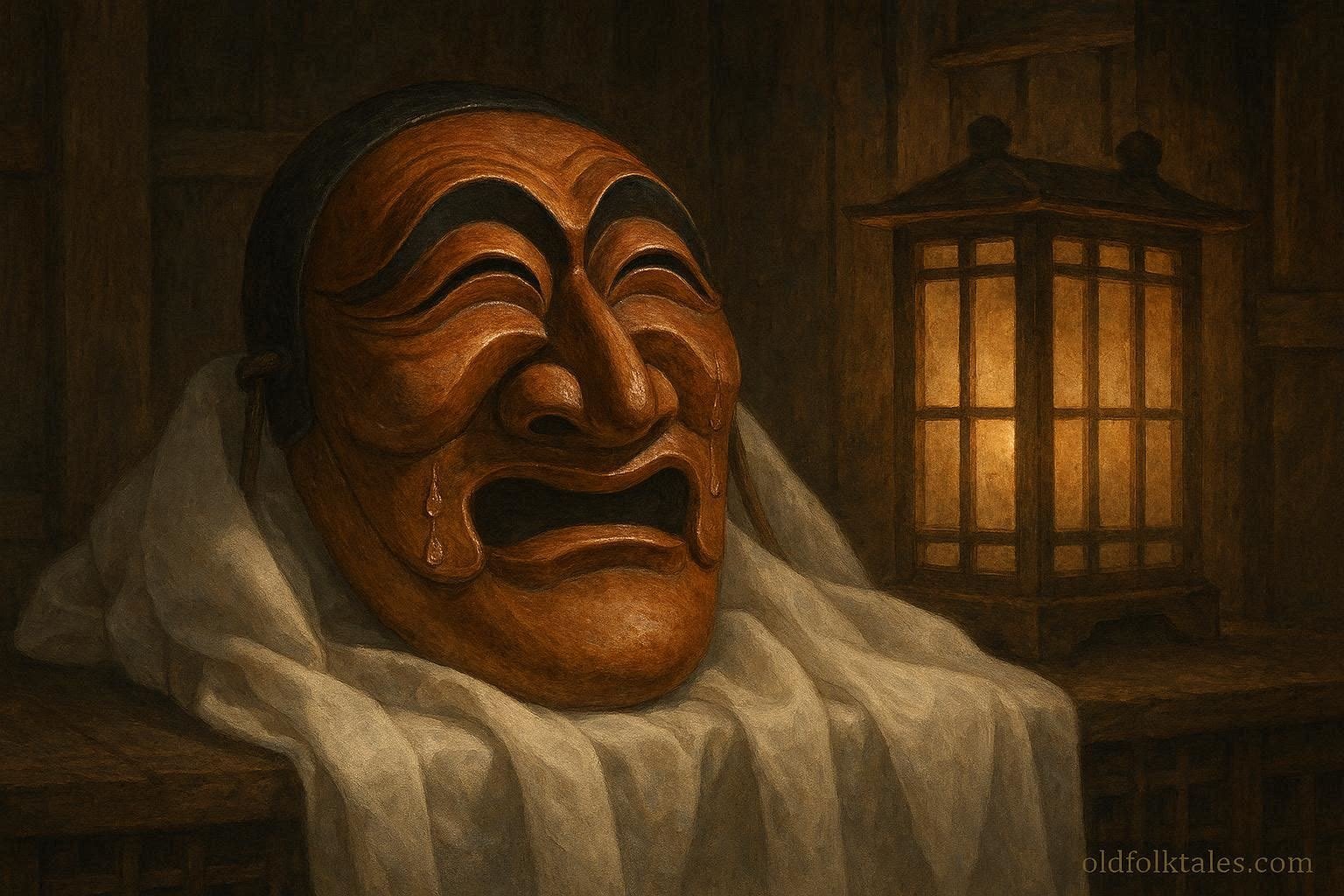
Lantern light drifted slowly across the packed earth of the village courtyard as elders, performers, and families gathered without chatter or laughter. The night carried a weight that everyone recognized, because this was not a festival meant for pleasure or spectacle. It was the night of ritual reckoning, when the community renewed its moral bond with the ancestors who had shaped their land and laws. At the center of the courtyard stood a wooden chest wrapped in white cloth, untouched for most of the year, containing an object spoken of only in quiet voices. Inside rested the Crying Mask of Andong, a relic believed to respond not to skill or beauty but to the hidden truth within the heart of the one who wore it.
The Crying Mask was carved many generations earlier during a time when Andong was fractured by mistrust. Ritual performances that once unified the village had become corrupted. Performers accepted bribes to alter stories, mock rivals, or conceal wrongdoing. Masks that were meant to humble the wearer instead offered anonymity for dishonesty. As moral order weakened, the village suffered poor harvests, illness, and growing resentment among families. Elders believed the spirits were withdrawing their protection, not out of anger but disappointment.
According to oral tradition, the village’s senior ritual elder withdrew into the nearby hills to seek guidance. He fasted for days and refused comfort until he dreamed of a spirit who spoke calmly but firmly. The spirit instructed him to carve a mask from wood taken from a tree struck by lightning, symbolizing judgment without malice. The carving was to be done in silence, and the mask would not punish but reveal. If worn by a sincere performer, it would remain dry. If worn by someone who carried deceit, pride, or hidden wrongdoing, it would shed tears visible to all.
Journey through enchanted forests and islands in our Southeast Asian Folktales collection.
The mask was created exactly as described. Its face was neutral and calm, neither smiling nor frowning. The eyes were hollow and deep, painted dark so that no one could see through them. From the moment it was completed, it was treated as a living witness rather than a prop. It was kept hidden except during the most sacred annual ceremony, guarded by a villager chosen for humility rather than status or strength.
In the present generation, that guardian was an elderly man named Seok Jin. He had served in the role for many years and approached it with quiet seriousness. As the annual ceremony approached, performers gathered to rehearse and purify themselves. Among them was Mun Gye, a dancer whose reputation extended far beyond Andong. He was admired for his flawless technique, confident posture, and commanding presence on the ritual ground.
Seok Jin observed Mun Gye carefully. Though the dancer performed beautifully, he rushed purification rites and spoke of tradition as something owed to him rather than something he served. He dismissed advice from elders and treated ritual prayers as formalities. Seok Jin felt unease, but the guardian’s role was not to accuse. The Crying Mask itself would reveal the truth.
When the night of the ceremony arrived, drums echoed through the courtyard, and performers entered one by one, each wearing masks that represented social roles and moral lessons. The audience remained silent, understanding that this performance was an offering, not entertainment. When the time came for the Crying Mask to appear, Seok Jin stepped forward and carefully unwrapped the cloth.
Mun Gye accepted the mask with steady hands and placed it upon his face. He began to dance, his movements controlled and powerful. For several long moments, nothing happened. Then a faint shimmer appeared beneath one eye of the mask. A tear formed and fell onto the earth. The drums faltered. Another tear followed, then another, until the mask wept openly.
The courtyard froze in silence. Mun Gye staggered and collapsed to his knees. He removed the mask and confessed aloud before the entire village. He admitted to accepting favors, manipulating ritual stories, and using sacred performance to elevate himself. His confession came not from threat or force but from the undeniable exposure of his inner truth.
The elders halted the ceremony immediately. Mun Gye was not beaten or imprisoned. Instead, he was stripped of his role and instructed to leave the village to reflect on his actions. The Crying Mask was returned to its chest, dry once more, its purpose fulfilled.
In the months that followed, Andong slowly regained balance. Rituals were approached with renewed humility. Performers understood that masks did not conceal responsibility but magnified it. The Crying Mask was never worn again that year, yet its presence shaped every ceremony that followed.
The legend of the Crying Mask endured as a reminder that tradition demands integrity. It taught that objects of ritual do not enforce morality but reveal it, and that a community remains strong only when its members honor truth even when no one is watching.
Moral Lesson
True tradition cannot be upheld through skill alone. Integrity and humility are required to maintain harmony between community, ritual, and spirit.
Knowledge Check
- Why was the Crying Mask created in Andong folklore?
Answer: It was created to expose deceit and moral corruption among ritual performers and restore communal harmony. - What caused the mask to shed tears?
Answer: The mask cried when worn by someone who carried dishonesty or impure intentions. - How did the village respond to the mask revealing wrongdoing?
Answer: The ceremony was halted, the truth was acknowledged publicly, and the performer was removed without violence. - What role did the guardian of the mask play?
Answer: The guardian protected the mask and ensured it was used only during sacred ceremonies, without making personal accusations. - What lesson did the villagers learn from the Crying Mask?
Answer: They learned that ritual carries moral responsibility and that no performance can hide a corrupted heart. - What lesson did the village carry forward?
Answer :That truth and accountability sustain harmony
Source
Adapted from Andong Hahoe Folk Village Research Archive
Cultural Heritage Administration Mask Dance Records
Cultural Origin
Andong mask dance folklore of Korea