Long ago in the mountainous region of Yoshino there stood a magnificent cherry tree that towered above all the others. The villagers believed that it was several centuries old and that it carried within its roots the memories of the many generations who had lived and died beneath its branches. Every spring pilgrims climbed the mountain to see its blossoms which were said to fall like soft snow. The tree was a symbol of beauty and renewal but one year its petals failed to bloom and an unsettling stillness settled over the mountain.
At the base of this ancient tree a young samurai named Arito had once been executed. He had been falsely accused of betraying his lord although he had always been loyal and honorable. The accusation came from a jealous rival who sought to rise in rank by destroying Arito’s reputation. The lord believed the false accusations and ordered Arito’s death without a proper investigation. Arito died with sorrow in his heart but he did not curse those who wronged him. His final thoughts were of his mother who had raised him with kindness and discipline and of his promise to serve his clan with integrity.
After his death strange things began to occur along the mountain path. Travelers reported hearing the sound of quiet weeping near the cherry tree late at night. Others claimed that cold winds circled the area even on warm days. The villagers became afraid and avoided the tree. They believed that the young samurai’s spirit lingered, bound to the place of his unjust death. Over time the cherry tree which had always bloomed early in the season ceased to blossom altogether. Its bare branches stood like mournful arms reaching toward the sky.
Journey through enchanted forests and islands in our Southeast Asian Folktales collection.
Years passed and the story of Arito’s execution spread beyond the mountain villages. One spring a traveling monk named Sogen visited Yoshino. He had heard whispers of a restless spirit who could not find peace. The villagers told him of the tree that had stopped blooming after the execution. Sogen felt that the land carried a heavy sadness. He decided to climb the mountain and see the tree for himself. As he approached he sensed the air growing colder. When he reached the base of the tree he felt a presence surrounding him like a faint echo of suffering.
The monk knelt and prayed for the spirit that lingered there. He called upon the compassion of the Buddhas to bring peace to the one who had died unjustly. As he chanted he heard a faint sound like a sigh carried by the wind. He opened his eyes and saw the dim outline of a young man appearing beneath the tree. The figure looked at him with sorrowful eyes but made no threatening movement. Sogen understood that the spirit did not seek harm but longed to be heard.
Sogen asked the spirit what it wished for. The faint figure raised its eyes to the tree then lowered its gaze to the ground. Sogen realized that Arito wanted the truth of his death to be acknowledged. Without recognition the weight of injustice would keep him tied to the mountain forever. The monk promised that he would try to bring healing to the memory of what had happened. He bowed deeply and the spirit vanished into the mist.
Sogen returned to the village and gathered the elders. He spoke of the sorrow he had witnessed and explained that the spirit’s suffering came from an injustice that had never been corrected. The elders discussed the matter with the few remaining warriors who remembered the story. They confirmed that Arito had been a loyal samurai and that his execution had indeed been ordered without proper investigation. Many years had passed but the guilt of the event still lingered in the hearts of those who knew the truth.
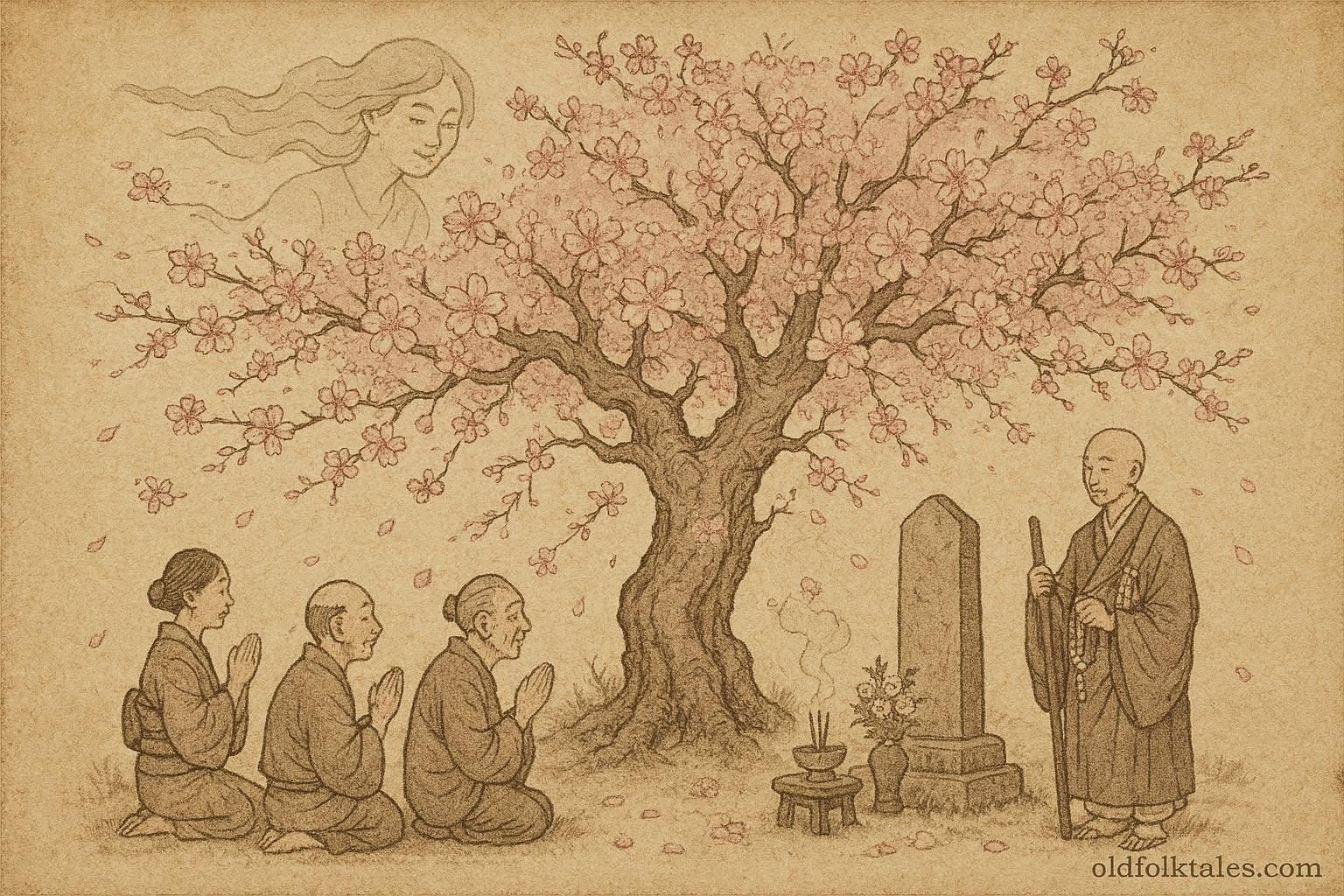
The villagers decided to hold a memorial ceremony for Arito. They prepared offerings of incense, rice cakes, and spring water. They invited monks from a nearby temple to perform prayers for the spirit’s peace. They climbed the mountain together and gathered around the silent cherry tree. Sogen led the ceremony with calm sincerity. He spoke of Arito’s loyalty and courage and acknowledged the wrong that had been done. The villagers listened with bowed heads and many wept as the wind rustled the bare branches above them.
As the prayers continued a gentle glow appeared on the tree. It was faint at first then slowly grew brighter. One by one small buds appeared at the tips of the branches. Before the villagers’ eyes the tree began to bloom. Pale pink petals unfolded like fragile lanterns. The tree glowed softly in the evening light as if expressing long awaited relief. The villagers gasped in wonder. They realized that the curse had lifted and that Arito’s spirit had finally found peace.
When the ceremony ended Sogen looked up at the blossoms that now swayed gently in the breeze. He felt the presence of the young samurai one last time. It was no longer sorrowful but calm and grateful. The mountain air warmed and the sound of distant birds returned. The villagers rejoiced, for the ancient tree had bloomed out of season and that could only mean that the spirit’s suffering had been healed.
From that day forward the cherry tree of Yoshino became a place of remembrance. Travelers continued to visit it and offer small tokens of respect. The villagers told their children that justice once denied can be restored through remembrance and compassion. The cherry blossoms served as a gentle reminder that even the most sorrowful places can be transformed when truth is honored.
Discover more East Asian Folktales from the lands of dragons, cherry blossoms, and mountain spirits.
Moral Lesson
Justice brings peace to both the living and the dead. Remembering those who were wronged can heal wounds that linger quietly in the world.
Knowledge Check
- Why did the cherry tree stop blooming
Answer: Arito’s sorrowful spirit caused the tree to withhold its blossoms. - Who first attempted to help the spirit
Answer: The traveling monk Sogen. - What did the spirit desire?
Answer: Recognition of the injustice done to him. - How did the villagers respond after learning the truth?
Answer: They held a memorial ceremony to honor Arito. - What happened to the cherry tree during the ceremony?
Answer: It bloomed out of season as the curse lifted. - What message does the story convey about justice?
Answer: Truth and remembrance restore balance and bring peace.
Source
Adapted from Nara Prefecture Cultural Archive, 2015.
Cultural Origin
Yoshino Mountain tradition.