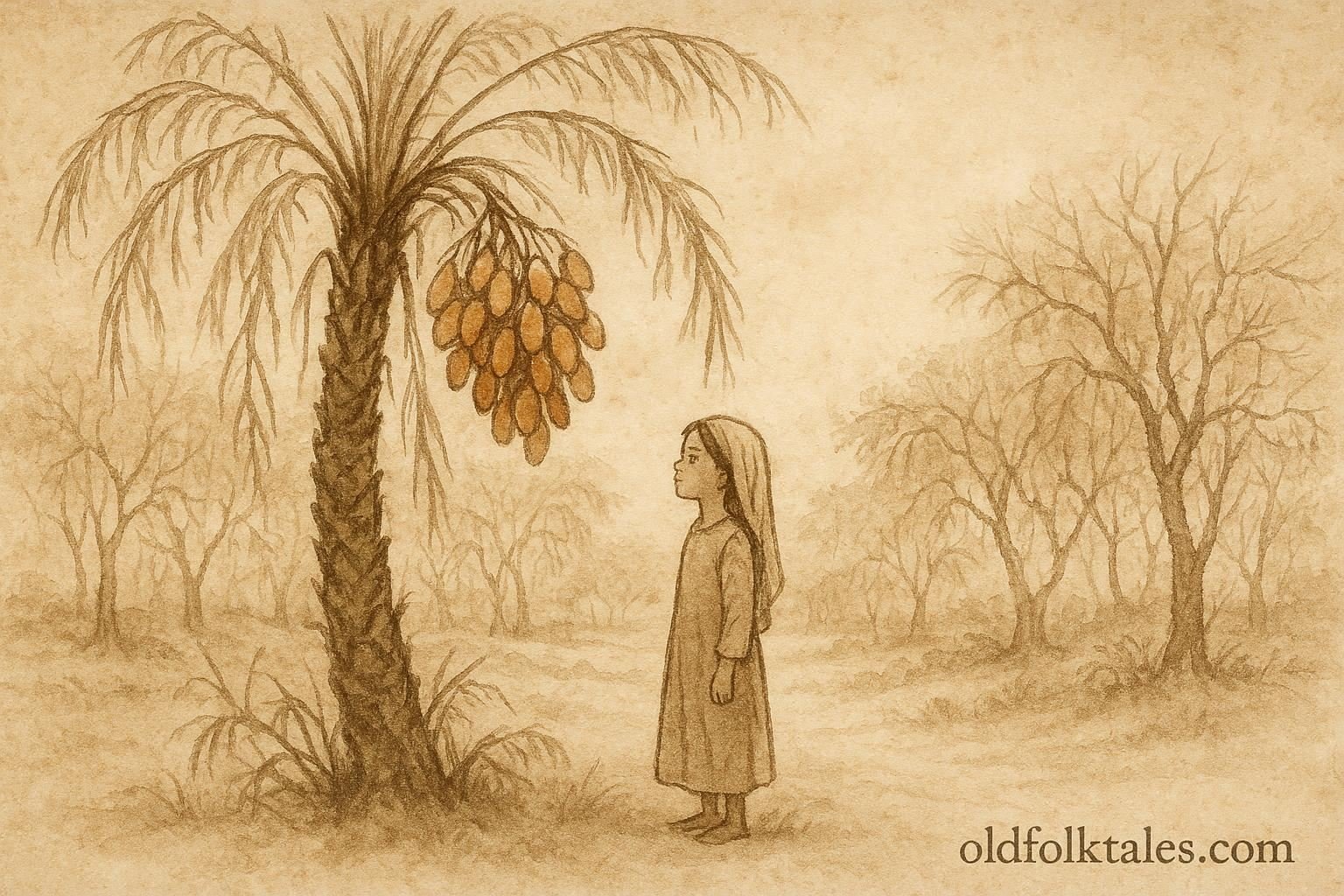
In the quiet groves of Al Batinah, near the old fort of Nakhal, a small family of seven lived among their cherished date palms, or nakhl. Their home stood at the edge of a vast orchard, where rows of tall palms once shimmered with life. But for many seasons, a harsh and unforgiving drought had lingered over the land. The sun beat down mercilessly, drying the soil until it cracked and peeling the moisture from the air itself. The father, a patient and hardworking man, tended daily to the trees, hoping for the slightest sign of relief. Yet no matter how carefully he watered, trimmed, or shaded the palms, the fruits remained small, dry, and sour.
Each day he walked the grove with weary steps, running his fingers along the rough trunks, whispering small prayers under his breath. The family depended on these trees, and every day without a proper harvest tightened the knot of worry in his chest. His wife tried to stretch their dwindling supplies, dry bread, a few dates, and milk barely enough for the youngest child. Their five children watched their parents quietly, understanding the silent weight that hung over the household.
Among them was the youngest daughter, Fatima, a gentle and tender-hearted girl who had grown up playing between the palms and feeling the cool shade of their fronds. She had one tree she loved most, a slightly smaller, graceful palm that leaned softly toward the path. She often sat beneath it, telling it stories, imagining it listened. On one particularly hot afternoon, when the earth seemed too tired to hold another day of sun, Fatima pressed her cheek to the tree’s trunk and whispered, “If only you could help us, dear friend.”
That evening, Fatima fell asleep thinking of her beloved palm. As she drifted into dreams, the dry wind outside seemed to soften, and she imagined herself standing in the grove beneath the moonlight. In the dream, the tree she loved shimmered faintly, as though touched by a soft inner glow. Then its voice, gentle, warm, and full of compassion, spoke to her: “My roots reach the deep, hidden water. I will give it all to you.”
Fatima woke before dawn, her heart beating fast, unsure whether what she had experienced was a message or merely the hope of a child’s loving imagination. When morning light spilled over the grove, she rushed outside. Her father was already inspecting the trees, shaking his head at their poor condition. But then they noticed something strange. The palm Fatima loved most looked different. Its leaves, once bright and full, had begun to droop as if exhausted. Yet the dates on its branches, unlike those on any other tree in the grove, had grown large, plump, and glossy.
The dates glowed with a deep amber color, richer than honey, and when the father touched one, it felt full and moist, as though hiding water within its flesh. He picked a single fruit and tasted it. His eyes widened. “These… these are sweeter than any date I have ever eaten,” he whispered.
Fatima’s mother tasted one as well, and the sweetness nearly brought tears to her eyes. It was as though the fruit held the very life the palm was sacrificing. The family began to gather the dates carefully, treating each one like a treasure. They ate sparingly, savoring the sweetness, and shared with the youngest children first. Day after day, the miraculous fruit sustained them, giving them strength, hope, and comfort during the most difficult season of their lives.
But with every passing day, the palm looked weaker. Its fronds dimmed from green to pale yellow. The trunk grew thinner, its bark dry and brittle. Fatima would sit beneath it, resting her small hand against the rough surface, feeling its quiet struggle. She would whisper, “Thank you, dear friend. Thank you for loving us.”
One still morning, after many weeks, the family found the tree nearly bare. Only one frond remained, trembling gently in the warm breeze. Fatima approached slowly, her heart heavy. She rested her forehead against the trunk, and in that quiet moment, she felt, whether in memory, dream, or truth, the palm’s final whisper: “Love is giving until you have nothing left to give.”
As the last frond fell to the earth, the family stood together in silence. They buried the fallen fronds with respect and remembered the miracle that had saved them.
When the next spring arrived, the grove awakened in a way no one could have imagined. Every date palm, from the oldest towering tree to the youngest sapling, began to produce fruit that resembled the gift given by the beloved palm. The dates were full, amber-colored, and impossibly sweet, exactly like the ones that had saved the family during the drought.
Word spread through the region of Nakhal that a new variety of date had emerged, soft, sweet, and filled with a rare, almost tender richness. People named it Al-Wadood, “The Loving One,” in honor of the tree that gave everything for the family it cherished.
And so the tale was told: true generosity, once given, lives on in abundance.
Moral Lesson
True love and generosity are acts of giving without expecting anything in return. When kindness is offered with a pure heart, its blessings multiply far beyond the sacrifice.
Knowledge Check
1. What is the central setting of the Omani folktale?
The story takes place in the date palm groves near Nakhal in the Al Batinah region of Oman.
2. Why was the family struggling in the folktale?
A long drought caused their date palms to produce small, sour fruit, leaving the family with little to survive on.
3. What made Fatima’s favorite date palm special?
It sacrificed its deep, hidden water to produce sweet, amber dates that saved the family.
4. What symbolic message does the dying palm express?
The palm teaches that true love means giving selflessly, even at great personal cost.
5. How did the grove change after the palm’s sacrifice?
The following spring, every tree produced the same sweet fruit, later named Al-Wadood.
6. What is the main moral of this Omani folktale?
Generosity offered with sincerity creates lasting blessings and continues beyond the giver.
Source
Adapted from Omani Ministry of Heritage archives, “Date Palm Traditions,” Al Batinah Region (Nakhal).