In the quiet village of Diraz, where earth and sky met in a wide, sun-worn horizon, there lived a poor widow named Maryam. Her house was small, built of mud brick and palm fronds, and stood at the edge of the village where the fields thinned into dry soil. Maryam owned little in the world, but what she had, she tended with care and devotion. Her greatest treasure was a single date palm growing beside her home, a tree that had fed her family for generations and now stood as her only means of survival.
Each morning before the heat grew fierce, Maryam would step outside with a clay jug of water. She would press her hand to the palm’s rough trunk, whisper a prayer, and pour the water carefully at its roots. The palm rose tall and slender against the sky, its fronds whispering softly in the wind, as though listening. In a land where date palms were life itself—providing food, shade, and trade, this one tree meant everything to her.
Then came a terrible drought. Weeks passed without rain, and the soil cracked like broken pottery. Wells ran low. Palm after palm across Diraz yellowed and died, their fruit shriveling before it could ripen. Hunger crept into the village, and fear settled heavily in every home.
Yet Maryam’s palm did not wither.
Against all reason, it remained green. When the season came, it bore plump, sweet dates, richer than any Maryam had known. At dawn, she noticed something even more wondrous: tiny droplets of clear, sweet water forming along the trunk, glistening in the first light of morning. They slid down like tears, cool and refreshing. Maryam gathered them with care, sharing them with her neighbors, who drank and marveled in disbelief.
Word spread quickly through Diraz. People whispered that the tree was blessed, that it wept from compassion for the suffering land. Some said it was a sign from God, a reminder that mercy still lived among them.
But not all hearts were filled with gratitude.
The village sheikh, a man of authority and wealth, grew jealous as he watched Maryam’s tree flourish while his own groves stood barren. The praise spoken of the widow and her palm stirred resentment in him. He claimed that such a miracle could not belong to a poor woman alone and declared that the tree must be taken under his control “for the good of the village.”
One afternoon, the sheikh arrived at Maryam’s home with armed men. Maryam stood before them, her hands trembling but her voice steady, begging him to leave the tree where it was. She reminded him that she had shared its fruits and water freely, never claiming them for herself alone.
The sheikh refused to listen.
He ordered his men to cut down the date palm and carry it to his land. As the first axe struck the trunk, a deep, mournful sound echoed through the air—not like wood splitting, but like a living cry. The men froze, fear flickering across their faces. The wind rose suddenly, swirling dust and palm leaves around them.
Before another blow could fall, the palm began to change.
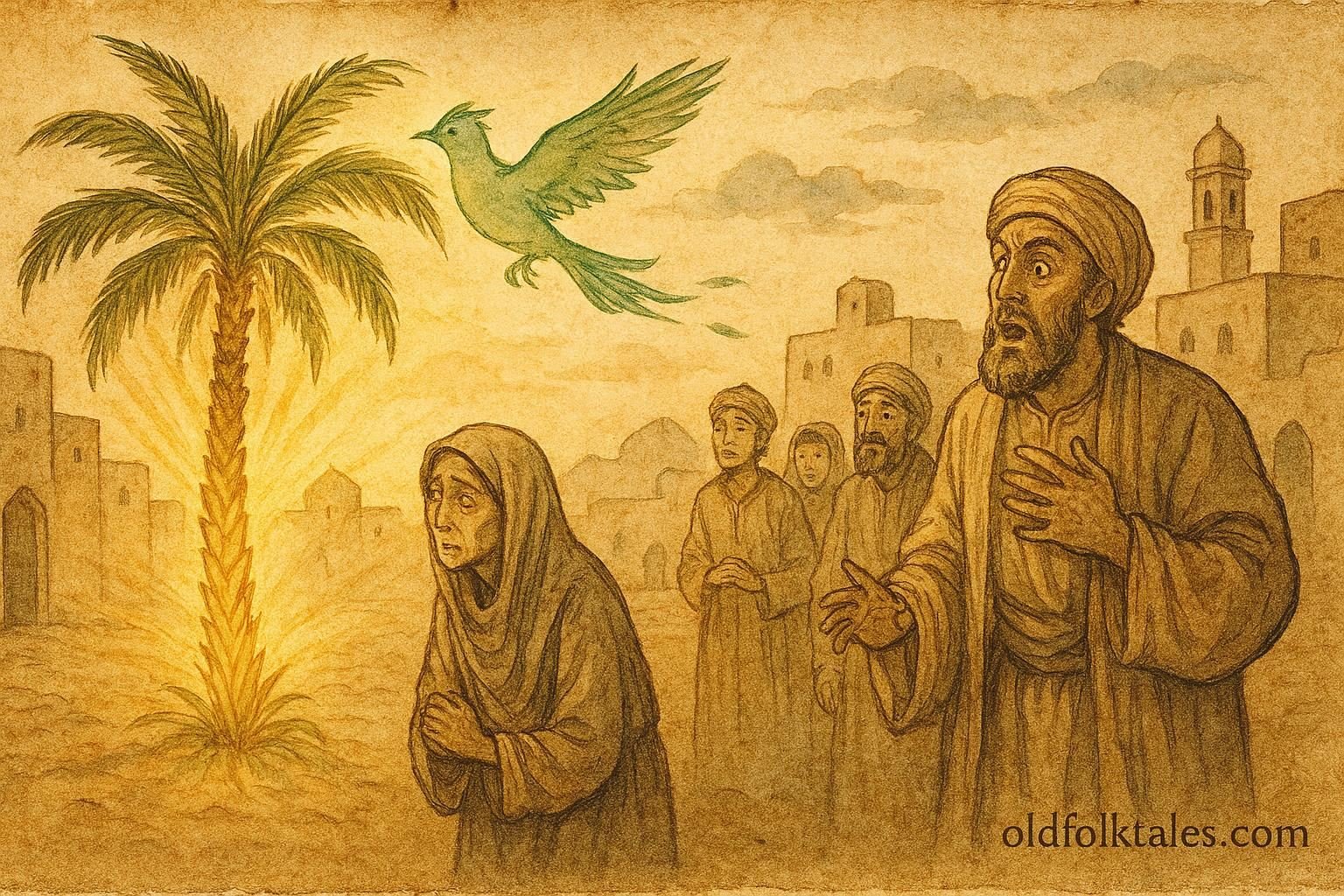
Its trunk shimmered, its fronds folding inward as light burst forth. In a moment that left all who watched breathless, the tree transformed into a green bird, radiant and alive. With a sorrowful cry, it spread its wings and flew away toward the horizon, disappearing into the bright sky.
Silence fell.
Where the date palm had stood, the ground darkened and softened. Clear water bubbled up from the earth, forming a fresh spring that flowed steadily despite the drought. The men stepped back in awe and terror. The sheikh’s face drained of color, for when he returned to his own land, he found it utterly barren, his fields stripped of life and promise.
Maryam knelt by the new spring, tears on her face, not of loss alone, but of understanding. The blessing she had cared for had not vanished; it had simply taken a new form, one meant for all.
To this day, the spring in Diraz is said to flow where the date palm once grew, a reminder of what happens when greed seeks to claim what was given in trust.
Moral Lesson
This folktale teaches that blessings rooted in care, humility, and generosity cannot be seized by greed. Nature responds to respect and compassion, but withdraws from those who seek to dominate it for personal gain.
Knowledge Check
1. Who was Maryam in the folktale?
Maryam was a poor widow whose only sustenance came from a single date palm she lovingly cared for.
2. What miracle did the date palm perform during the drought?
It continued to bear sweet dates and produced droplets of fresh, sweet water at dawn.
3. Why did the village sheikh want the date palm?
He grew jealous of its blessing and sought to claim it for himself.
4. What happened when the sheikh’s men tried to cut down the tree?
The tree cried out, transformed into a green bird, and flew away.
5. What appeared where the date palm once stood?
A spring of fresh water emerged and continued to flow.
6. What cultural theme does this Bahraini folktale emphasize?
It emphasizes community, environmental respect, and the consequences of greed.
Source & Cultural Origin
Source: Adapted from oral tradition documented in the Bahrain Folklore Bulletin (1992), published by the Bahrain Historical Society.
Origin: Bahrain, an environmental parable reflecting agricultural hardships and communal values of the 19th century.