
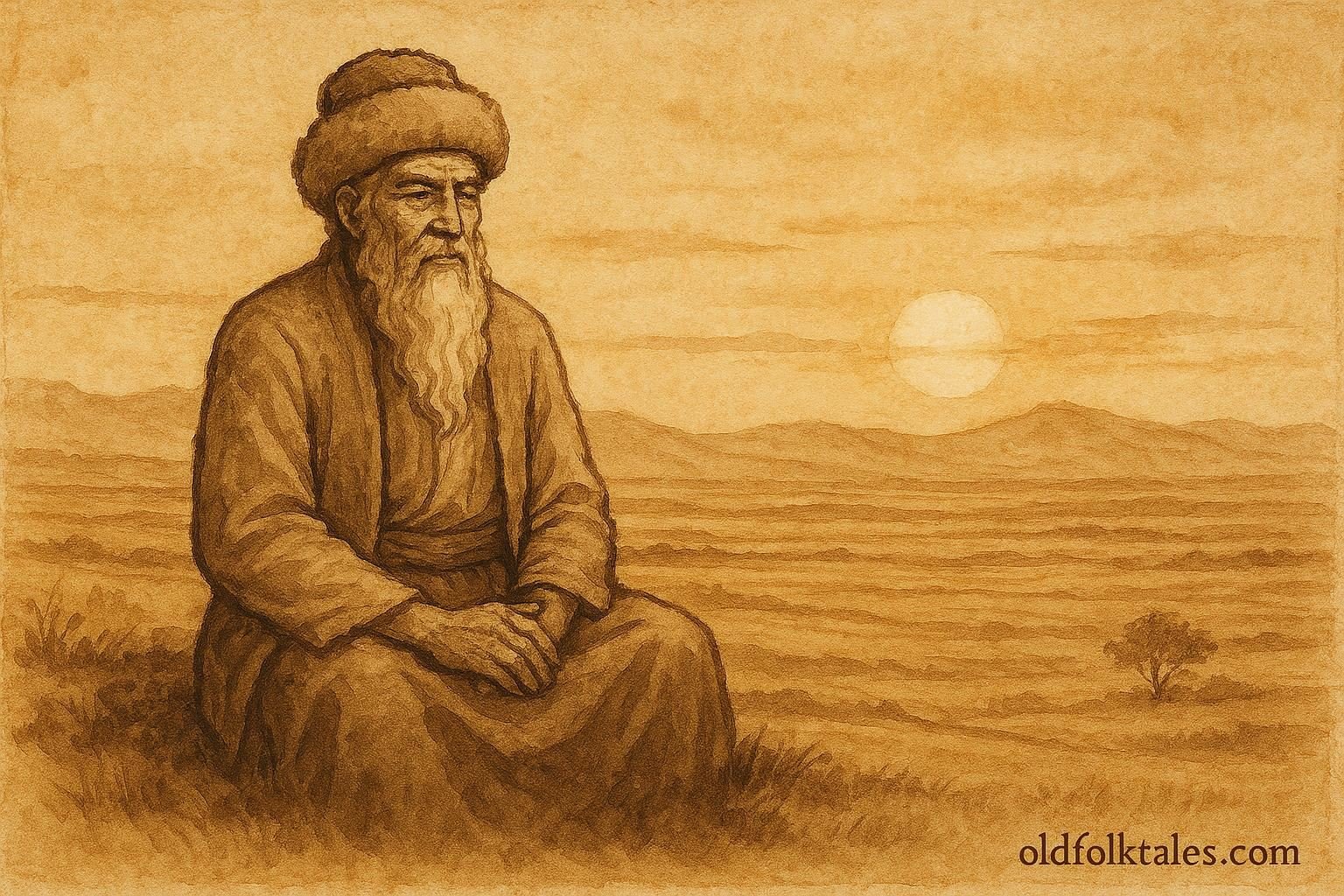
Across the wide steppes of Turkmenistan, where stories travel farther than footprints and names outlive bodies, the final tale of Gorogly is told with reverence. This is not a story of defeat, but of completion, a reflection on how a life devoted to justice becomes immortal through memory and example.
In his final days, Gorogly is no longer defined by physical might alone. The strength that once carried him through battles has softened into wisdom shaped by experience. He remains a figure of calm authority, respected not for fear he inspires, but for the moral order he upheld throughout his life. Those around him sense that his journey nears its end, yet there is no despair in his presence.
Explore timeless legends from China, Japan, and Korea in our East Asian Folktales collection.
Gorogly reflects upon the path he has walked. He remembers hardship, resistance, loyalty, and sacrifice. His victories were never measured in conquest, but in balance restored and dignity defended. As he speaks, his words carry the weight of lived truth, offering guidance rather than command. In Turkmen tradition, such wisdom marks the highest stage of heroism.
The people who gather near him do not see a fading warrior; they see a legacy taking shape. Gorogly reminds them that justice does not belong to one man. It must be carried forward through conduct, courage, and moral responsibility. He urges them to remember that strength without integrity is empty, and that leadership must always serve the vulnerable.
As his life draws to a close, Gorogly’s name becomes more than a personal identity. It transforms into a symbol. His deeds are retold not as distant legend, but as instruction. Children learn his name alongside lessons of fairness, while elders recall his actions as proof that righteousness can stand against tyranny.
The tale emphasizes that Gorogly’s wisdom endures beyond his physical presence. His spirit lives in the customs he protected and the justice he modeled. In Turkmen epic tradition, a hero does not truly die when his body fades; he lives as long as his values are practiced and remembered.
When Gorogly passes from the world, the land does not fall silent. Instead, his story takes root. Songs and stories preserve his example, ensuring that future generations inherit not only his name, but the principles he embodied. Justice, once defended by his hand, now rests in the hearts of the people.
Thus, the death of Gorogly is not an ending, but a transformation, from living hero to eternal standard of moral leadership. His life affirms that legacy is greater than mortality, and that wisdom, once earned, can never be lost.
Discover the wisdom of ancient India and the Silk Road in South & Central Asian Folktales.
Moral Lesson
This story teaches that true greatness is measured by legacy, not lifespan. Wisdom, justice, and moral leadership endure long after physical strength fades.
Knowledge Check
1. What does Gorogly’s final tale emphasize most?
It emphasizes legacy, wisdom, and moral influence rather than physical death.
2. How is Gorogly portrayed in his final days?
As a calm, wise figure whose authority comes from experience and integrity.
3. What message does Gorogly leave behind?
That justice must be upheld collectively through ethical conduct and courage.
4. Why does Gorogly’s name become symbolic?
Because it represents enduring justice and moral leadership.
5. How does Turkmen folklore view a hero’s death?
As a transformation into lasting cultural memory rather than an ending.
6. What central value does this tale reinforce?
That wisdom and justice outlive physical power.
Source: Görogly epic tradition
Cultural Origin: Turkmenistan (Turkmen folklore)








