Long ago, before the villages along the Irrawaddy River had proper boats or organized fishing methods, the river itself was wild and unpredictable. The villagers relied entirely on its bounty, yet they often took more than they needed. Crops would fail, and fish would mysteriously vanish. The elders whispered that the river was protected by a mighty Dragon King, a being of both awe and terror, who rewarded those who respected the water and punished those who disrespected it.
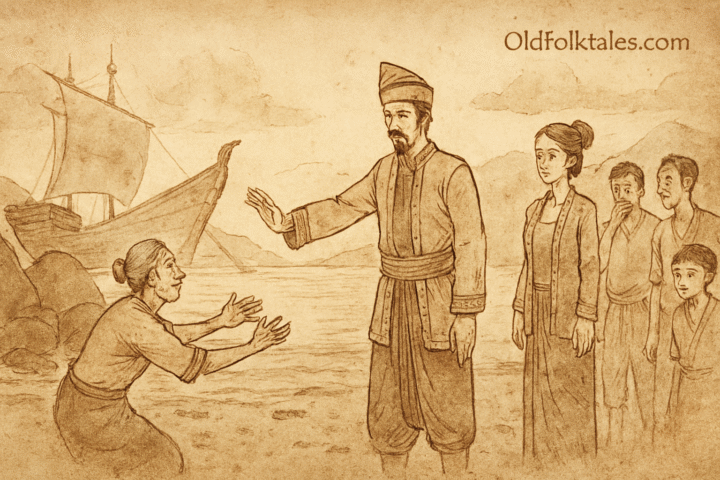
In a small riverside village, a fisherman named Thura was known for his fairness and respect for the river. Every day, he offered a portion of his catch back to the riverbank, bowing and muttering quiet prayers. One day, a stranger arrived in the village, a boastful man named Min who ignored all warnings about the Dragon King. Min would catch as many fish as he could, sometimes even poisoning parts of the river to increase his haul.
One evening, as the sun dipped behind the mountains, the villagers noticed the river surface glowing faintly. Waves swirled unnaturally, and a deep, rumbling voice echoed through the valley. It was the Dragon King, rising from the depths to inspect those who lived along his waters. Villagers fell to their knees, trembling, but Thura calmly remained by his boat, whispering thanks. Min, however, stood defiantly, laughing and calling the Dragon King a mere tale to frighten children.
Explore timeless legends from China, Japan, and Korea in our East Asian Folktales collection.
The Dragon King tested Min’s greed first. He conjured a massive storm, and the river waters swelled violently. Min’s boat, filled with illegally caught fish, was tossed like a leaf. He screamed for help, but Thura paddled his smaller, modest boat to rescue not only Min but also several villagers who had ignored safety warnings. Instead of anger, Thura’s courage and respect for the river impressed the Dragon King.
The Dragon King spoke through the roaring waters. He told Min that his greed had harmed not only the river but all who depended on it. The Dragon King warned that unless Min learned humility and reverence for nature, the river would reclaim all he had taken. Terrified, Min promised to change his ways.
Over the next weeks, the Dragon King continued to test the villagers. Thura and a few other humble fishermen would see signs of a sudden shimmering in the water, ripples forming shapes, or fish jumping unusually high. These were messages from the Dragon King, guiding the villagers to safer waters, abundant fish, and fertile riverbanks. Those who ignored the warnings faced mishaps: broken nets, spoiled fish, or sudden storms while fishing.
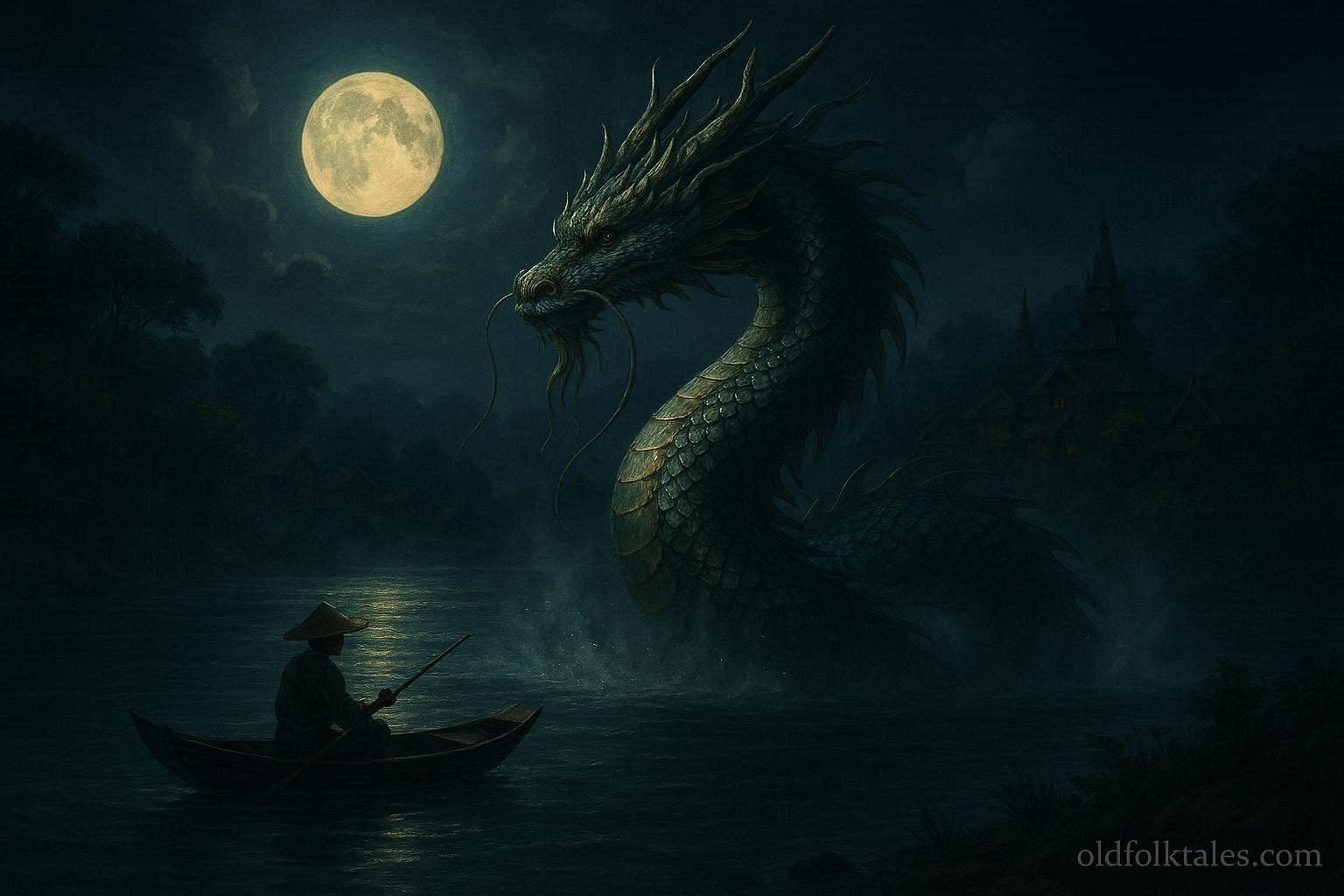
One day, Thura noticed Min sneaking past the riverbank, intending to catch fish at night using illegal methods. Thura confronted him, reminding him of the Dragon King’s warnings. Min scoffed and rushed into the water. Instantly, a glowing serpent of water and light surged from the river, surrounding Min’s boat. Min froze in terror. Thura knelt and spoke a prayer aloud, calling for protection. The Dragon King appeared before them, immense and shimmering, a vision of scales and swirling water. He lifted Min from the river in a giant claw, not to harm him permanently but to impress upon him the power he had long ignored.
Min was spared, but only after kneeling and swearing lifelong respect for the river and its creatures. The Dragon King instructed Thura to guide Min henceforth, showing him proper fishing methods, sharing part of each catch with the river, and teaching humility to others in the village.
Years passed, and the village flourished. The river remained generous, and the villagers maintained rituals of respect: small offerings of fruit, flowers, and portions of fish placed along the banks. Thura became an elder, telling stories of the Dragon King to children, ensuring that the lessons of reverence and moderation would endure. Min, once greedy and arrogant, became a teacher of the river’s ways, warning travelers of the Dragon King’s vigilant presence.
The Dragon King’s appearances became rare, but the villagers knew that each ripple, glow, or unusual movement in the water was a message to remind them of balance. Generations later, even as new villages appeared along the Irrawaddy, elders recounted the tale of Thura and the Dragon King, emphasizing that prosperity depended not just on skill but on moral integrity and respect for the forces that sustained life.
Journey through enchanted forests and islands in our Southeast Asian Folktales collection.
Moral Lesson:
Respect for nature ensures survival and prosperity, while greed and arrogance invite disaster. True guardianship requires humility, and moral balance is rewarded with protection and abundance.
Knowledge Check:
- Who protected the villagers during the storm?
Answer: Ko Thura, the humble fisherman. - Why did the Dragon King punish the merchant?
Answer: Because he disrespected the river by cutting trees and polluting the waters. - What offerings did Ko Thura give to the river?
Answer: Portions of his catch and prayers. - What lesson did the villagers learn from the Dragon King?
Answer: That respecting nature and its spirits brings safety and prosperity. - How did the Dragon King reveal himself during the storm?
Answer: As a massive shadow beneath the waves with blazing eyes. - What lasting impact did the legend have on future generations?
Answer: It taught children and villagers to honor and protect the river and nature.
Source:
Adapted from Universities Historical Research Centre Myanmar Folklore Collection, 2012.
Cultural Origin:
Central Burmese riverine folklore.