Long ago, in a small Maldivian island surrounded by the endless, sapphire waters of the Indian Ocean, there lived a village threatened by a powerful and fearsome sea-demon named Rōnu. For generations, Rōnu had terrorized the islanders, demanding the periodic sacrifice of a young maiden. The villagers lived in dread, whispering his name even in the brightest daylight, and none dared venture near the reef where the demon was said to dwell.
The elders of the island consulted one another and agreed to seek the help of a fanḍita, a sorcerer known for his mastery of magic, spirits, and protective rituals. This fanḍita, a man of great knowledge and calm courage, had faced spirits, curses, and supernatural threats before. His arrival brought hope to the trembling villagers.
Upon reaching the village, the fanḍita studied the tides, the coral reefs, and the ocean’s whispers. He listened to the villagers recount their experiences: how Rōnu emerged from the deep during storms, dragging boats, frightening fishermen, and claiming the lives of the young and unprotected. The fanḍita’s eyes, sharp and thoughtful, reflected both concern and determination. He knew that brute strength alone could not defeat a creature born of ocean magic; it required wisdom, ritual, and strategy.
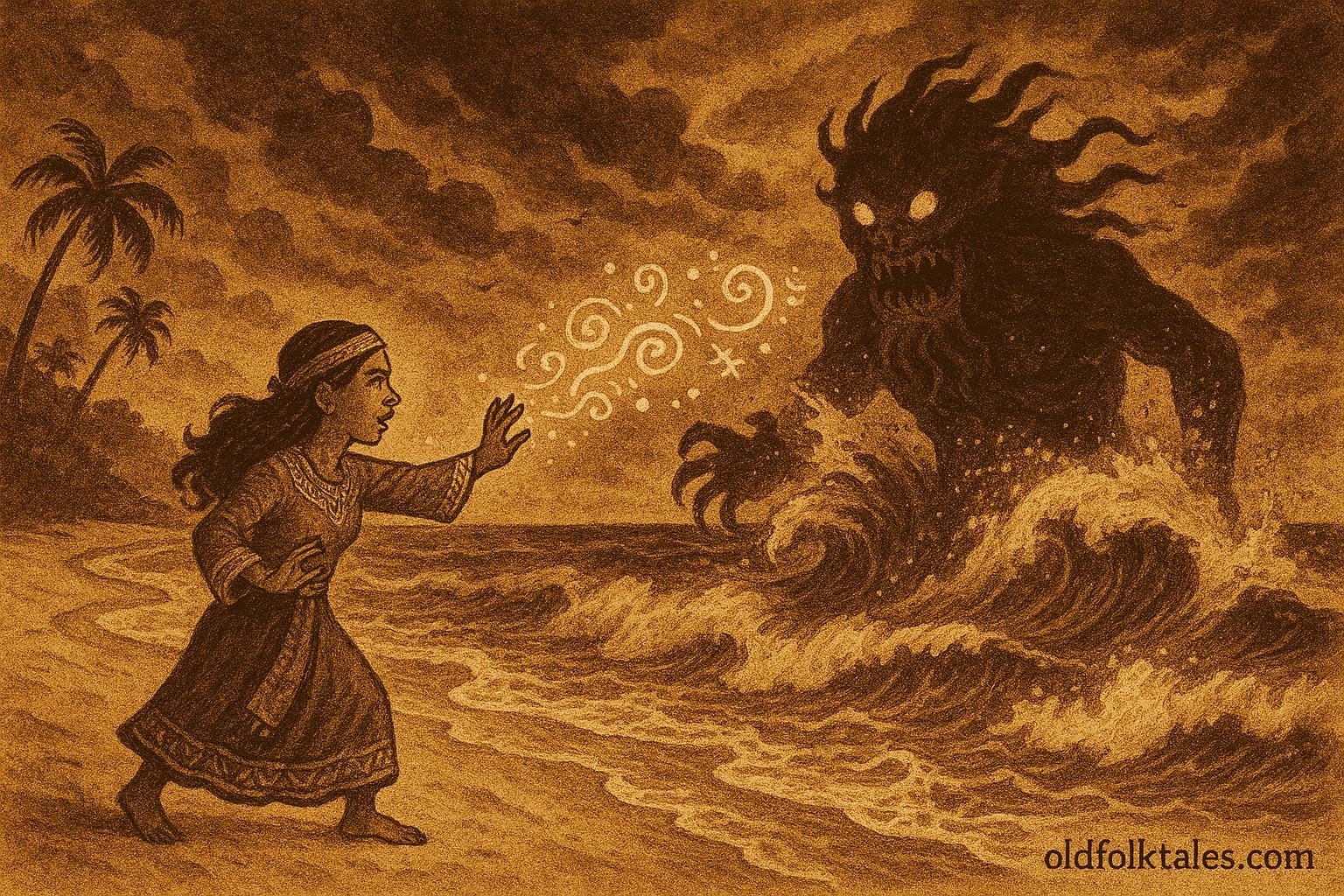
As the night of the next tide approached, when Rōnu traditionally demanded a sacrifice, the fanḍita prepared carefully. He inscribed sacred symbols in the sand around the village, chanted protective incantations, and prepared ritual offerings to honor the spirits of the sea. He instructed the villagers to stay indoors and maintain calm, warning that fear would only strengthen the demon’s power.
When Rōnu rose from the ocean with his massive, shadowy form, waves crashing around him like living walls, the fanḍita stood firm on the shore. With a steady voice, he spoke the incantations and cast the protective charms into the waters. Rōnu roared, a sound that shook the very coral reefs beneath, but the fanḍita’s knowledge of the spirits allowed him to withstand the demon’s fury.
Using a combination of clever misdirection and sacred ritual, the fanḍita tricked Rōnu into believing that the village offered a willing sacrifice elsewhere. As the demon lunged toward the decoy, the fanḍita completed the final spell, binding Rōnu to the depths with cords of spiritual energy and coral charms. With a last, terrifying cry, Rōnu sank into the ocean, never to terrorize the island again.
The islanders rejoiced, and the fanḍita became a legend among them. From that day on, the village flourished, free from the terror that had haunted them. Parents told their children of the fanḍita’s courage, wisdom, and sacred knowledge, emphasizing that clever thinking, bravery, and respect for the unseen world were far more powerful than fear.
Thus, the story of the fanḍita who saved his island became a cherished tale of Maldivian folklore, a reminder of courage, wisdom, and the importance of harmonious living with both nature and the unseen forces of the ocean.
Moral Lesson
Courage, intelligence, and respect for natural and spiritual forces overcome even the greatest dangers. Facing challenges with wisdom, preparation, and calm determination is more powerful than fear or brute force.
Knowledge Check
-
Who is the central hero in this Maldivian folktale?
The fanḍita, a sorcerer skilled in spiritual rituals and protective magic. -
What threat does the village face in the story?
The sea-demon Rōnu, who demanded periodic sacrifices of villagers. -
What key qualities of the fanḍita help him save the village?
Wisdom, courage, preparation, and knowledge of spiritual rituals. -
What does the tale symbolize in Maldivian culture?
Respect for the sea, the importance of spiritual protection, and the triumph of knowledge over fear. -
What lesson does the story teach about facing dangers?
Facing challenges calmly and wisely, rather than with panic or recklessness, ensures success. -
Where does this folktale originate?
It is a traditional Maldivian tale, reflecting local beliefs about spirits, the ocean, and supernatural threats.
Source: Adapted from the Maldivian folktale “Rōnu and the Fanḍita” in Folk Tales of the Maldives, collected by Romero‑Frias (year unspecified), published by Barnes & Noble. Public domain / institutional repository.
Cultural Origin: Maldives (Maldivian folklore)