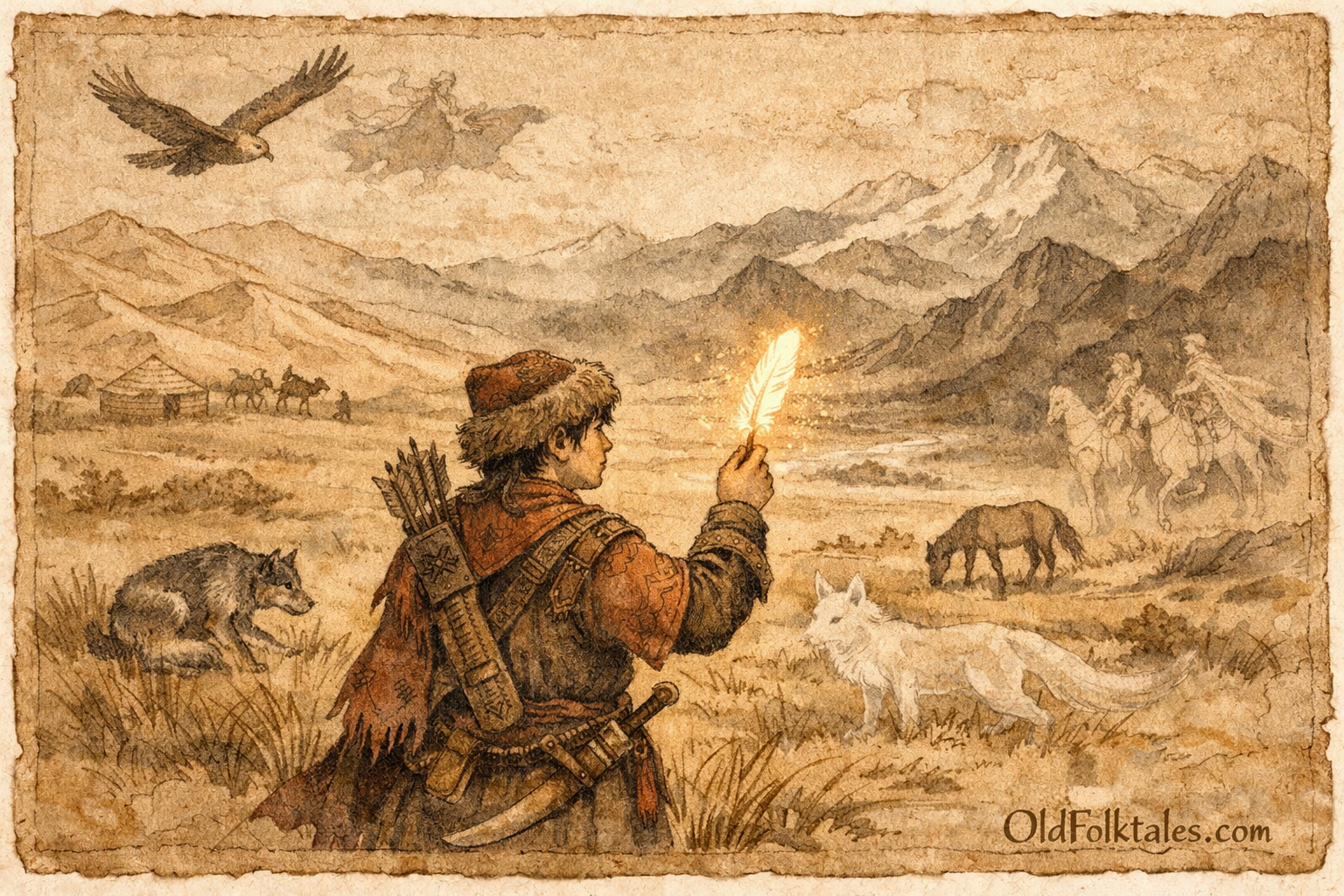
In the boundless steppes of Kazakhstan, where the wind carries both song and story, a young hero discovered a glowing feather drifting from the sky. It was no ordinary plume, it had fallen from Samruk, the sacred bird of the World Tree, and radiated warmth and soft light that seemed to pulse with life itself. Villagers whispered that the feather was a sign of destiny, and the hero, humble yet curious, felt compelled to return it to its rightful guardian.
The feather’s glow drew attention far and wide. Many eyes, hungry for power or wealth, sought to claim it. Yet the young hero resisted every temptation, understanding instinctively that this gift was not to be wielded for personal gain. He embarked on a long and perilous journey across deserts baked by the sun, mountains that scraped the clouds, and shadowed valleys where fear seemed to lurk in every corner. Along the way, he faced challenges that tested not only his courage but the depth of his character.
In the deserts, he endured blistering days and freezing nights, learning patience and endurance. In the mountains, he met spirits of the land, guardians of paths known only to the worthy, who tested his honesty and humility. Animals that roamed freely across the steppes appeared at moments of danger, guiding him and offering assistance to those who showed respect for life. Each trial reinforced a simple truth: true courage is inseparable from integrity.
The hero’s journey was also a lesson in vigilance and self-control. Those who attempted to steal the feather, thieves, opportunists, and even ambitious strangers, were foiled not by strength alone, but by his cleverness, moral clarity, and the allies he had earned through kindness and respect. The feather’s light seemed to respond to his virtue, illuminating the path when he acted wisely and dimming when doubt or greed threatened.
Finally, after many hardships, he reached the World Tree, where Samruk nested in the branches that connected heaven, earth, and underworld. The sacred bird observed him silently, her immense wings casting shadows like clouds over the steppe below. She had watched his journey and recognized the purity of his intentions. Instead of reclaiming the feather immediately, Samruk spoke to him: the feather was a symbol, not of power, but of wisdom, responsibility, and trust.
With her blessing, the hero was allowed to keep the feather, not as a weapon or a treasure, but as a reminder of the lessons learned on his journey. When he returned home, he was no longer just a boy from a distant village; he was now respected as a leader and a custodian of virtue. The feather’s gentle glow reminded him and others that leadership is earned through courage, integrity, and service rather than force or greed.
Through retellings across the Kazakh steppes, The Feather of Samruk became more than a tale of adventure; it became a moral guide. Listeners learned that gifts of power carry responsibilities, that courage is inseparable from virtue, and that wisdom is demonstrated by how one treats others and confronts challenges, not by the brightness of a magical object.
Moral Lesson
The Feather of Samruk teaches that true courage and leadership arise from integrity, selflessness, and respect for the responsibilities that come with power.
Knowledge Check
1. What is the origin of the glowing feather?
It fell from Samruk, the sacred bird of the World Tree.
2. Why does the hero undertake the journey?
To return the feather to its rightful guardian, honoring integrity and destiny.
3. What kinds of trials does the hero face?
Deserts, mountains, shadowed valleys, and attempts by others to steal the feather.
4. How does the hero earn assistance during his journey?
Through acts of honesty, respect for life, and courage in the face of danger.
5. What does Samruk teach the hero about the feather?
It symbolizes wisdom, responsibility, and trust, not personal power.
6. What cultural values does this story reflect?
Integrity, courage, respect for nature and spiritual forces, and moral responsibility.
Source: Kazakh magical tales from the Samruk mythic cycle
Cultural Origin: Kazakhstan (Kazakh fairy-tale tradition)