Long ago, in the sun-scorched islands of the Maldives, the first settlers faced hardships beyond imagining. Life was harsh, and many of the early inhabitants succumbed to disease, hunger, and the merciless sea. The islands, though rich with potential, seemed cruel in their emptiness. Villagers buried their dead along the sandy shores, and sorrow hung heavily in the air.
In this time of despair, a wise and mysterious sorcerer, known among the people as a fanḍita, observed the suffering of the survivors. Though the islands had claimed the lives of many, the fanḍita was determined to offer hope and sustenance to those who remained. With knowledge of powerful magic and deep respect for the forces of nature, he sought a way to transform loss into life.
Explore ancient tales from Thailand, Cambodia, and the Philippines in Southeast Asian Folktales.
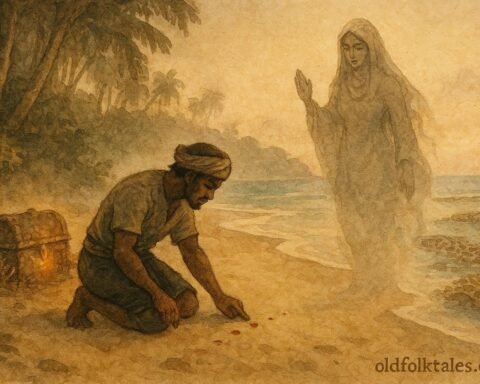
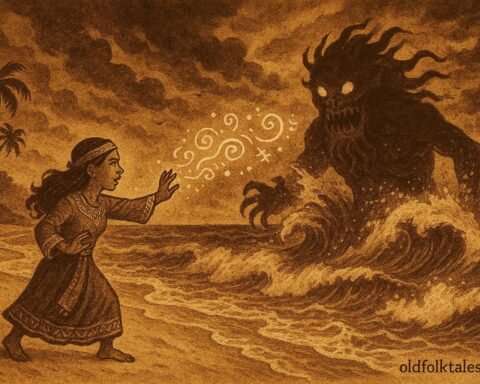
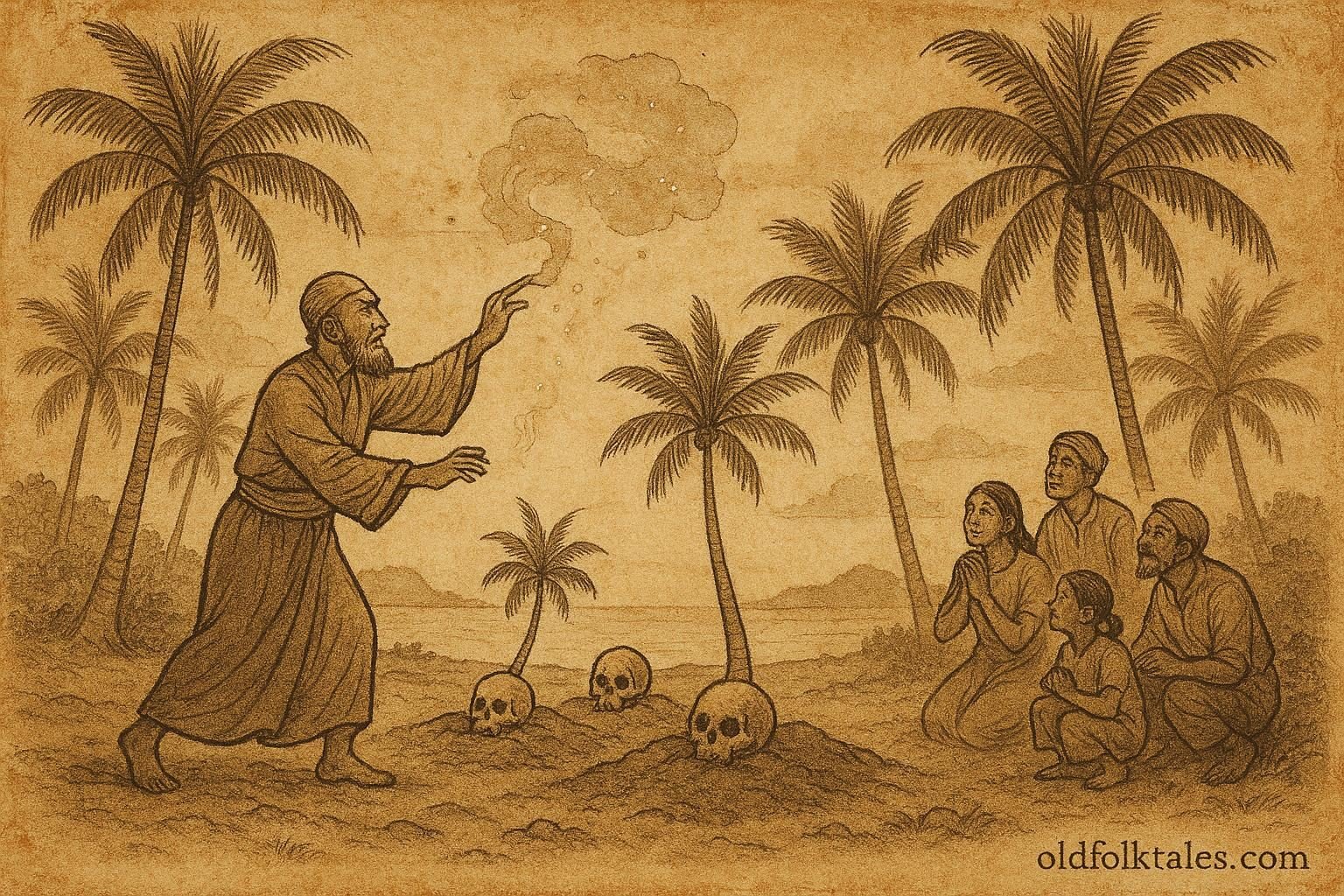
Walking among the freshly dug graves, the fanḍita began his incantations, chanting to the spirits of the departed. He focused his power upon the skulls of the dead, murmuring spells that intertwined death and rebirth. Slowly, as if guided by the hands of fate itself, the first coconut palms sprouted from the ground, emerging from the very bones of the ancestors. Their slender trunks reached skyward, and their fronds swayed gently in the tropical breeze. Golden coconuts hung from the trees, promising nourishment, water, and hope for the living.
The survivors, astonished and grateful, marveled at the miracle. These trees were unlike any they had known. Their roots clung firmly to the sandy soil, anchoring life in a land that had seemed unforgiving. The fanḍita instructed the people on how to harvest the coconuts, explaining that the fruits could provide both food and water, and that the trees themselves could shield against storms and offer shade under the blazing sun.
From that day forward, the coconut palms became central to Maldivian life. They symbolized survival, resilience, and the continuity of life even in the face of tragedy. Villagers named the first fruits with reverence, understanding that they were gifts born from sacrifice and guided by the wisdom of the fanḍita. The trees spread across the islands, growing in clusters along the coastlines and forming groves that would sustain generations.
The story of the first coconuts was passed down through families and villages, a reminder that even in death, life could flourish. The fanḍita’s magic transformed grief into abundance, and the islands, once desolate and sorrowful, now teemed with nourishment, hope, and a legacy that would endure forever.
Moral Lesson
From tragedy can arise life; with wisdom, ingenuity, and respect for nature, communities can transform loss into survival and prosperity.
Knowledge Check
-
Who caused the first coconut trees to grow?
A wise sorcerer, or fanḍita, planted magic that grew the trees from the skulls of the dead. -
Why did the original settlers die in large numbers?
The settlers faced harsh environmental conditions, disease, and scarcity of food. -
What role do coconut trees play in Maldivian life?
They provide food, water, shelter, and symbolize survival and resilience. -
What cultural lesson does the tale teach?
Even in times of death and despair, life can continue with wisdom and innovation. -
What is the origin of this myth?
It is a traditional Maldivian folktale, passed down through generations. -
How does the fanḍita demonstrate his power?
By performing magic that transforms the skulls of the deceased into thriving coconut palms.
Source: Adapted from Folk Tales of the Maldives, Maldivian institutional repository.
Cultural Origin: Maldives (Maldivian folklore)