In the days of the Ya’ariba dynasty, when Oman’s interior was shaped by oases and guarded by resolve rather than walls, the Imam of Nizwa faced a grave concern. Raiders moved swiftly across the desert, threatening a vital oasis that sustained villages and caravans alike. To protect it, the Imam ordered the construction of a great fort, one that would command the land and secure the people. For this task, he summoned the finest architect in the region, a man known for skill, precision, and tireless devotion to his craft.
The architect accepted the commission with pride. He was given a year to raise a fort worthy of the Imam’s authority. From the first days, he labored relentlessly. Stone was cut, carried, and stacked. Walls rose, only to crack and collapse. Towers leaned and fell. Each failure was met with renewed effort, yet the ground seemed unwilling to hold the structure. Weeks turned into months, and the ruins grew larger than the progress. The Imam’s patience thinned, and his displeasure became known.
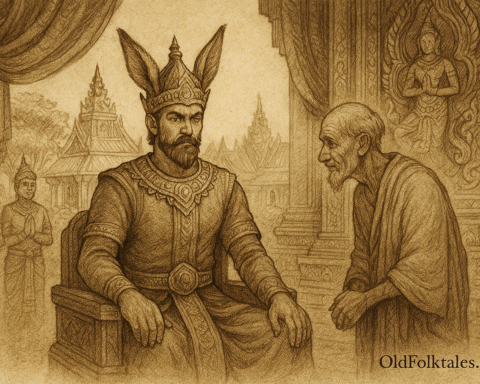
As the final deadline approached, the architect was overcome by despair. One night, alone among the broken stones, he knelt and prayed. He asked not for favor or fame, but for understanding. Exhausted, he fell asleep beside the ruins. In his dream, an old man appeared. His beard was white like mountain limestone, and his presence was calm and weighty. The old man spoke gently, yet his words carried the force of truth.
“You build with pride for an Imam’s glory,” the old man said. “Build instead for the people’s safety, and the land will help you.”
The architect awoke before dawn, his heart steady for the first time in months. He understood that his work had been guided by ambition rather than purpose. At sunrise, he dismissed his workers and sought out the village elders. Sitting humbly among them, he asked what they desired in a true sanctuary. They spoke of justice, learning, refuge, and fairness. They wanted a place where disputes could be settled, knowledge preserved, and families protected in times of danger.
That evening, silence settled over Nizwa. Then, as darkness deepened, the villagers heard a low, steady sound. It was the grinding of stone upon stone. From their windows, they saw an astonishing sight. Fallen stones stirred, rolling across the ground. Blocks lifted as if guided by unseen hands, stacking themselves with care and balance. Walls rose straight and strong. Towers formed, their lines graceful and sure. Ceilings appeared, adorned with intricate geometric stars, precise and harmonious.
By morning, the fort stood complete. It was majestic yet welcoming. Within its walls were a library for learning, a court for justice, and hidden passages that offered escape in times of siege. Every feature reflected wisdom rather than force. When the Imam arrived, he was astonished. He questioned the architect, who bowed and confessed all that had occurred, from the dream to the night of wonder.
The Imam listened in silence, then declared, “This fort was built by the will of the people and the spirit of the land, rouh al-ard. It shall be a house of justice, beit al-adl, not merely a weapon.” He appointed the architect as the fort’s first keeper, entrusted not with power, but with responsibility.
It is said that on quiet nights, when the desert wind is still, the stones of Jabrin Fort whisper counsel to rulers who govern with fairness. The fort stands as a reminder that true security is born from communal will and humility, not from forced labor or pride.
Moral Lesson
This Omani folktale teaches that lasting strength comes from humility, collective purpose, and service to the people. When leaders and builders act for justice rather than glory, even the land itself offers support.
Knowledge Check
1. Why did the Imam want to build the fort?
To protect a vital oasis near Nizwa from raiders during the Ya’ariba dynasty.
2. What problem did the architect face during construction?
The walls and structures repeatedly collapsed despite tireless labor.
3. Who appeared in the architect’s dream?
An old man with a white beard who symbolized wisdom and the spirit of the land.
4. What change did the architect make after the dream?
He sought the villagers’ vision and focused on building for the people’s safety.
5. What miraculous event occurred at night?
The stones assembled themselves into a complete and majestic fort.
6. What does the fort symbolize in Omani culture?
That true security and justice arise from communal will and humility.
Source and Cultural Origin
Source: Omani Folklore Centre Archive, Story HF-112.
Cultural Origin: Nizwa area, Sultanate of Oman, explaining the legendary origin of Jabrin Fort.