Across the wide Uzbek steppe, where tall grasses bend under the endless sky and animals roam freely between desert and pasture, stories have long been told not only of heroes and kings, but of animals who speak and behave like humans. Among these tales, none were more beloved than those of the fox and the jackal, creatures whose wit and weakness mirrored the strengths and flaws of people themselves.
In one such tale, a fox and a jackal lived near the same watering place. The fox was small and lean, with sharp eyes and a quiet manner. The jackal, though no stronger, believed himself superior. He boasted loudly of his cleverness, mocking others and claiming that no creature could outthink him.
One day, hunger struck both animals. The land was dry, and food was scarce. The jackal announced that he would find a way to eat well without effort. Seeing a herd of animals grazing nearby, he devised a reckless plan, bragging that he would frighten them into abandoning their food. The fox listened silently, saying nothing.
The jackal rushed forward, howling and showing his teeth. But the herd scattered in all directions, and the jackal was left with nothing but dust in his mouth. Embarrassed and angry, he returned to the fox, who had calmly observed from afar.
Later that evening, the fox suggested a different approach. Using patience rather than noise, the fox quietly followed the scent of food to a forgotten campsite. With careful steps and keen attention, the fox found scraps left behind by travelers. When the jackal tried to rush ahead and seize everything at once, he made too much noise and frightened himself, believing danger was near. The fox, calm and deliberate, gathered enough food for himself.
Humiliated, the jackal accused the fox of trickery. The fox replied that cleverness was not loud boasting, but careful thinking. Still unwilling to learn, the jackal challenged the fox to prove his wisdom.
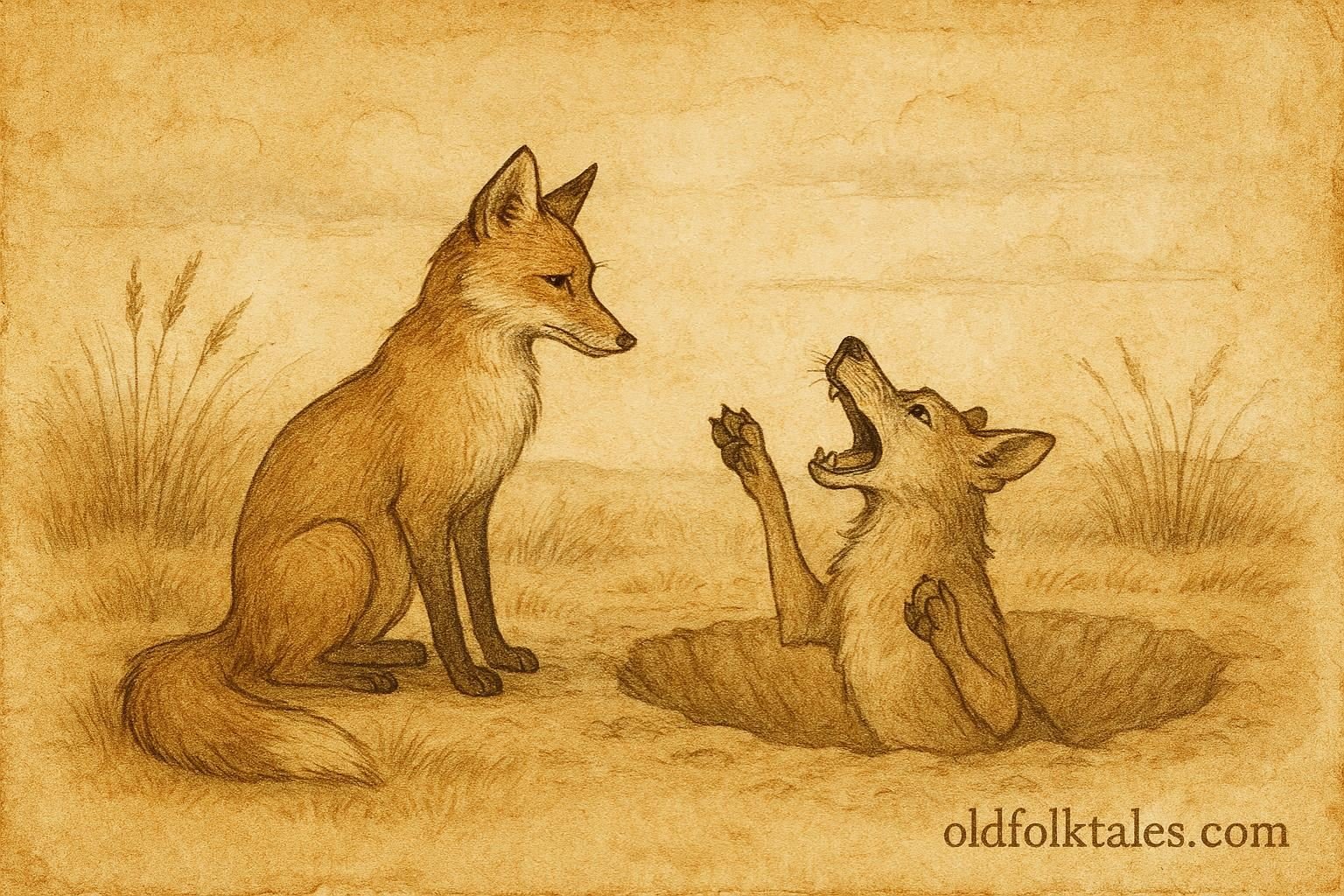
The fox agreed and proposed another test. He led the jackal to a shallow pit and claimed it was full of hidden food. The jackal jumped in without looking, only to find nothing. As he struggled to climb out, the fox calmly explained that greed and haste often lead to foolish outcomes.
By the time the jackal escaped, exhausted and ashamed, the fox had already gone. Alone beneath the open sky, the jackal finally understood that strength without thought and pride without wisdom bring only loss.
From that day on, the fox was known as a symbol of quiet intelligence, while the jackal became a warning told to children, of what happens when boasting replaces humility.
Moral Lesson
This Uzbek trickster tale teaches that intelligence, patience, and self-control are greater than pride and reckless ambition. True wisdom speaks softly and acts carefully.
Knowledge Check
-
Q: What do the fox and jackal represent in Uzbek folklore?
A: Human traits such as intelligence, pride, greed, and foolishness. -
Q: Why does the jackal fail repeatedly?
A: Because he acts with arrogance and haste instead of careful thought. -
Q: How does the fox succeed?
A: By observing quietly, using patience, and thinking before acting. -
Q: What lesson is taught to children through this tale?
A: That pride and greed lead to failure, while humility leads to success. -
Q: Why are animal characters used in Uzbek folktales?
A: To teach moral lessons in a humorous, memorable way. -
Q: What environment shapes these animal trickster stories?
A: The Central Asian steppe and nomadic way of life.
Source: Uzbek oral animal folklore; collected in children’s tale anthologies.
Cultural Origin: Uzbekistan (Uzbek folk tradition)