In a quiet Uzbek village bordered by open steppe and distant hills, there lived a humble villager whose life passed in steady rhythm with the land. His house was small, built of sunbaked earth, and his possessions were few, but his heart was known for its gentleness. Each morning he tended his patch of land, drawing water from the well and greeting neighbors as they passed along the dusty path that wound through the village.
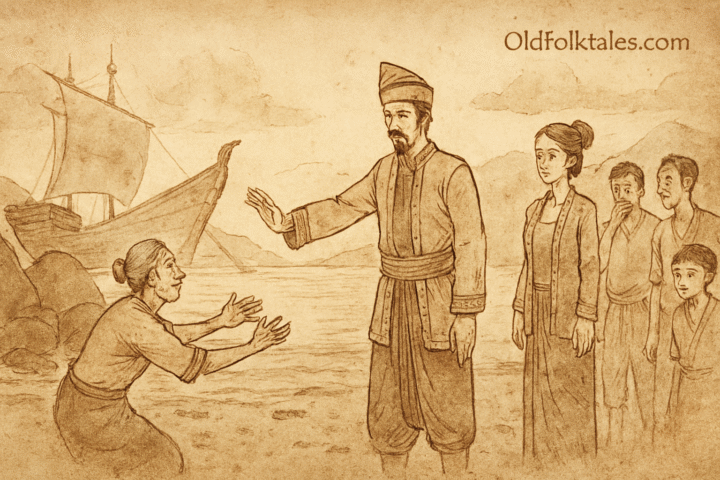
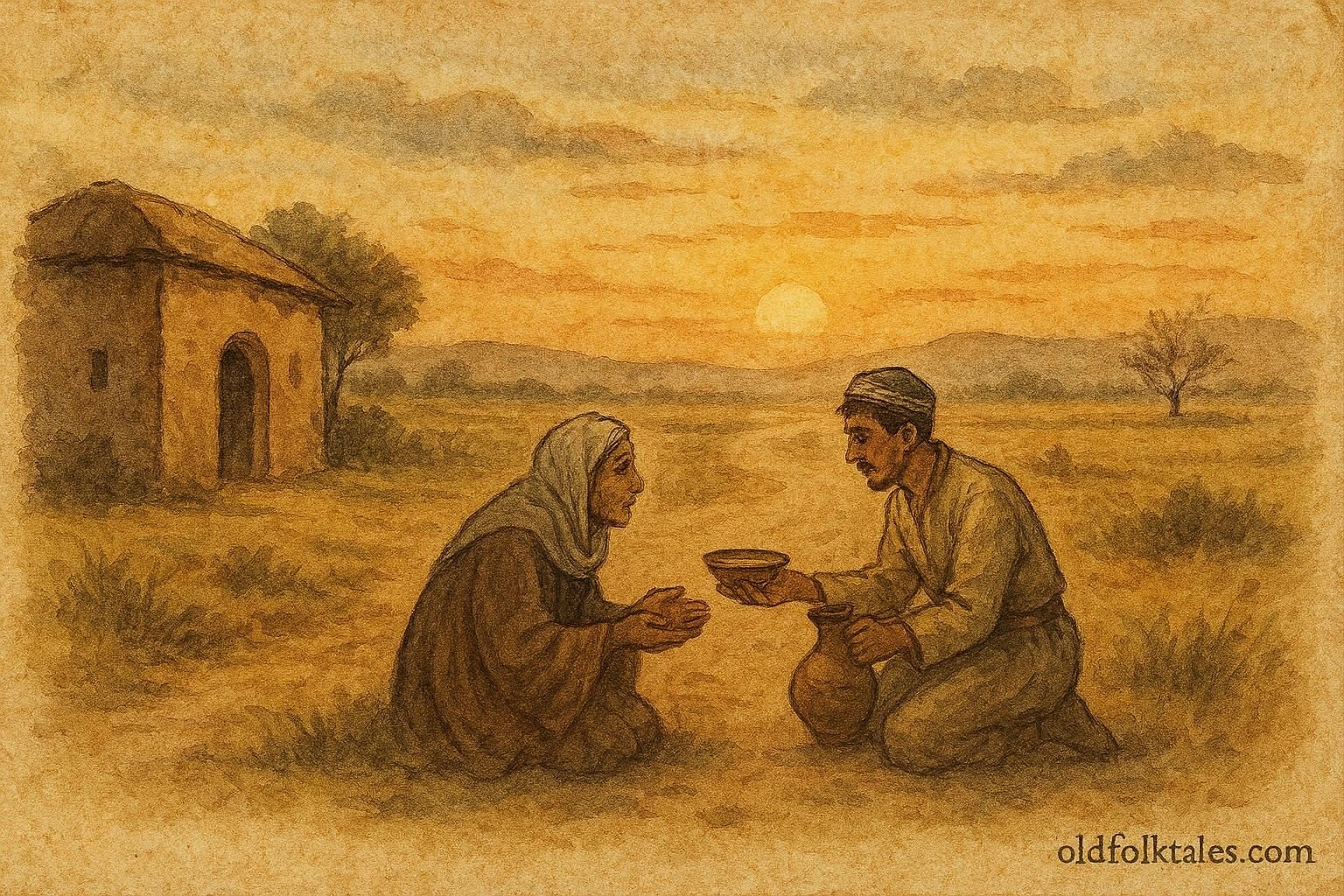
One evening, as the sun dipped low and painted the sky in shades of copper and rose, the villager was returning home when he saw an old woman sitting by the roadside. Her back was bent, her clothes worn thin by time and travel, and her face carried the fatigue of many miles walked alone. Travelers were not uncommon on that road, yet something in her stillness stirred his concern.
Journey through enchanted forests and islands in our Southeast Asian Folktales collection.
Without hesitation, the villager stopped. He offered her water from his flask and helped her rise to her feet. Seeing that night was approaching and the road ahead was long, he invited her to his home. There, he shared what little he had, warm bread, a simple stew, and a place to rest by the hearth. He asked no questions and expected nothing in return, for such generosity was, to him, simply the proper way to treat another human being.
The old woman ate quietly, her eyes observing the household with careful attention. When dawn came, she prepared to leave. Before stepping beyond the threshold, she turned to the villager and placed a small object in his hands. Some said it was a seed, dark and unremarkable; others claimed it was a plain artifact, smooth and light. Whatever its form, she told him only this: it was a gift from heaven, to be used with gratitude and patience.
With that, she walked away, and as the villager watched her retreat along the road, she seemed to fade into the morning light, leaving behind more questions than answers.
The villager planted the seed, or kept the gift, as instructed, and in time its blessing became clear. His fields grew richer, his harvest more abundant than any he had known. His home was no longer marked by scarcity, and he shared his good fortune with neighbors, giving grain to the hungry and help to those in need. The village prospered alongside him, and many whispered that heaven itself had smiled upon his kindness.
But prosperity draws attention as surely as fire draws moths. Word of the gift spread beyond the village, reaching those whose hearts were ruled by envy and greed. Some scoffed at the story, while others sought to claim the blessing for themselves. A few attempted to trick the villager, offering false friendship. Others tried threats, believing force could win what kindness had earned.
Each attempt failed. Those who acted with cruelty found the gift brought them nothing but misfortune. Crops withered, plans unraveled, and their schemes collapsed under their own weight. The blessing could not be taken, only received, and only by those whose intentions were pure.
The villager remained unchanged by his good fortune. He continued to live simply, honoring the gift not as a reward to hoard, but as a reminder of the values that had brought it into his life. In time, the village understood that the true miracle was not the seed or artifact itself, but the kindness that had summoned it.
And so the story was told and retold, as a lesson carried on the wind across the Uzbek steppe.
Moral Lesson
This folktale teaches that genuine kindness, humility, and generosity invite blessings beyond material wealth. Greed and cruelty, no matter how clever, lead only to loss, while compassion aligns the human heart with divine justice.
Knowledge Check
1. Who receives the gift from heaven in the story?
A humble Uzbek villager who shows kindness to a struggling old woman.
2. What act leads to the villager’s reward?
Offering food, shelter, and compassion without expecting anything in return.
3. What happens to those who try to take the gift through greed or force?
They suffer misfortune and failure, as the blessing does not respond to selfish intent.
4. What does the mysterious gift symbolize?
Divine reward granted through moral virtue rather than material desire.
5. How does the villager use his prosperity?
He shares it with his community and continues to live humbly.
6. What cultural value does this Uzbek folktale emphasize most strongly?
That generosity and humility are honored and protected by higher justice.
Source: Uzbek oral folktale tradition; recorded in regional folklore anthologies
Cultural Origin: Uzbekistan (Uzbek folklore)