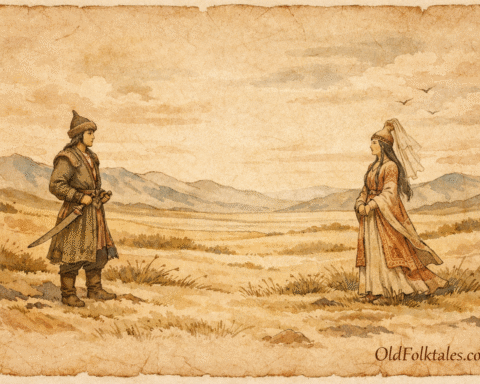
On the broad Kazakh steppe, where herds moved with the seasons and a person’s name carried as much weight as their possessions, there lived a bai, a wealthy landowner whose herds were vast and whose storehouses were full. His yurt stood large and well furnished, a sign of his status, and many laborers depended on him for work.
Among those laborers was a poor man with little to his name but his strength and endurance. From dawn until the sky burned white with midday sun, he worked the bai’s land, tending animals, repairing fences, and carrying heavy loads across long distances. Yet for all his effort, his reward was meager. The bai paid him little and spoke to him less kindly still.
Discover the wisdom of Persian poets and Arabian storytellers in Western Asian Folktales.
The bai often boasted of his wealth. He laughed at the poor man’s worn clothes and mocked his empty purse, claiming that fortune favored those who deserved it. In his mind, riches proved superiority, and poverty was a sign of weakness. The poor man listened in silence, lowering his eyes, though his heart carried quiet dignity.
Seasons passed, and the steppe, as it always does, brought change. A harsh year followed, storms scattered herds, sickness took animals, and trade routes failed. One misfortune after another fell upon the bai. His wealth dwindled until the once-proud landowner found his barns empty and his influence gone. Those who had once praised him now turned away.
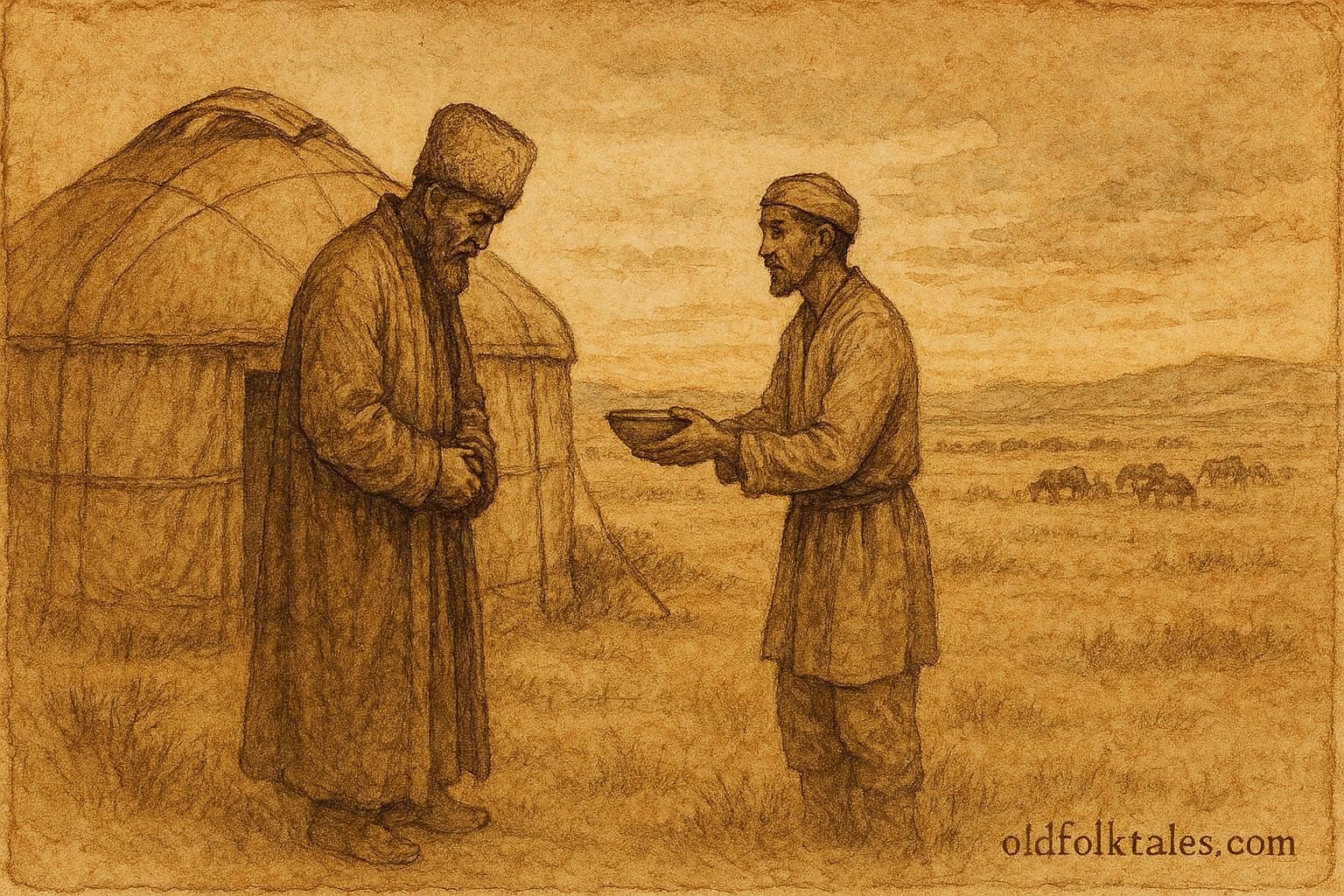
Reduced to need, the bai remembered the poor man he had long dismissed. He set aside his pride and traveled to the modest dwelling where the man now lived. Time and steady effort had given the former laborer a small but stable life. He was respected in the community for his fairness and willingness to help others.
When the bai arrived, he did not boast. Hunger and hardship had stripped him of arrogance. He asked for help, food, shelter, and guidance through his misfortune.
The poor man recognized him at once. Memories of long days of labor and harsh words surfaced, but he did not let bitterness guide his response. Instead, he welcomed the bai inside, shared his food, and offered him a place to rest.
No reproach was spoken. The poor man gave help not to shame the bai, but because compassion was the measure by which he lived. The bai, sitting in silence, understood more deeply than if he had been punished. He saw that wealth had not made him honorable, and poverty had not diminished the other man’s worth.
When the bai left, he carried little in his hands but much in his heart. He had learned that riches could vanish, but character endured.
Discover the wisdom of ancient India and the Silk Road in South & Central Asian Folktales.
Moral Lesson
This folktale teaches that wealth without compassion leads to disgrace, while generosity and dignity define true honor. Power fades, but kindness leaves a lasting legacy.
Knowledge Check
1. Who is the bai in Kazakh society?
A wealthy landowner with social and economic power.
2. How does the bai treat the poor man initially?
With exploitation, mockery, and little reward.
3. What causes the bai’s downfall?
A series of misfortunes that strip him of wealth.
4. How does the poor man respond when roles reverse?
With generosity and compassion.
5. What lesson does the bai learn?
That wealth without honor brings shame.
6. What value does the story promote?
Fairness, dignity, and humane treatment of others.
Source: Kazakh morality tales criticizing greed and abuse of power
Cultural Origin: Kazakhstan (Kazakh moral folklore)