In a small village nestled between the rugged hills and fertile plains of the Pashtun lands, there lived a man known for his small but valuable inheritance, a modest collection of livestock, tools, and a few coins he had saved through careful work. He had three sons, each with very different natures.
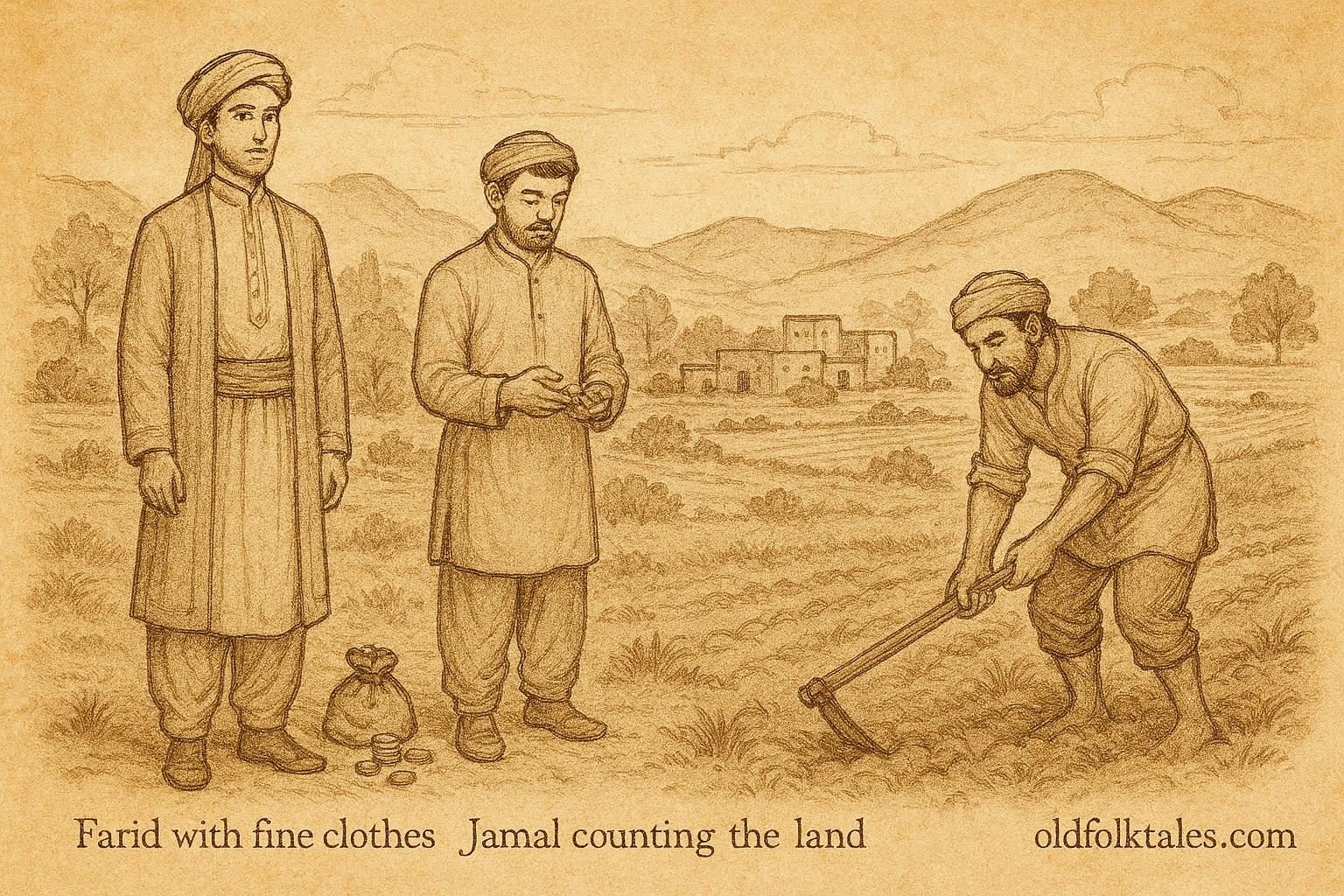
The eldest son, Farid, was proud and indulgent. He loved fine clothes and lavish food, caring little for the wealth his father had accumulated. The second son, Jamal, was cautious to the point of miserliness. He hoarded every coin, refusing to spend or share, fearing loss above all else. The youngest, Salim, was humble and diligent. He worked steadily, learning the crafts of the village, tending the fields, and helping his neighbors.
One day, their father called them together. His voice was gentle but firm.
“My sons,” he said, “I have little to leave, but I wish to divide it fairly among you. May each use it wisely.”
Farid laughed and immediately spent his portion on luxuries and elaborate meals. He bought a fine robe and a horse that ate more than it carried, showing off to the villagers at every opportunity. Within weeks, his wealth had vanished, leaving him destitute and dependent on others for food.
Jamal, on the other hand, stored his inheritance carefully. He counted his coins daily, afraid to invest or help anyone. While he amassed small sums, he never allowed it to grow. His hoarding created anxiety and distrust; people avoided him, and eventually, his hidden wealth attracted thieves, who took everything he had guarded so obsessively.
Meanwhile, Salim approached his portion differently. He divided his inheritance to improve what he already had, fixing his small plot of land and helping his neighbors repair tools. He planted crops and tended them with care, learning from each mistake. Over time, his diligence produced harvests that fed not only himself but also the villagers in times of need. His honesty and hardworking nature earned him respect, and even his older brothers eventually came to seek his guidance when misfortune struck them.
Years passed, and the village watched the outcomes of each son’s choices. Farid, ruined by greed and extravagance, wandered seeking charity. Jamal, consumed by fear and selfishness, found only emptiness despite his wealth’s disappearance. Salim prospered, not through luck, but through consistent effort, fairness, and integrity.
When the father passed away, the villagers remembered his words and the example of his sons. The lesson was clear: wealth and inheritance alone cannot guarantee success. Only a heart that works diligently, treats others with honesty, and avoids the traps of greed will flourish.
Moral Lesson
Hard work, honesty, and steady effort build lasting success. Greed and laziness lead to loss and ruin, regardless of inherited wealth.
Knowledge Check
1. Who are the three sons and how do they differ?
Farid is indulgent and reckless, Jamal is miserly and fearful, and Salim is diligent and honest.
2. What was the father’s purpose in dividing his inheritance?
To allow each son to use his resources wisely and learn the value of effort and character.
3. How does Farid’s greed affect his life?
He spends recklessly, loses all his wealth, and becomes dependent on others.
4. How does Jamal’s hoarding backfire?
He isolates himself, loses respect, and his hidden wealth is stolen.
5. Why does Salim succeed?
Through steady work, fairness, helping others, and avoiding greed, he creates lasting prosperity.
6. What cultural lesson does this tale reflect?
Pashtun and broader Afghan folk wisdom emphasizes diligence, honesty, and community-mindedness over selfishness and greed.
Source: Adapted from SOAS collection of short Pashtun folk tales.
Cultural Origin: Afghanistan–Pakistan (Pashtun Region)