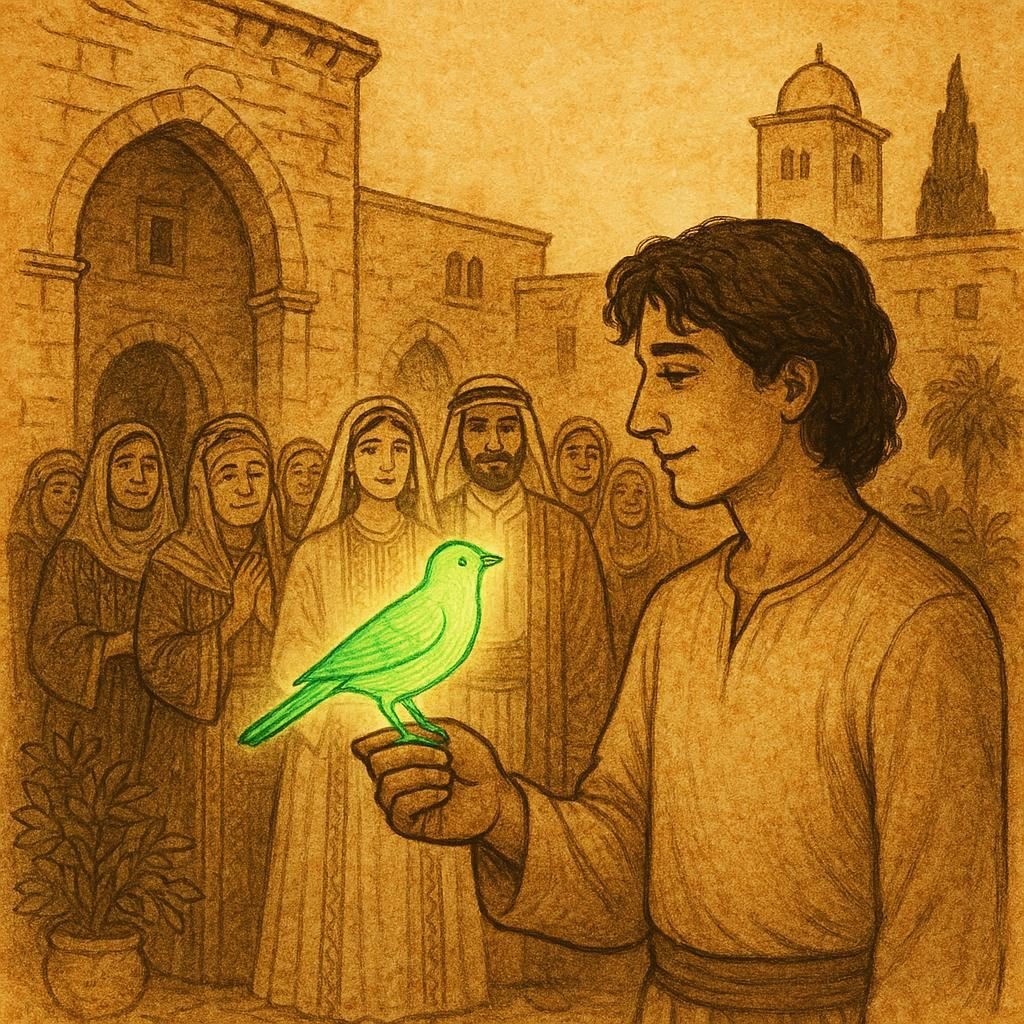
In the heart of a small Palestinian village, where the olive trees whispered to the wind and the scent of jasmine lingered in the courtyards, there once lived a kind man with his young son and daughter. Their mother had passed away when they were very small, leaving behind a home filled with tenderness and sorrow. In time, the man remarried, hoping to bring warmth and order back to the household. But his new wife was envious and cruel, especially toward the children, whose bond remained strong despite her harshness.
The siblings’ days grew heavy under their stepmother’s tyranny. She would give them little food, force them into endless chores, and whisper lies into their father’s ears. The boy, brave and clever, tried to protect his sister. Each morning, he would bring her water from the well and share whatever scraps of bread he could find. The girl, patient and gentle, bore her troubles quietly. Her only comfort was her brother’s steadfast love and the faith that goodness would one day return.
But jealousy knows no rest. The stepmother, seeing their closeness, decided to break their bond forever. One day, when the brother went to the fields, she gave the girl a cup of enchanted milk. “Drink, my daughter,” she said sweetly, “it will make you strong and beautiful.” But the moment the girl drank, she felt her limbs grow light, her skin shimmer, and before she could cry out, she was transformed into a radiant green bird that fluttered out the window, vanishing into the sky.
When the brother returned, his sister was gone. The stepmother feigned tears, saying the girl had run away. The boy’s heart broke, but in his dreams that night, he heard the flutter of wings and a soft, sorrowful song calling his name.
The green bird wandered from grove to grove, its feathers gleaming like emerald leaves in sunlight. It sang in a voice that touched every listener’s heart, though none could understand the sorrow within its melody. Years passed, and the boy grew into a handsome young man. One day, while walking near the edge of the village, he heard that same haunting tune, the same song from his childhood dreams. He followed the sound to a wedding feast, where people had gathered to celebrate. High above the crowd perched the green bird, its song silencing all laughter.
The bird sang:
“They feast below, yet truth they do not see,
A sister lost, her brother grieves for me.
Beware the stepmother, false in every part,
Only love can cleanse a poisoned heart.”
The guests were astonished, and whispers spread quickly. The bridegroom, who was none other than the young man himself, stared at the bird in awe. Something deep within him stirred, a memory of laughter shared long ago, of a voice he once knew.
Moved by instinct, he reached out and called softly, “If you are my sister, come to me.” The green bird descended, trembling, and alighted upon his hand. At that moment, a soft light surrounded her, and she shed her feathers, becoming once again the gentle girl he had lost. The crowd gasped in wonder.
The truth came to light that day. The wicked stepmother was exposed for her cruelty and banished from the village. The brother and sister, reunited at last, restored their father’s home to peace and joy. From that day on, the tale of the green bird was told across the hills of Palestine, a story of faith, endurance, and the bond no evil could sever.
Moral Lesson
True love between siblings transcends hardship and deceit. No matter how deeply buried, truth always finds its voice, often in the most unexpected forms.
Knowledge Check
1. What is the central symbol in “The Green Bird” folktale?
The green bird symbolises transformation, truth, and the enduring bond between siblings.
2. Why was the sister transformed into a bird?
The jealous stepmother used magic to separate the loving siblings and harm the girl.
3. How does the brother recognise his sister?
He recognises her through her song, which carries memories of their childhood love.
4. What moral lesson does the folktale teach?
It teaches that love and truth always triumph over envy and deceit.
5. What cultural theme does this story reflect in Palestinian folklore?
It reflects family honour, sibling loyalty, and the victory of goodness over malice.
6. How is transformation used symbolically in the tale?
Transformation represents suffering leading to revelation and justice.
Source: Adapted from the Palestinian folktale “The Green Bird” as told by Fatme of Arrabe, collected in the Israeli Folktale Archive (IFA).
Cultural Origin: Palestine (Arab-Palestinian Folklore)