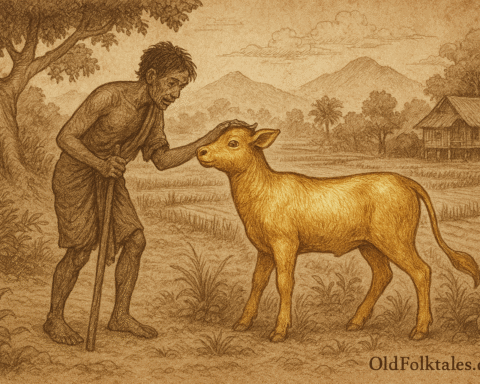
In the fertile plains of the Red River Delta, many generations ago, there lived a poor and humble fisherman named Chử Đồng Tử. From dawn to dusk, he worked the waters of the river, casting his net and hauling in what he could. Despite his poverty, he was content with his simple life, guided by honesty, compassion, and a deep respect for the natural world. Villagers often admired his integrity and gentle heart, even if they pitied him for his lack of wealth or influence.
One year, the kingdom prepared for a grand festival to celebrate the autumn harvest. Princess Tiên Dung, the daughter of the king, was as beautiful as the sunrise over the river, yet she possessed a free spirit that could not be contained by palace walls or strict royal etiquette. She often wandered the rivers and fields in secret, seeking the joys of ordinary life that her royal status denied her.
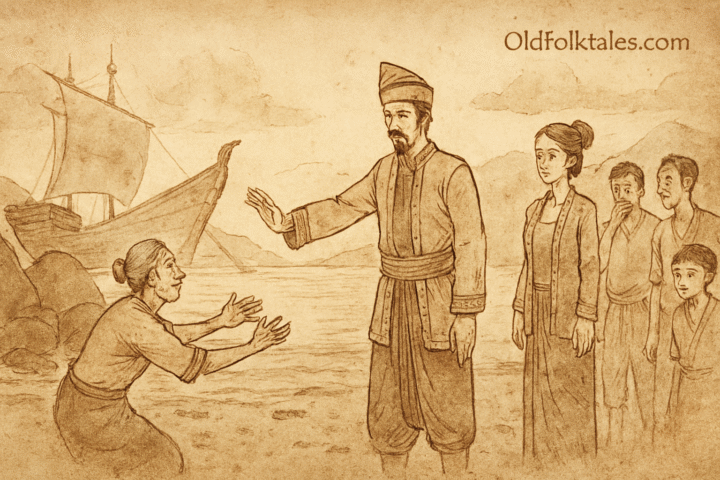
On the eve of the festival, Tiên Dung disguised herself in simple clothing and left the palace to watch the villagers’ preparations along the river. There, by the riverbank, she saw a young man casting his net with skill and devotion. His movements were humble, yet graceful, and his eyes held a calm wisdom that captivated her instantly. She approached him without revealing her true identity.
Discover more East Asian Folktales from the lands of dragons, cherry blossoms, and mountain spirits.
Chử Đồng Tử greeted her with a gentle smile. The two spoke long into the evening, discovering a shared sense of wonder for the beauty of the world and the simplicity of honest labor. Tiên Dung felt a bond she had never known with anyone in her life, and Chử Đồng Tử, too, sensed a deep connection with the mysterious young woman. Their hearts, though divided by social rank, spoke the same language.
The next day, word of the princess’s absence spread through the palace. Enraged, the king demanded that his daughter be found. Guards searched the riverbanks and fields but could not locate her. Tiên Dung, knowing the danger of discovery, returned secretly to the fisherman, and the two pledged their hearts to one another.
They married in a modest ceremony beside the river, attended only by the fisherman’s friends and a few kind villagers. Despite the joy of the union, their happiness was short-lived. Word of the princess’s marriage reached the king, and he was furious. To the royal court, it was unthinkable for a daughter of the king to marry a commoner. Soldiers were sent to retrieve the princess and punish Chử Đồng Tử.
Faced with this crisis, the couple fled to the forested hills along the river. They hid beneath the shade of ancient trees and slept beside quiet streams, surviving on the bounty of the land. Yet even in hardship, their love remained strong. Chử Đồng Tử worked tirelessly to provide for them both, while Tiên Dung offered courage and unwavering support. They shared laughter, stories, and dreams under the canopy of stars, finding freedom and fulfillment that wealth and titles could never provide.
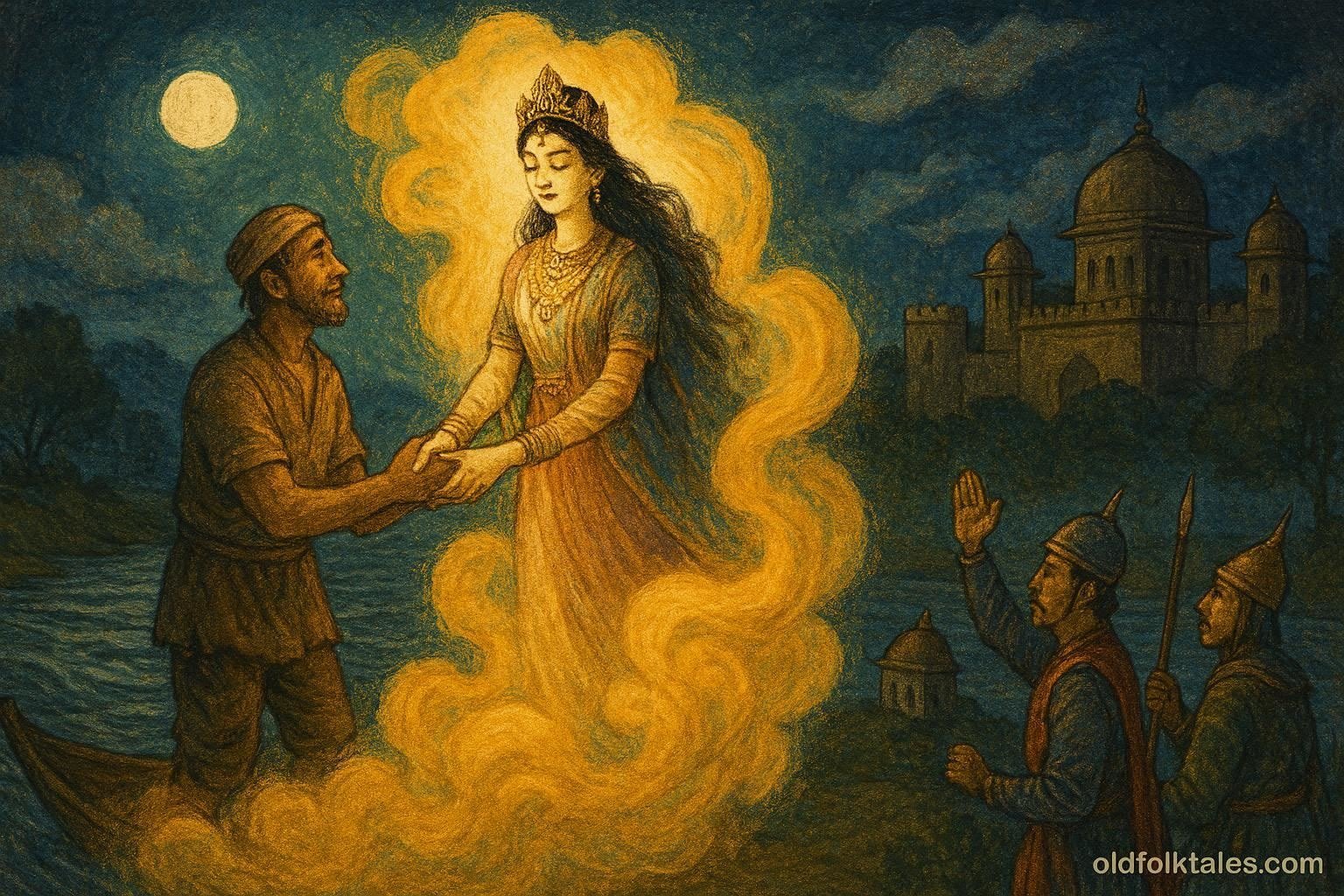
One day, as the king’s soldiers closed in, Chử Đồng Tử prayed to the spirits of the river and sky for protection. Suddenly, a radiant light enveloped the couple. The earth beneath them rose, forming a golden cloud that lifted them above the palace guards. The soldiers could not reach them, no matter how fast they ran or how high they climbed. The villagers who witnessed the miracle fell to their knees in awe, whispering that heaven itself had intervened.
The cloud carried Chử Đồng Tử and Tiên Dung high into the sky, and there, bathed in celestial light, they transformed into spiritual beings. Their love, forged in humility, devotion, and courage, became eternal. People say that from that day forward, their story served as a symbol of how true love transcends material wealth, social rank, and even mortal life. Couples in the Red River Delta would invoke their names in prayer, asking for devotion, fidelity, and the blessing of spiritual ascension.
Generations later, scholars and storytellers would recount the tale of the fisherman and the princess. They emphasized not only the romantic devotion of the couple but also the courage it took to defy societal norms and live in harmony with natural and spiritual forces. The story became an emblem of Vietnamese reverence for both human love and the unseen guidance of ancestors and spirits who protect virtue and honesty.
Explore ancient tales from Thailand, Cambodia, and the Philippines in Southeast Asian Folktales.
Moral Lesson
The tale of Chử Đồng Tử and Princess Tiên Dung teaches that true love is guided by sincerity, compassion, and courage rather than social status or material wealth. Devotion to one another, combined with humility and moral integrity, can transcend obstacles, gain spiritual favor, and endure beyond earthly limitations. It also reminds us that virtue, faith, and courage are valued by both the human and spiritual worlds.
Knowledge Check
- Who was Chử Đồng Tử?
A humble fisherman admired for his honesty and kindness. - Why did Princess Tiên Dung leave the palace?
To experience the simple joys of life among the villagers. - How did the couple avoid the king’s soldiers?
They were lifted by a radiant cloud sent by the spirits. - What did their transformation signify?
Their eternal love and spiritual ascension. - What lessons do villagers derive from this story?
That love and virtue transcend social rank and material wealth. - What is the main moral lesson of the story?
True love combined with courage, humility, and integrity is powerful enough to overcome obstacles and earn spiritual favor.
Source
Adapted from Vietnam Institute of Culture and Arts Studies Folklore Records, 2013.
Cultural Origin
Red River Delta spiritual tradition.