In a small village nestled among the emerald rice paddies and mist-covered mountains of Laos, there lived a young orphan boy whose name has been carried through generations on the lips of storytellers. He had no family to call his own, no land to cultivate, and no home except for a simple bamboo shelter at the edge of his uncle’s property. Each day, he worked from sunrise until the stars emerged, tending his uncle’s water buffalo, mending fences, and performing every task assigned to him without complaint.
The boy’s uncle was a man whose heart had hardened like sun-baked clay. Though he was the child’s only living relative, he showed no warmth or kindness. The boy received only leftover rice sometimes just a handful mixed with water and worn clothes that barely protected him from the mountain winds. Yet despite his circumstances, the orphan boy remained gentle in spirit, finding joy in small blessings: the song of a bird, the coolness of stream water on his feet, the loyal companionship of the buffalo he tended.
Click to read all East Asian Folktales — including beloved stories from China, Japan, Korea, and Mongolia.
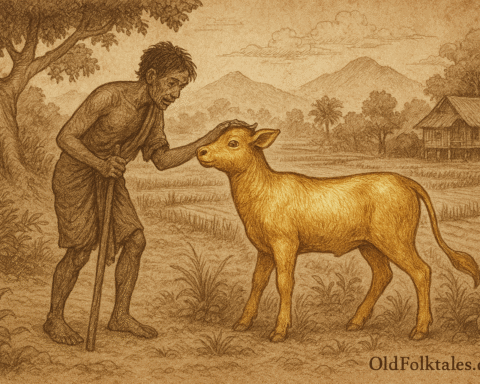
Among the uncle’s small herd, there was one old buffalo that the boy loved especially. Its coat was faded and patchy, its horns chipped from years of labor, and its steps had grown slow and uncertain. The uncle considered the animal worthless and often threatened to abandon it in the forest. But the boy cared for this elderly creature with tender devotion, sharing his meager portions of rice, leading it to the sweetest grasses, and speaking to it as one would speak to a dear friend.
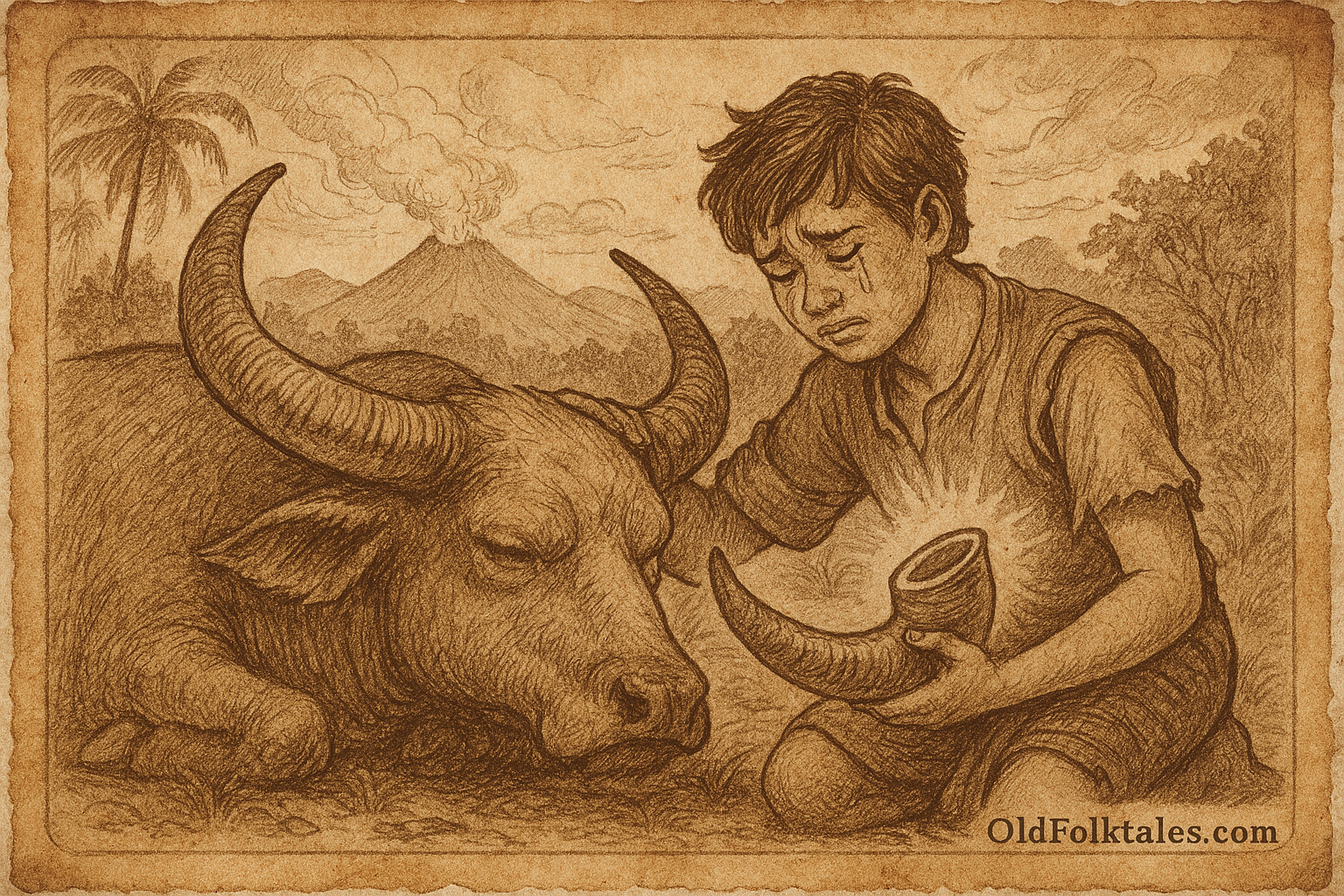
One evening, as golden light filtered through the palm fronds and the air grew thick with the scent of jasmine, the old buffalo collapsed beneath a tamarind tree. The boy rushed to its side, cradling the great head in his lap, tears streaming down his dusty cheeks. The buffalo’s ancient eyes gazed up at him with profound understanding, as if all the wisdom of the earth resided there.
“Do not weep for me, kind child,” the buffalo spoke, its voice like wind through bamboo soft yet clear. The boy gasped in wonder, but the buffalo continued, “You have shown me compassion when others saw only burden. You fed me when you yourself went hungry. You spoke words of kindness when I was deemed worthless. For this, I give you a gift.”
With its final breath, the buffalo gestured toward one of its horns. “Take my horn when I have passed. It will provide for you as you have provided for me. But remember magic serves only the pure of heart.” As the last light faded from the buffalo’s eyes, the boy wept openly, mourning not the loss of a beast of burden, but the departure of a true friend.
After performing proper rites for the buffalo’s spirit, the boy carefully removed one horn as instructed. That night, alone in his shelter with hunger gnawing at his belly, he held the horn and whispered a prayer of gratitude to the buffalo’s spirit. Suddenly, the horn grew warm in his hands and began to glow with soft, amber light. From its hollow interior poured forth steaming rice more than enough for a feast. The boy ate his first full meal in longer than he could remember, tears of gratitude mixing with grains of rice.
In the days that followed, the magic horn proved its power again and again. When the boy needed salt to preserve vegetables, the horn provided it. When his tools broke, new ones emerged from the horn’s depths. When the rains failed and others worried about their crops, the horn gave him seeds that would flourish even in drought. Yet the boy never grew greedy or proud. He shared his bounty with other poor villagers, helped elderly neighbors repair their homes, and gave offerings at the village temple.
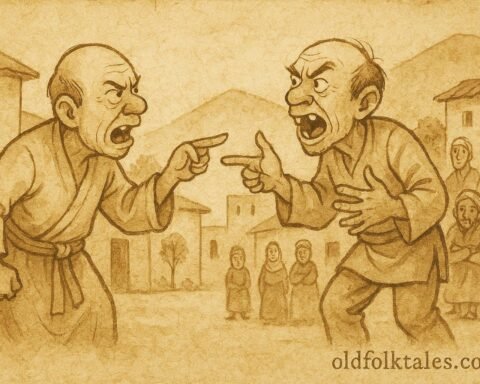
His uncle, however, watched these developments with eyes dark with envy. How could this worthless orphan suddenly have such abundance? He interrogated the boy, and in his innocence and honesty, the child revealed the truth about the magic horn. That very night, while the boy slept deeply after a day of hard labor, the uncle crept into the bamboo shelter and stole the horn, his heart racing with visions of limitless wealth.
Back in his own house, the uncle clutched the horn and demanded gold, silk, and jewels. But the horn remained cold and silent in his grasping hands. He shook it, shouted at it, and even struck it against the ground, but nothing emerged. The magic that had flowed so freely for the generous orphan refused to serve a selfish heart. Frustrated and enraged, the uncle threw the horn into a corner, where it lay as ordinary and lifeless as any old bone.
Meanwhile, the boy awoke to find his precious gift stolen. His heart broke not for the loss of comfort, but for the severed connection to his beloved friend’s memory. He wept as he worked, and his sorrow did not go unnoticed. The village headman, seeing the child’s distress and knowing of his kindness, brought the matter before the king, who was known throughout the land for his wisdom and justice.
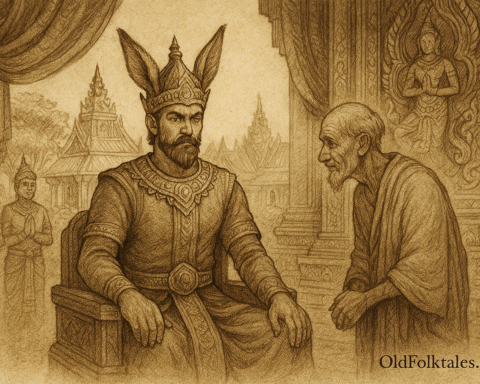
The king summoned both the orphan and his uncle to the royal palace, a magnificent structure of carved teak and golden spires that seemed to touch the clouds themselves. As they stood before the throne, surrounded by courtiers in silk robes and soldiers bearing ceremonial spears, the king listened to both their stories. He saw the truth immediately in the boy’s honest eyes and trembling voice, in the uncle’s shifty gaze and defensive posture.
“Bring me this horn,” commanded the king. When it was placed before him, he first handed it to the uncle. “Show me its magic,” he said. The uncle tried desperately, but the horn remained inert and cold. Then the king placed it gently in the boy’s small hands. Immediately, the horn glowed with warm light, and a sweet fragrance filled the throne room. Rice, salt, and precious tools flowed forth, and everyone present gasped in wonder.
The king smiled, his weathered face reflecting both authority and compassion. “This magic serves only the virtuous,” he declared. “It recognizes the pure heart of this child, who showed kindness to a dying animal and generosity to his neighbors, even in poverty.” He turned to the uncle, whose face had paled to the color of ash. “You have proven yourself unworthy of this boy’s presence. He shall remain here, adopted into the royal household, where his virtue will be honored and nurtured.”
And so the orphan boy came to live in the palace, not as a servant but as a cherished ward of the king. He grew in wisdom and kindness, eventually becoming a beloved advisor known throughout Laos for his fairness and compassion. The magic horn remained with him always, though he rarely needed to call upon its power for he had learned that the greatest magic of all resides not in enchanted objects, but in the kindness we show to all living beings, no matter how small or forgotten they may seem.
Click to read all Southeast Asian Folktales — featuring legends from Thailand, Indonesia, Vietnam, and the Philippines.
The Moral Lesson
The tale of the orphan and the magic buffalo horn teach us that true wealth comes not from material possessions but from the kindness we show others. The boy’s compassion toward a dying, worthless buffalo earned him a magical gift, while his uncle’s greed caused the same magic to fail. The story reminds us that generosity creates abundance, while selfishness leads to emptiness. It also illustrates the sacred bond between humans and animals, showing that when we treat all creatures with respect and love, we honor the interconnected web of life. Most importantly, it teaches that virtue and pure-heartedness are recognized and rewarded, even when it seems that the cruel and selfish prosper. Magic, like justice, serves those with genuine goodness in their hearts.
Knowledge Check
Q1: Who is the orphan boy in the Lao folktale and why is he significant?
A: The orphan boy is the protagonist of this Lao moral tale, a poor child who lives with his cruel uncle and tends water buffalo. Despite his harsh circumstances, he maintains a gentle, compassionate spirit. His significance lies in his pure-heartedness and kindness toward a dying buffalo, which earns him a magical horn that provides for his needs. He represents virtue rewarded and the power of compassion over material wealth.
Q2: What is the magic buffalo horn and how does it work?
A: The magic buffalo horn is a supernatural gift given by a dying buffalo to the orphan boy who had cared for it with devotion. The horn magically produces rice, salt, tools, and other necessities when held by someone with a pure heart. However, its magic only works for those who are virtuous and generous when the greedy uncle steals it, the horn becomes powerless in his hands, illustrating that magic serves only the kindhearted.
Q3: Why did the buffalo give its horn to the orphan boy?
A: The buffalo gave its horn to the orphan boy as a reward for his compassionate care. When others, including the boy’s uncle, saw the old buffalo as worthless and wanted to abandon it, the orphan treated it with kindness, shared his meager food, spoke gentle words, and tended to its needs. The buffalo recognized this pure-hearted devotion and wanted to ensure the boy would be cared for after its death, creating a reciprocal bond of gratitude.
Q4: What role does the king play in the Lao buffalo horn story?
A: The king serves as the arbiter of justice and wisdom in the tale. When the conflict between the orphan and his uncle is brought before him, he devises a test to reveal the truth having both attempt to use the horn’s magic. Upon seeing that the horn only works for the virtuous boy, the king recognizes true character and adopts the orphan into the royal household, while denying the greedy uncle any claim. He represents righteous authority that rewards virtue.
Q5: What does the story teach about the relationship between humans and animals?
A: The story emphasizes the sacred bond between humans and animals in Lao culture. It teaches that animals possess wisdom and spiritual power, and that treating them with respect and compassion brings blessings. The buffalo’s ability to speak and bestow magical gifts shows that animals are not merely property or tools, but beings worthy of kindness. The tale suggests that how we treat vulnerable creatures reflects our true character and determines our spiritual merit.
Q6: What is the cultural significance of this folktale in Laos?
A: This folktale holds deep cultural significance in Laos as a moral teaching tool that reinforces Buddhist values of compassion, generosity, and karma. Water buffalo are essential to Lao agricultural life, making this story particularly resonant for rural communities. It teaches children about kindness to animals, warns against greed and cruelty, and illustrates that virtue is ultimately rewarded. The tale is part of Laos’s rich oral tradition and continues to be shared to preserve cultural values and teach ethical behavior across generations.
Source: Adapted from Laos: Folktales, Myths, and Legends by Steve Epstein
Cultural Origin: Lao people, Laos (Southeast Asia)