In the winding streets of Salt, a town where stone houses clung to the hillsides and narrow alleys echoed with centuries of life, a young man named Fadil wandered among the markets and workshops. He was curious by nature, always drawn to objects that seemed old and forgotten, and one afternoon, as the sunlight filtered through a lattice of windows in a dusty antique shop, his eyes caught an unusual gleam.
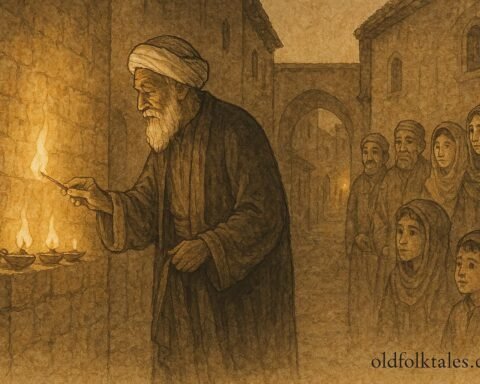
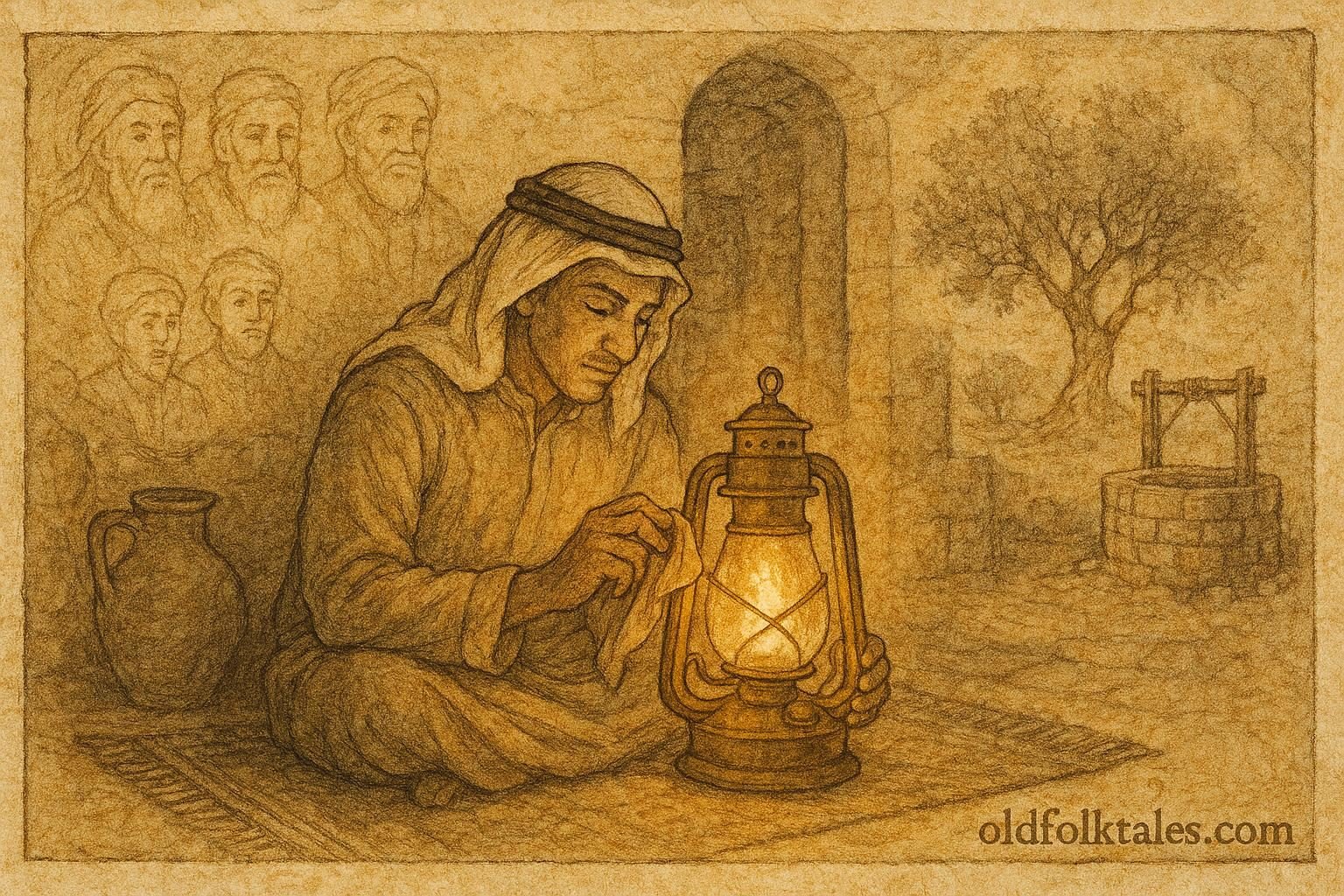
It was a small copper lantern, tarnished and dull, yet intricately engraved with swirling patterns of stars and vines. Fadil lifted it carefully, running his fingers over the cool metal. Though no one else seemed to notice it, he felt a quiet hum of significance, as if the object itself were alive with memory. He purchased it with the few coins he had saved, and hurried home, eager to clean and polish the curious lantern.
As his cloth rubbed the copper surface, the lantern began to shine with a warm, soft light. Suddenly, the room seemed to shimmer, and before him appeared a jinn, not a being of greed or wild mischief, but a dignified spirit with eyes that seemed to hold the weight of centuries. The jinn spoke in a calm, resonant voice. He did not offer wishes or gold; instead, he promised visions of the past.
Fadil’s heart raced with anticipation. At the jinn’s command, the walls of his modest home faded away, and he was transported through time. He saw the streets of his village as they had been generations ago, filled with bustling markets, families tending their fields, and elders gathering under fig trees to share stories of courage and wisdom. He saw his own ancestors, brave and resourceful, digging wells, building homes, and defending the village from bandits.
The lantern revealed not only deeds of heroism but also the hidden resources that had sustained his people, streams that had long since dried from neglect, and caches of stored water in secret reservoirs. Fadil understood that the magic of the lantern was not in riches or immediate power, but in the knowledge of who he was and where he came from.
Night after night, he polished the lantern and watched new visions unfold. He saw the birth of festivals, the planting of olive groves, and the formation of neighborhoods. The jinn guided him gently, allowing him to witness both triumphs and hardships, the lessons that had shaped the hearts and minds of his forebears. Fadil began to carry these lessons into his daily life, helping neighbors, restoring neglected wells, and teaching children about the old ways.
Word of Fadil’s dedication spread, and the young man became a quiet but respected figure in the town. People marveled at his knowledge of hidden wells, lost traditions, and the stories of their ancestors, never guessing that a simple lantern had shown him the paths of the past. Through his actions, the community rediscovered pride in their heritage and a renewed sense of unity.
Eventually, the lantern’s magic became a symbol in the village, not as a tool for wealth or power, but as a reminder that true treasure lies in understanding one’s roots, preserving memory, and honoring the legacy of those who came before. Fadil placed the lantern in a small shrine in his home, not to summon visions daily, but to remind himself and others that history, once remembered, could illuminate the present.
Moral Lesson
This folktale emphasizes that true wealth comes from knowledge of heritage and ancestral wisdom. It teaches that understanding one’s past allows a community to thrive and strengthens identity and unity.
Knowledge Check
1. Who discovers the magic lantern?
Fadil, a young man from the town of Salt in Jordan.
2. What is the purpose of the jinn in this story?
To show visions of the past, revealing the village’s history and ancestral deeds.
3. Does the lantern grant wishes or wealth?
No, its magic is in rediscovering heritage and knowledge.
4. What lessons does Fadil learn from the visions?
He learns about his ancestors’ bravery, community practices, and hidden resources.
5. How does Fadil apply the knowledge from the lantern?
By helping neighbors, restoring wells, teaching traditions, and strengthening community unity.
6. Where was this folktale collected?
In historic Jordanian towns such as Salt and Fuheis.
Source and Cultural Origin
Source: Collected from Jordanian towns, reflecting the value of historical memory and ancestral knowledge in local folk traditions.
Origin: Jordan, Salt and Fuheis, emphasizing communal heritage and education through folklore.