
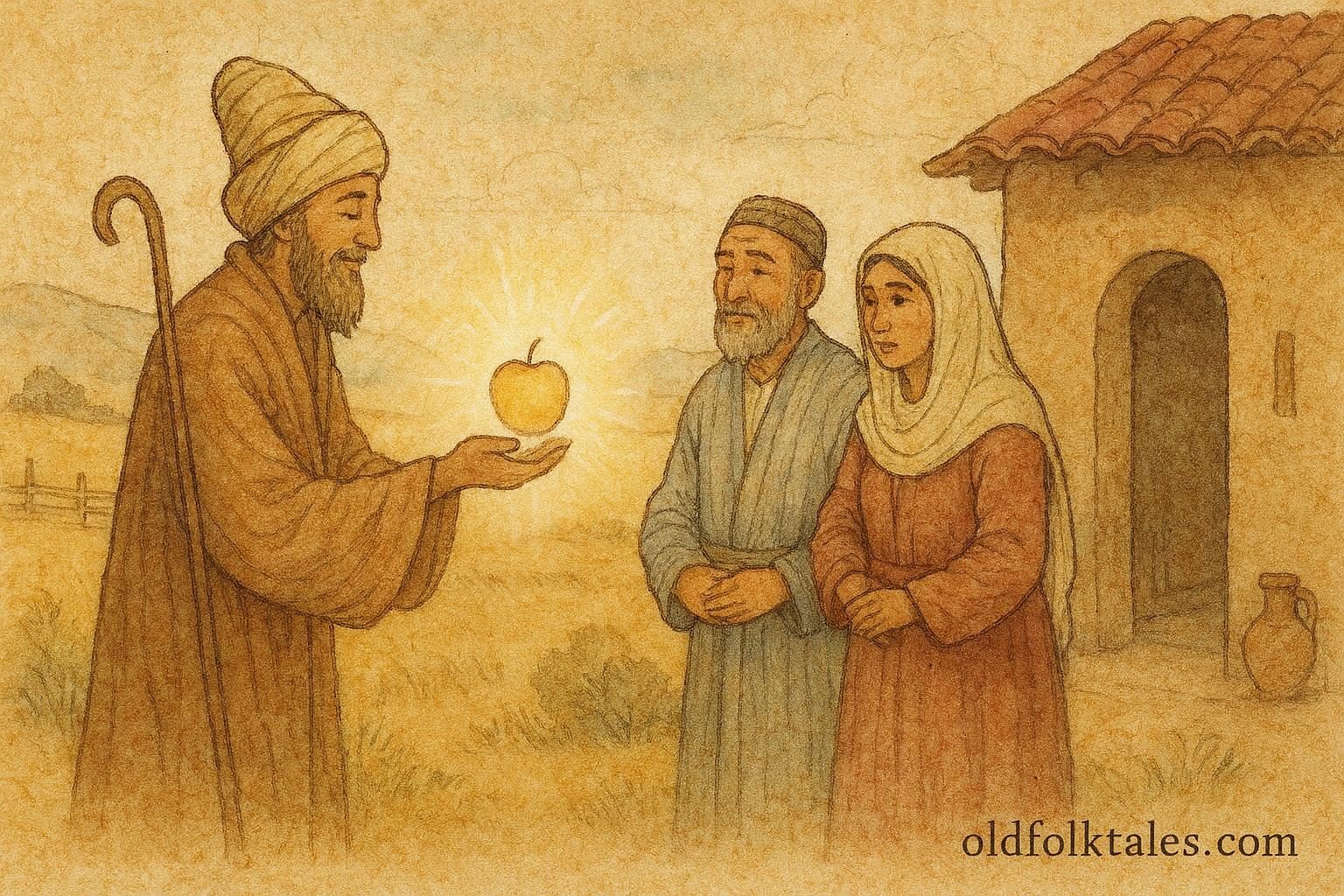
In a quiet Uzbek village at the edge of the wide steppe, where wind bent the tall grasses and the scent of baked bread drifted from clay ovens, there lived a poor husband and wife. Their home was small, their belongings few, yet their hearts were generous and patient. For many years they longed for a child, but their prayers remained unanswered. Still, they treated every guest with kindness, believing that fate listens most closely to the humble.
One evening, as the sun dipped low and painted the sky with copper and gold, a wandering dervish arrived at their door. His clothes were dusty from travel, and his eyes carried the depth of long journeys. Without hesitation, the couple welcomed him inside, sharing their simple meal and offering him rest. Before departing at dawn, the dervish pressed a single apple into their hands. It was unlike any apple they had seen, smooth, fragrant, and glowing faintly in the morning light.
Explore timeless legends from China, Japan, and Korea in our East Asian Folktales collection.
“Share this apple,” the dervish said softly, “and trust what destiny brings.”
That night, the couple divided the apple equally and ate it with gratitude. Not long after, their lives changed forever. The wife bore a child, healthy, bright-eyed, and calm beyond infancy. From early childhood, the child showed uncommon wisdom and kindness. Animals followed willingly, strangers offered blessings, and elders remarked that fate had marked this child from birth.
Yet such gifts rarely pass unnoticed. Envy stirred among neighbors and distant relatives, some whispering that no child born to such poor parents should shine so brightly. Through deception and jealousy, the child was separated from the family, sent away under false pretenses or lost through betrayal, depending on the telling. The parents grieved deeply, believing their miracle stolen by fate.
Alone in the world, the child grew strong not through force, but through character. Guided by signs of nature, birds that led the way, animals that offered protection, and wise figures who appeared at crucial moments, the child journeyed across valleys, deserts, and villages. Each trial tested honesty, compassion, and humility rather than physical strength. Where others chose greed, the child chose fairness. Where fear ruled, courage prevailed.
In time, truth revealed itself. Lies unraveled, wrongdoers were exposed, and the path led the child home. The family was reunited, not through revenge, but through justice shaped by wisdom. The apple’s blessing had fulfilled its purpose—not merely to grant birth, but to shape a life guided by destiny and moral strength.
Thus, the village learned that blessings test the heart as much as they reward it, and that true transformation begins within.
Discover the wisdom of ancient India and the Silk Road in South & Central Asian Folktales.
Moral Lesson
This Uzbek folktale teaches that destiny’s gifts, like the magical apple, carry responsibility. True transformation comes not from power or fortune, but from kindness, patience, and moral integrity.
Knowledge Check
-
Q: What role does the apple play in the story?
A: The apple symbolizes destiny, divine blessing, and transformation in Uzbek folklore. -
Q: Who gives the magical apple to the couple?
A: A wandering dervish or magical stranger, representing fate and spiritual guidance. -
Q: Why is the child separated from the parents?
A: Due to envy and betrayal from others who resent the child’s gifts. -
Q: How does the child overcome challenges?
A: Through wisdom, compassion, humility, and guidance from nature and helpers. -
Q: What cultural values does the story emphasize?
A: Hospitality, patience, moral strength, and respect for destiny. -
Q: What is the ultimate message of the folktale?
A: Blessings must be honored through virtuous actions, not taken for granted.
Source: Recorded in Uzbek fairy-tale collections; oral tradition.
Cultural Origin: Uzbekistan (Uzbek folk tale)








