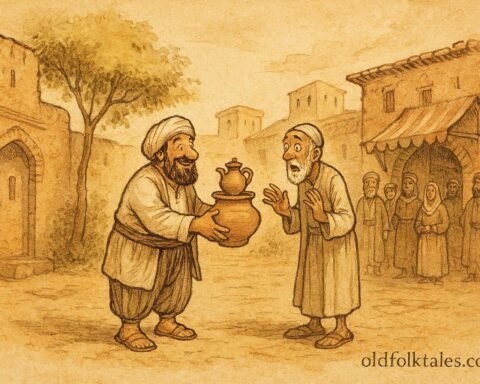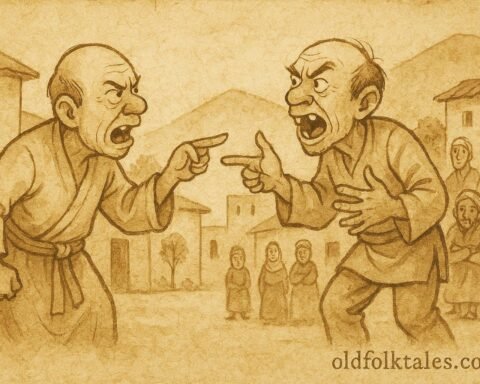
In the rolling hills of northern Lebanon, in a village known for its stone houses and terraces of olive trees, lived two men whose reputations could not have been more different. The first man was known far and wide as a liar, so skilled in twisting words that even the simplest truth became unrecognizable in his telling. The second man, his closest friend, was known for the opposite trait: he spoke only the truth, even when it cost him comfort or peace. Their friendship puzzled the villagers, yet the two shared a bond forged in childhood and strengthened through years of shared labor and struggle.
One year, disputes over land and taxes stirred unrest across the region, and the Sultan called for all subjects to appear before him to plead their cases. Hearing of the two famous opposites, one who never told the truth and one who never spoke a lie, the Sultan summoned them both to his court. He was fascinated by the extremes of their character and believed that each deserved a reward, either for steadfast honesty or for the audacity of their deception.
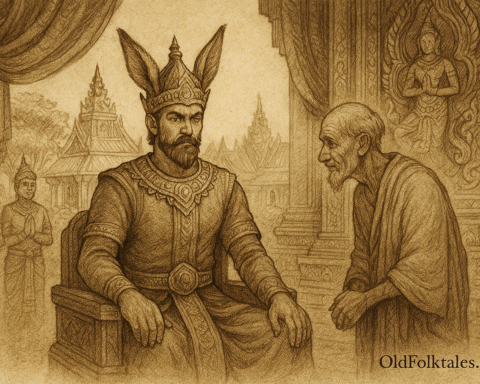
The palace stood tall with white limestone walls reflecting the noonday light. When the two men approached the court, courtiers whispered about the liar’s sharp tongue and the truthful man’s unwavering sincerity. The Sultan seated on his elevated throne studied the pair with a mixture of curiosity and amusement.
“You have lived your lives in perfect contrast,” the Sultan declared. “You, who lie without shame, and you, who cling to truth even when it pains you. Both extremes interest me. As Sultan, I reward what is remarkable, so each of you shall have a wish.”
The liar was quick to speak. He bowed deeply and said, “Your Majesty, I ask for nothing less than a palace, grand, magnificent, and worthy of your court’s envy.”
The Sultan laughed, impressed by the liar’s boldness, and granted the wish immediately.
Then he turned to the truthful man. “And you? Surely you desire wealth or land?”
But the truthful man, whose calm eyes reflected neither greed nor fear, answered simply, “I wish that you, O Sultan, would recognize your own mortality.”
The court fell silent. The request was strange, no treasure, no land, no honor. Only a reminder that even a Sultan was not immune to death. Yet the Sultan, intrigued, granted the wish without objection, though he did not fully grasp its meaning.
Weeks passed. In a valley not far from the village, workers constructed for the liar a magnificent palace. Its walls gleamed in the sun, ornamented with carved cedarwood balconies, marble columns, and brass doors that shone like fire at dusk. People from neighboring towns traveled to admire it, marveling that a man known for deception now possessed beauty beyond measure.
News of the palace eventually reached the Sultan, and he commanded that the liar return to court at once.
Standing before the throne, the liar bowed low. “Your Majesty, how may your humble servant help?”
The Sultan gestured sharply. “Tell me how you gained such a palace. What trickery or miracle lies behind your fortune?”
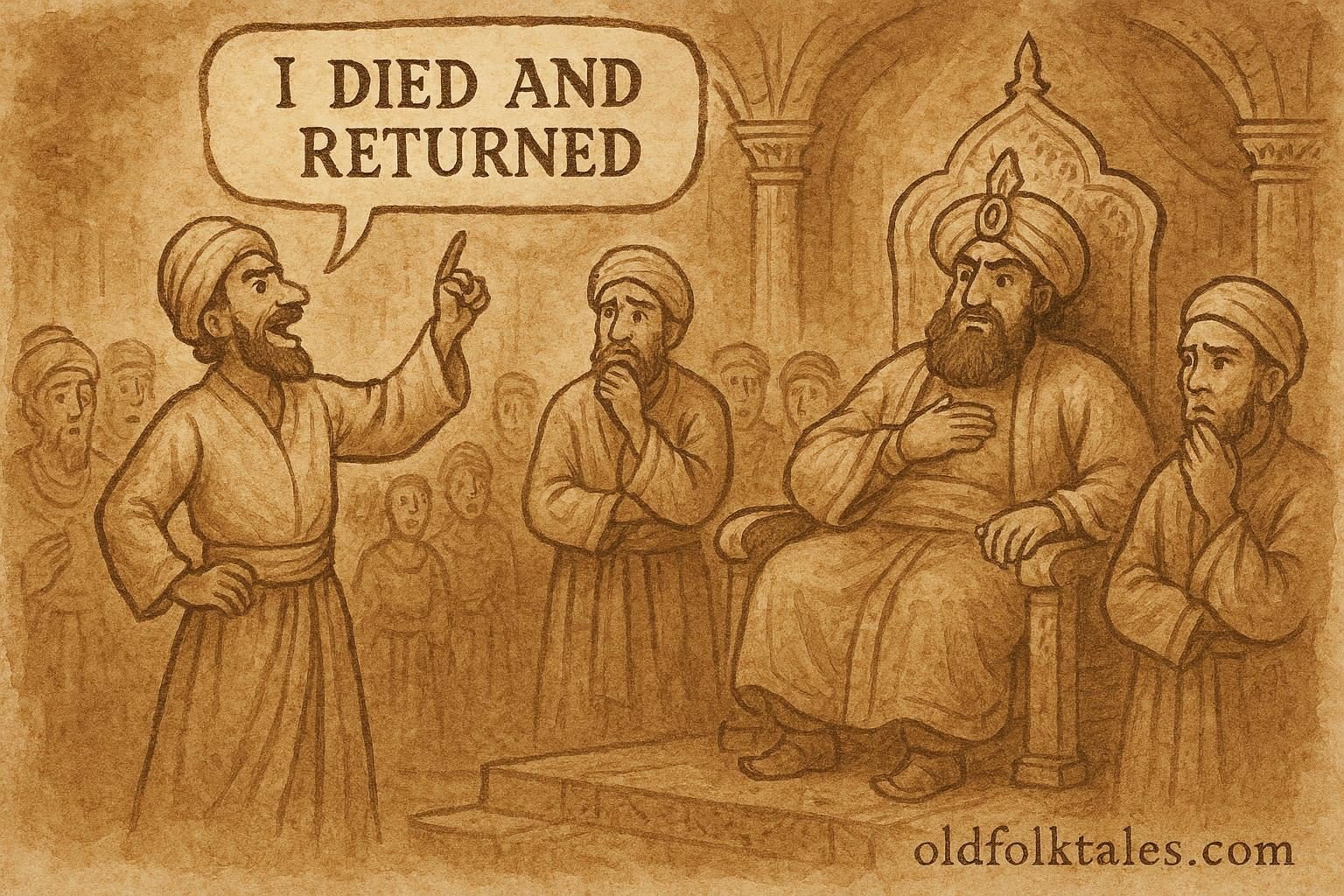
And here the liar stepped fully into the craft for which he was known. Without hesitation, he answered, “It was simple, Your Majesty. My friend and I died. We died and entered the world beyond, and there we were rewarded. When we returned to life, the palace stood waiting for me.”
Gasps filled the court. Whispers fluttered like startled birds. The liar watched the effect of his story and smiled inwardly. He knew the Sultan’s pride and ambition. He knew that the ruler longed for eternal glory and feared being forgotten.
The Sultan leaned forward. “You died… and returned?”
“Yes,” the liar replied confidently. “And the reward was greater than anything found in this world.”
Desire burned in the Sultan’s eyes. “Then I must have such a reward as well.”
The truthful man, standing nearby, felt dread rise within him. He had known his friend would one day speak a lie with grave consequences, but never imagined it would touch the throne itself.
Ignoring all counsel, the Sultan commanded his vizier to join him. “Prepare us as you would the dead,” he said. “Lay us to rest so that we, too, may rise again and receive our heavenly gifts.”
The vizier, bound by obedience, could not refuse. The Sultan and his loyal minister were entombed according to the very rites reserved for the dead. But unlike the liar’s tale, there was no return to life. By sunset, both were gone.
The court erupted into confusion. The people, remembering the Sultan’s promise to reward the remarkable, turned to the man known for absolute truth. With the ruler dead and no heir immediately present, the truthful man was elevated to the throne, for the palace needed a leader whose word could be trusted.
As he took the seat of power, the new Sultan understood a harsh lesson: the truth has its place, but even the purest honesty must be guided by wisdom, and sometimes, a single lie, told at the wrong time, can move nations and topple kings.
Moral Lesson
The tale warns that truth without judgment can be dangerous, and lies without wisdom can be deadly. Leadership demands discernment, for words carry power far beyond their moment of speech.
Knowledge Check
1. What is the central theme of “The Man Who Was a Liar and the Man Who Was Truthful”?
The story explores the consequences of truth and deception within Lebanese folktale tradition.
2. Why did the Sultan grant the two men wishes?
He was fascinated by their extreme reputations, one always lying, one always truthful.
3. What wish did the truthful man request?
He asked the Sultan to recognize his own mortality.
4. How did the liar’s request shape the story’s outcome?
His wish for a palace created the curiosity that sparked the Sultan’s fatal decision.
5. What lie led to the Sultan’s downfall?
The liar claimed that he and his friend had died, returned to life, and been rewarded with wealth.
6. Why did the truthful man become Sultan?
With the Sultan and vizier dead and no heir present, the court turned to the man known for unwavering truth.
Source
Adapted from the Lebanese folktale “The Man Who Was a Liar and the Man Who Was Truthful,” in Folktales of Lebanon by Anis Frayha (American University of Beirut, 1953), collected from Bishmizzine, Koura District.