In the days when trade routes crossed the desert and the sea carried pearl divers to distant horizons, there lived a wealthy merchant whose name was known in the markets of Kuwait. His warehouses were full, his ledgers heavy with profit, and his reputation, though respected, carried the quiet stain of greed. Among those who worked for him was an African slave named Mubarak, a man of steady hands and a patient heart.
The merchant had promised Mubarak freedom. It was a promise spoken more than once, repeated whenever work was hard or danger near, and always tied to the hope of العتق, manumission, which many enslaved people clung to as their final horizon. Mubarak served faithfully for years, trusting the word of his master. He labored under the sun, carried goods from ship to shore, and followed the merchant’s commands without complaint.
When the time came for the promise to be fulfilled, the merchant turned away. He spoke of delays, of debts not yet settled, of work still unfinished. Each excuse pushed freedom further into the distance. Mubarak understood then that the promise had been empty. The realization settled heavily on him, not with anger, but with a deep and quiet sorrow.
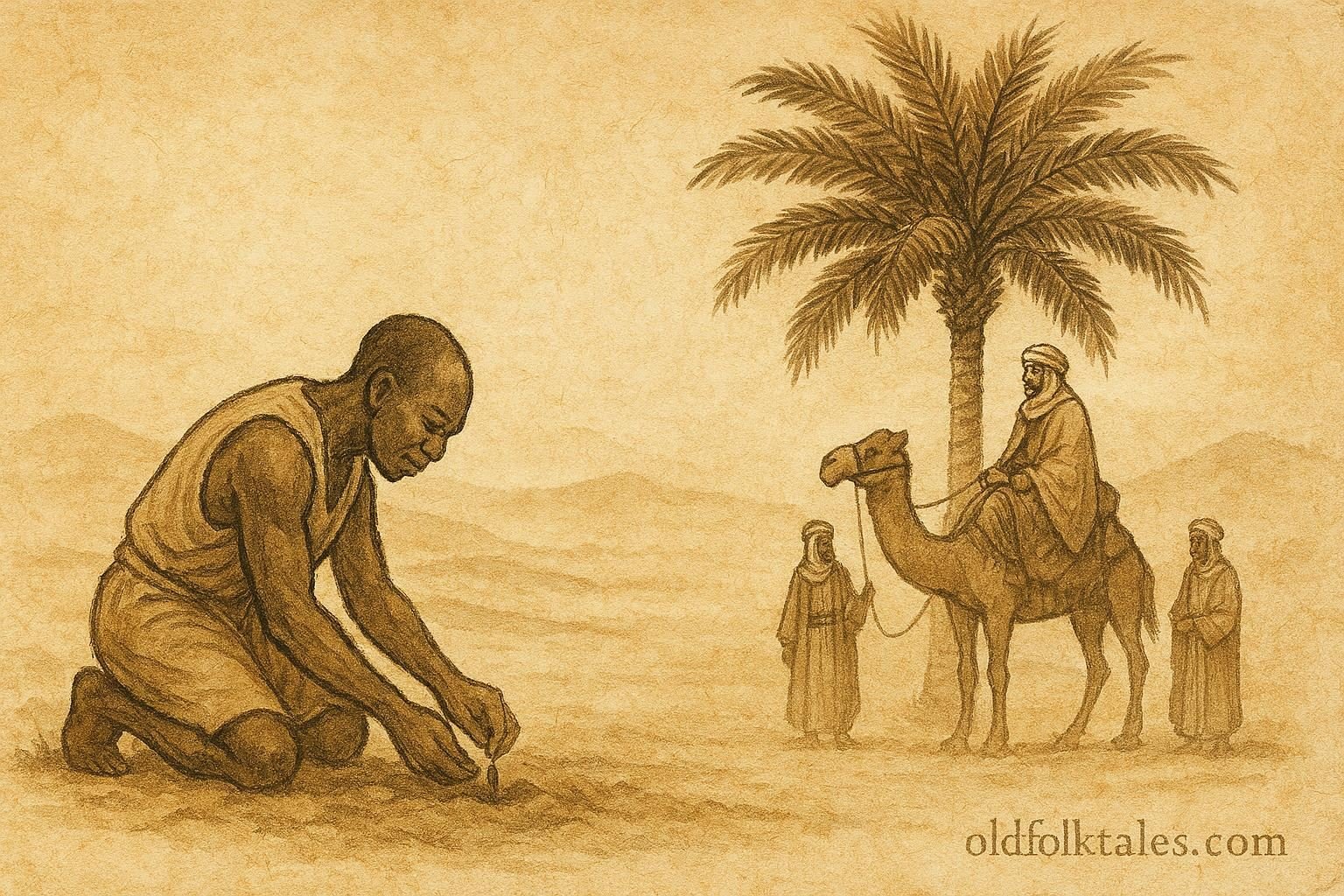
One evening, after the market stalls had closed and the air cooled, Mubarak walked beyond the town to a patch of dry earth. From a date he had eaten earlier, he pressed a single seed into the soil. It was a small act, almost unnoticed by the world, but it carried his despair and his hope together. He watered the ground and whispered a prayer, asking only that his suffering not be meaningless.
Years passed. Mubarak grew older, and the merchant grew wealthier. The seed, however, did not remain small. From the soil rose a young date palm, its roots gripping the earth, its leaves lifting toward the sky. With time, it became a tall and generous tree, offering shade from the desert sun and fruit to those who passed beneath it.
One season, a traveling Amir journeyed through the region with his retinue. The road was long, and the heat unforgiving. When the Amir reached the date palm, he ordered a halt. Beneath its shade, he rested and accepted the dates offered to him by those nearby. He noticed Mubarak standing close, respectful and silent, and asked about the tree.
Mubarak told the truth. He spoke of the seed planted in despair, of years of unfulfilled promises, and of a life bound by broken words. He did not accuse with bitterness, but his voice carried the weight of endurance.
The Amir listened carefully. Justice, he knew, was not always loud, but it demanded action. He summoned the merchant and questioned him openly. Faced with the Amir’s authority and the undeniable truth, the merchant could not hide behind excuses. The Amir ordered that Mubarak be granted his freedom and land of his own, including the ground where the palm tree stood.
Mubarak’s life changed in that moment. The palm that had grown slowly from sorrow now stood as proof that good deeds, though quiet and patient, eventually bear fruit.
Moral Lesson
This folktale teaches that justice may be delayed, but integrity and patience allow truth to grow until it can no longer be ignored.
Knowledge Check
-
Who is Mubarak in the story?
An African slave promised freedom by his master but denied it. -
What symbolizes Mubarak’s hope and patience?
The date seed he plants, which grows into a palm tree. -
Why is the merchant punished?
For breaking his promise and cheating Mubarak out of freedom. -
What role does the Amir play?
He represents justice and authority that corrects wrongdoing. -
What does the date palm symbolize?
That good deeds and truth grow slowly but surely. -
What cultural practice is reflected in the story?
The concept of العتق, or manumission, in Gulf society.
Source: Analyzed in “Folktales as Social Commentary in Pre-Oil Kuwait,” academic study examining oral traditions related to the pearl diving economy and manumission practices.