In the quiet neighborhoods of old Emirati towns, where coral-stone houses stood close together and narrow alleyways twisted like winding threads, night carried meanings far deeper than darkness alone. When the sun set and the final glow faded from the sky, parents called their children indoors, especially during the holy month of Ramadan. It was then that the name Umm al-Duways, the Mother of the Daws, was spoken in lowered voices.
She was not a creature of daylight.
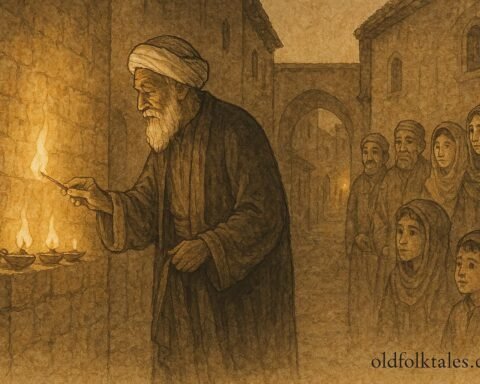
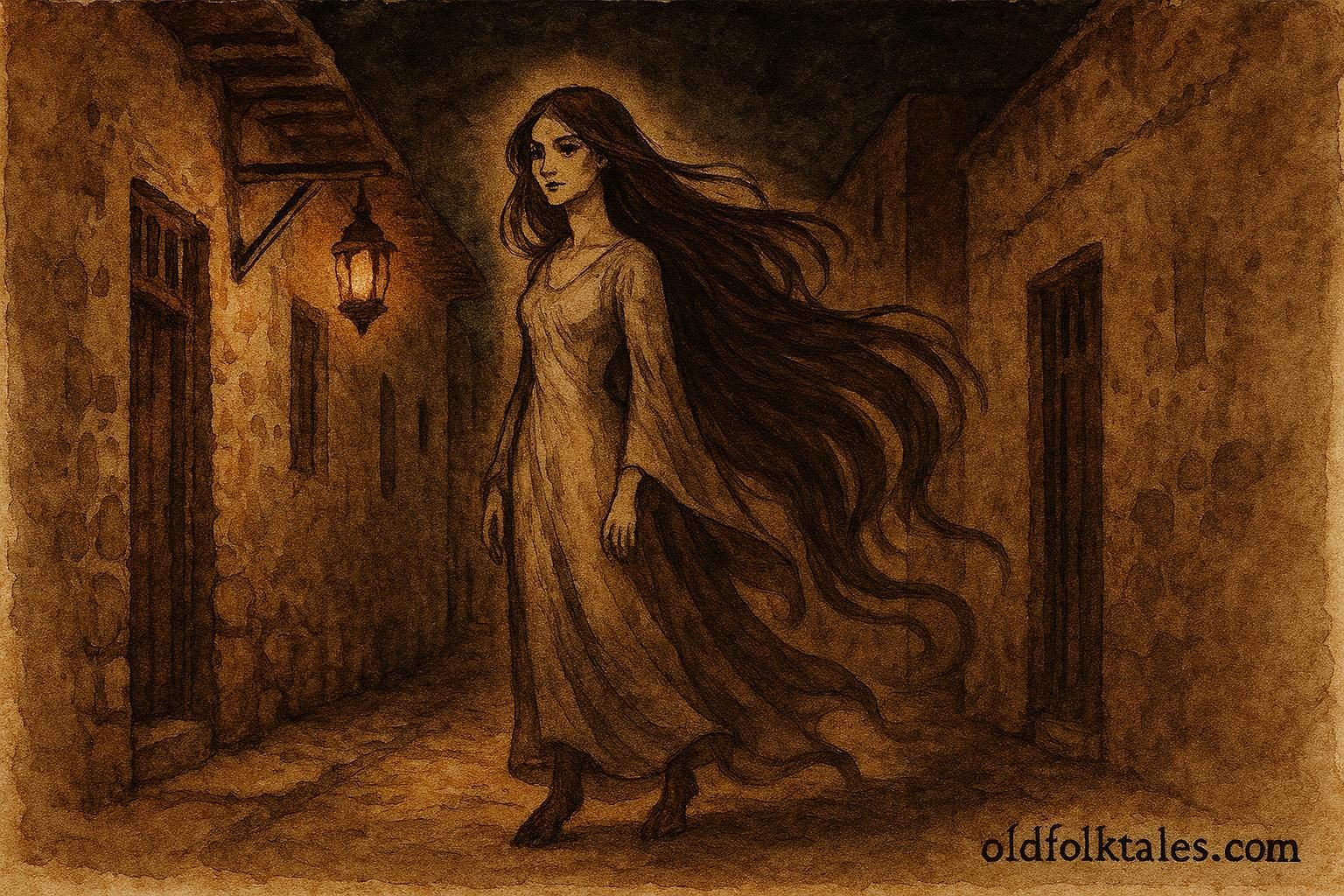
According to the elders, Umm al-Duways roamed after sunset, gliding through alleyways where lamps burned dim and shadows stretched long across the sand-packed ground. She was said to be a shapeshifting female being, capable of appearing as a woman of striking beauty. Her hair flowed thick and dark, her face gentle and inviting, her voice soft enough to calm even the most restless child. From a distance, she seemed no different from a kindly passerby or a graceful stranger lost in the night.
But those who looked too closely, or too late, noticed the truth.
Beneath her long robe were hooves instead of feet, hard, animal-like, and unmistakable. Some said the sound of her approach was subtle but chilling: the faint tapping of hooves against stone, masked by the whisper of the wind. Others claimed her scent changed as she drew near, from sweet perfume to something sharp and unsettling. By the time her true nature was revealed, it was often already too late.
Umm al-Duways was said to target children who disobeyed their parents, those who lingered in alleyways after dark, who ignored calls to return home, or who wandered alone when they should have been safe indoors. During Ramadan, when discipline and reflection were especially important, her presence was believed to grow stronger. Parents warned that she watched carefully during these nights, waiting for carelessness or stubbornness.
The tale often unfolded the same way.
A child, tempted by the quiet freedom of the night, slipped away from home. Perhaps the call to prayer had ended and the streets briefly stirred with movement. Perhaps the child believed nothing could happen so close to familiar walls. Then, from the shadows, a beautiful woman appeared, smiling warmly. She spoke gently, asking questions, offering guidance, sometimes promising sweets or safety.
If the child followed her, the alleyways seemed to grow longer and darker. The houses thinned, the lamps faded, and the air grew heavy. At that moment, when escape was hardest, the illusion broke. The woman’s feet revealed their hooves, her voice deepened, and her true form emerged. Fear took hold, and the lesson was sealed into memory, whether through terror alone or through the story being retold by those who survived by divine mercy.
Not all versions spoke of what happened next. Some ended with the child escaping in panic, vowing never to disobey again. Others remained deliberately vague, leaving the imagination to do the work. What mattered was not the ending, but the warning carried within the tale.
Parents told the story repeatedly, not as entertainment, but as protection. In communities without streetlights, locks, or modern safety, fear became a tool for survival. Umm al-Duways was not merely a monster, she was a boundary, a reminder that the night held dangers unseen and that obedience was a form of safety.
As generations passed, the story endured. Children whispered her name during sleepovers. Adults remembered the fear vividly, even after they no longer believed. The image of the beautiful woman with hidden hooves became one of the most enduring figures in Emirati folklore, symbolizing deception, temptation, and the cost of ignoring wisdom.
Though modern streets are brighter now, the Mother of the Daws still lives in memory, walking the old alleys of the past, carrying with her the echo of parental concern and communal care.
Moral Lesson
The tale of Umm al-Duways teaches that obedience, awareness, and respect for boundaries protect the vulnerable. Beauty and kindness can conceal danger, and wisdom lies in listening to those who guide us for our safety.
Knowledge Check
1. Who is Umm al-Duways in Emirati folklore?
She is a malevolent shapeshifting female creature who appears as a beautiful woman with hooves.
2. When is Umm al-Duways said to appear most often?
At night, especially during the holy month of Ramadan.
3. Who does Umm al-Duways target in the stories?
Disobedient or wandering children who stay out after dark.
4. What physical detail reveals her true nature?
Her hooves, hidden beneath her robe.
5. What cultural purpose did this folktale serve?
It was used as a social tool to keep children safe and obedient.
6. What theme is central to the story?
The danger of deception and the importance of obedience and caution.
Cultural Source
Source: Collected by Dr. Saeed Abdullah Salman and documented by the Abu Dhabi Cultural Foundation in Emirati Popular Myths and Legends.