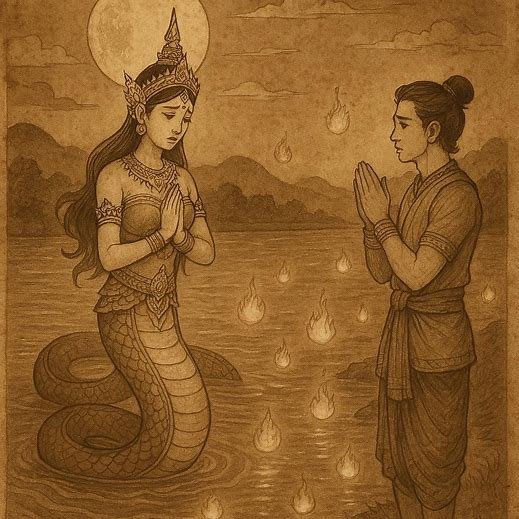
Long ago, when the waters of the Mekong River shimmered like silver under the sun, a noble prince named Chanthara ruled a peaceful kingdom by its banks. The prince was wise and kind, beloved by his people for his fairness and humility. Each morning, he went down to the river’s edge to offer lotus flowers and prayers to the water spirits, giving thanks for the life the river brought to his land.
One night, as moonlight danced upon the surface of the Mekong, the prince saw something extraordinary. The river began to glow softly, and from its shining waves rose a beautiful maiden with long black hair and eyes that gleamed like jade. She wore a crown of golden shells, and her voice was gentle as flowing water. She said her name was Princess Anong, daughter of the great Naga King who ruled the underwater kingdom deep beneath the river.
Prince Chanthara bowed respectfully. “I have long honored the river spirits,” he said, “but I never imagined meeting one so radiant.” Princess Anong smiled, touched by his reverence and sincerity. Night after night, they met by the riverbank. They spoke of the two worlds, the world of humans above and the kingdom of Nagas below and their friendship soon blossomed into love.
Discover more East Asian Folktales from the lands of dragons, cherry blossoms, and mountain spirits.
One evening, Anong invited the prince to see her world. With a graceful wave of her hand, the waters parted, revealing a shimmering palace beneath the riverbed. Towers made of crystal and coral glowed softly, and gardens of luminous flowers swayed in the current. The Naga King was powerful and wise, and though at first he doubted a human’s worth, he soon saw the goodness in Chanthara’s heart. He gave his blessing, and a grand wedding was held beneath the shining waves.
From that day on, peace reigned between the two realms. The humans and Nagas vowed to live in harmony. The prince ruled with kindness, and every year the Nagas blessed the land with rain and fertile soil. The river stayed clear and pure, and the people flourished under the bond between earth and water.
But as generations passed, the old promises were forgotten. Greed crept into men’s hearts. The forests were cut down for timber, waste was dumped into the river, and the sacred rituals were ignored. The once-living Mekong grew dull and choked. The descendants of the prince no longer honored the Naga King, and the songs of gratitude to the river fell silent.
One night, during the full moon, the Naga Princess rose again from the depths, her eyes filled with sorrow. She spoke to the new king who ruled the land. “Your ancestors vowed to protect the river, but now you poison its waters. Why have you broken your promise?”
The arrogant king laughed. “We are the masters of this world,” he said proudly. “The river is ours to use as we wish.”
At his words, the glow of the river faded. The Naga Princess turned away in tears and sank back into the depths. Soon after, the skies darkened, and rain fell in endless torrents. The river overflowed, flooding villages and fields. The people cried out for mercy, realizing too late the weight of their betrayal.
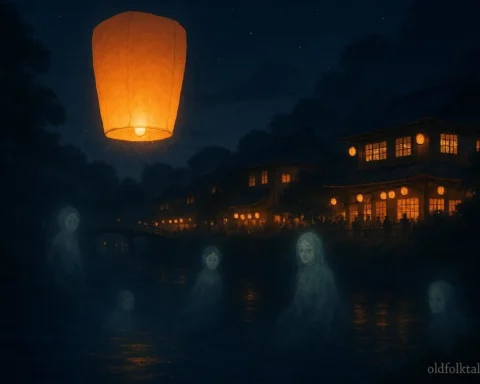
When the waters finally receded, peace returned, but the Naga Princess never came again. Yet every year, during the full moon of the That Luang Festival, glowing orbs of fire rise silently from the Mekong’s surface. They drift upward into the night sky and vanish like falling stars. The people call them the Naga Fireballs.
Elders say these lights are the tears of the Naga Princess, a gentle reminder of the love once shared between humans and the river spirits. Each fireball is a message from her world to ours, a plea to remember our promises, to honor nature, and to live in balance once more.
Even today, families gather along the riverbanks during the festival to watch the fireballs rise. As children stare in awe at the glowing lights, the elders tell them this story, teaching that love and respect for nature bring peace, but greed and neglect invite sorrow. The river, they say, remembers everything.
Moral Lesson
The Naga Princess and the Human Prince teaches that love and respect for nature are sacred. When humans live in harmony with the natural world, they find peace and prosperity, but when they betray that harmony through greed and carelessness, they bring suffering upon themselves. Promises made to the earth and its spirits must always be kept.
Knowledge Check
-
Who was the Naga Princess, and where did she live?
She was Princess Anong, daughter of the Naga King, who lived beneath the waters of the Mekong River. -
Why did the Naga Princess fall in love with the prince?
Because he was kind, respectful, and offered prayers to the river spirits with sincerity. -
What promise did humans make to the Nagas?
They promised to protect the river, honor the spirits, and live in harmony with nature. -
How did humans break their promise?
They polluted the river, destroyed forests, and forgot the sacred vows of respect. -
What are the Naga Fireballs that appear during the That Luang Festival?
They are glowing orbs said to be the tears or messages of the Naga Princess, reminding humans of their broken promise. -
What important lesson does this story teach?
That true harmony between humans and nature must be based on respect, gratitude, and the keeping of sacred promises.
Source
Adapted from the Lao legend of Phaya Naga (Naga Fireball myth), as recorded in Lao Legends and Oral Literature by Grant Evans and Somsanouk Mixay (2002), Vientiane Cultural Heritage Series.
Cultural Origin
Laos (Mekong River mythology and Buddhist spiritual folklore)