
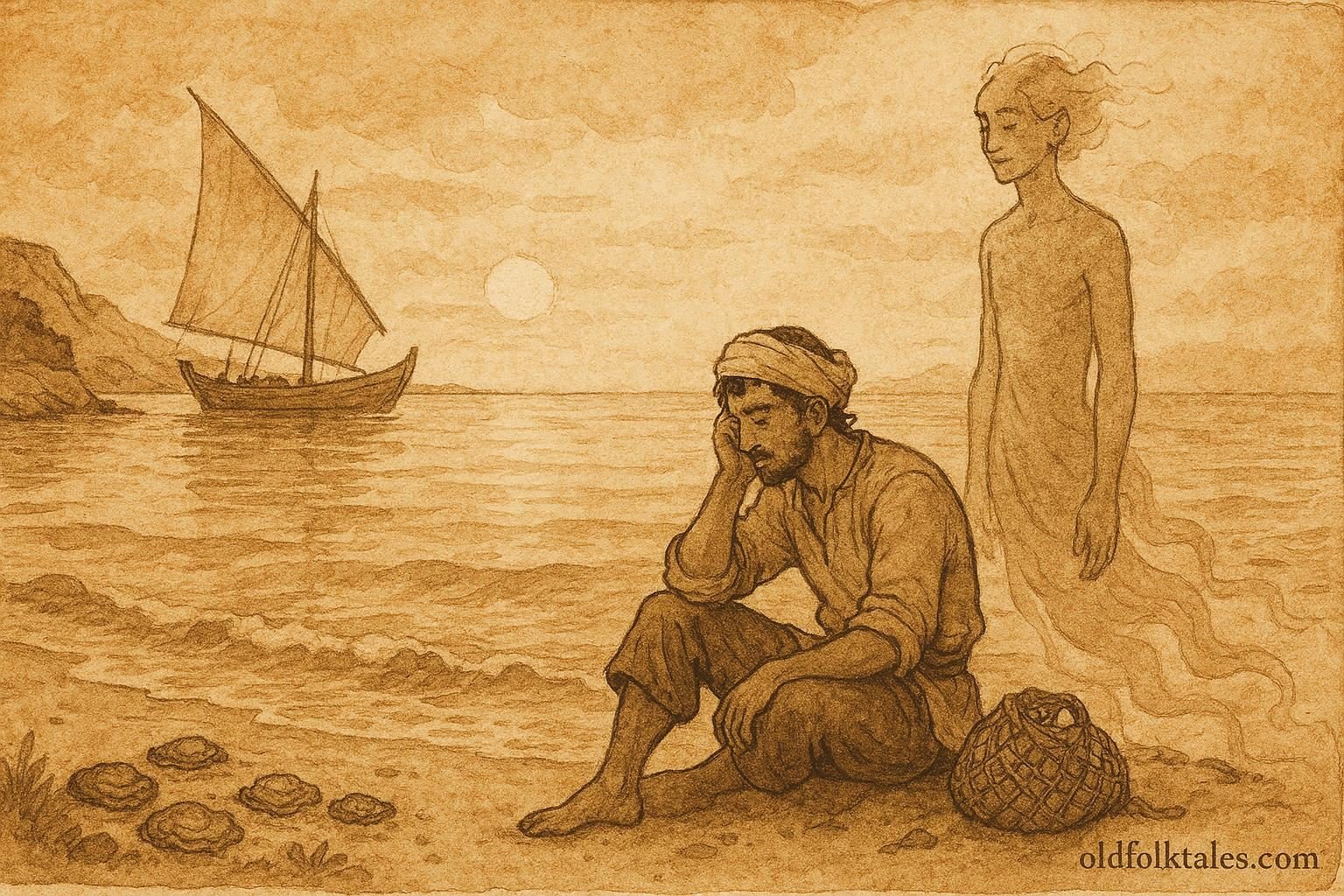
Along the shallow blue waters of the Arabian Gulf, where the horizon shimmered under the sun and the rhythm of waves guided daily life, pearl diving was more than a livelihood, it was a bond between humans and the sea. In the coastal towns of Dubai, Umm Al Quwain, and Ras Al Khaimah, men rose before dawn, prayed, and sailed out in wooden dhows, trusting their fate to breath, rope, and faith.
Among them was a humble pearl diver whose name has been remembered only through his deeds. He was not wealthy, nor did he command respect through status, but he was known for his honesty and patience. That season, however, hardship weighed heavily upon him. Day after day, he descended into the depths, opening oyster after oyster, only to find them empty or holding pearls too small to sell. Each evening, he returned home with little more than salt on his skin and worry in his heart.
His family depended on the sea, and the sea seemed silent.
One afternoon, after a long and fruitless dive, the diver rested on a quiet stretch of shore. The tide was low, and the air was still. As he gathered his tools, he noticed a man approaching from the water itself, barefoot, calm, and unfamiliar. His clothes were simple, yet untouched by wetness, and his eyes held a depth that reflected the sea more than the sky.
The stranger greeted him gently and asked why his face carried such sorrow.
The diver spoke honestly. He told of empty oyster beds, of fear for his family, and of his trust in God despite the hardship. He did not complain or curse the sea; he spoke with humility, as one who understood that the waters gave and withheld according to a wisdom greater than his own.
The stranger listened, then revealed his true nature. He was a jinni of the sea, one of the ancient beings entrusted with guarding its balance. He did not speak with menace, nor did he demand fear. Instead, his voice carried the calm authority of the tides.
“I will guide you,” the jinni said, “but only if you promise to take no more than what your family truly needs. Leave the rest untouched, so the sea may remain generous for others and for those yet unborn.”
The diver placed his hand upon his heart and swore the oath without hesitation.
The next morning, guided by the jinni, the diver descended into waters he had never explored. There, hidden beneath coral and sand, lay an abundant pearl bed untouched by greed. The oysters were large, heavy, and filled with lustrous pearls. The diver took only a small portion, enough to feed his family and repay his debts, leaving the rest exactly as he found it.
When he returned home, his wife wept with relief, and his children slept with full stomachs for the first time in many weeks.
Season after season, the diver returned to the same hidden bed, always honoring his promise. He never grew rich beyond his needs, but he never again knew hunger. His sons became divers, and his grandsons after them. Though others searched the sea endlessly, that family was never left empty-handed.
When the diver grew old, he returned to the shore where he had first met the stranger. The sea was quiet, but he felt a presence in the wind and waves, a reminder that respect, once given, is never forgotten.
The jinni was never seen again, yet his lesson endured in the tides and in the stories told along the coast.
Moral Lesson
This folktale teaches that true prosperity comes from respect, moderation, and harmony with nature. Greed exhausts blessings, but honesty and restraint allow them to endure across generations.
Knowledge Check
1. Where is this folktale traditionally told?
In the coastal communities of the Arabian Gulf, especially the UAE.
2. Why was the pearl diver struggling at the beginning?
The oyster beds he worked were empty during a difficult season.
3. Who was the stranger the diver met by the sea?
A benevolent marine jinni guarding the balance of the sea.
4. What condition did the jinni set?
The diver must take only what his family needed.
5. What was the reward for the diver’s honesty?
Sustained prosperity for himself and future generations.
6. What cultural value does the story emphasize?
Respect for nature and ethical use of shared resources.
Cultural Source
Source: Published in Tales from the UAE by Julia Johnson, based on interviews with former pearl divers from Deira and surrounding coastal towns.








