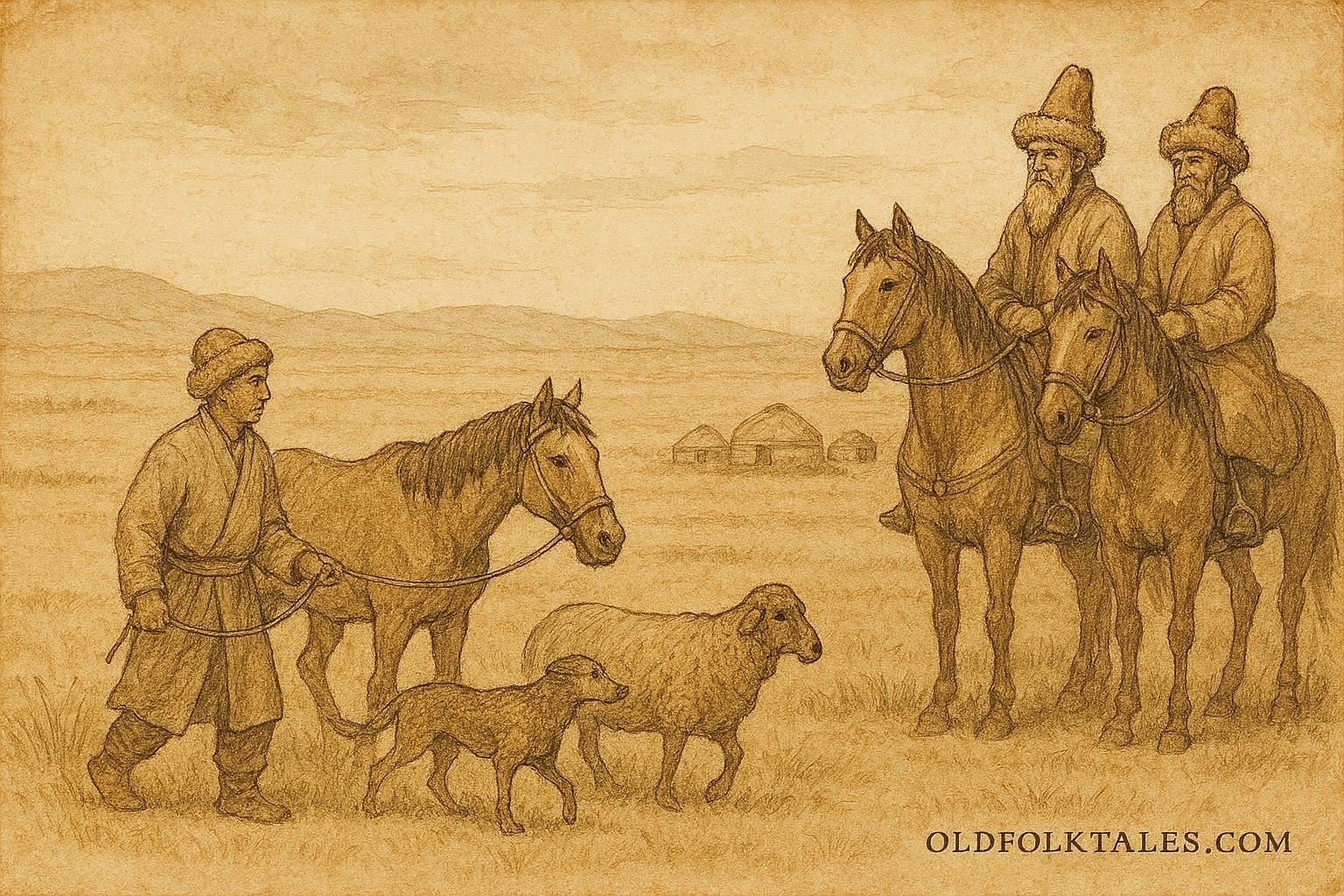
Across the open Kazakh steppe, where grasslands stretched beyond sight and a lone rider could travel for days guided only by stars and wind, a young shepherd lived a quiet and modest life. His wealth was small: a few animals, a simple shelter, and a reputation for steady work. Like many before him, he followed the rhythms of the land, moving his flock with the seasons and trusting in patience rather than fortune.
One evening, as the sun dipped low and painted the steppe in copper light, the shepherd noticed unfamiliar livestock grazing near his own. They were strong, well-kept animals, clearly belonging to someone of influence. He counted them carefully and realized they were not part of his herd.
The steppe was vast, and lost animals were not uncommon. Some men, when faced with such fortune, chose silence. Others lied, claiming ownership and trusting that distance would bury the truth. The shepherd knew this well. He also knew that the animals likely belonged to a powerful figure, someone whose anger could bring serious trouble.
For a moment, doubt crept into his thoughts. Winter was never far away, and extra livestock could mean safety, warmth, and food. Friends warned him quietly that honesty often brought hardship, not reward. But the shepherd’s conscience weighed heavier than fear. Among nomadic people, trust was the thread that held life together. Without it, no camp could survive.
The next morning, he guided the animals toward the nearest settlement and announced his discovery. Some villagers looked at him with suspicion. Why would a poor shepherd give up such fortune? Others whispered that he must be hiding something.
Word soon reached the authorities and the powerful owner of the animals. The shepherd was questioned closely. Again and again, he told the same simple truth, how he found the animals, how he guarded them, and how he brought them back without taking anything for himself.
Time passed, and the truth proved stronger than doubt. The animals were confirmed as lost, and every detail the shepherd gave matched the facts. What had first seemed foolish now appeared rare.
The powerful figure, moved by the shepherd’s conduct, did not respond with gold alone. He offered protection, trust, and public recognition. The shepherd was granted security for his land and livelihood, ensuring he would never suffer for his honesty.
Soon, people across the steppe spoke his name with respect. They said that while others chased wealth, he had guarded something far greater. His reputation traveled farther than any herd ever could.
The shepherd returned to his quiet life, unchanged in manner but strengthened in standing. He understood that riches fade, but honor endures.
Moral Lesson
This folktale teaches that honesty is the greatest treasure. In Kazakh nomadic life, integrity earned trust, protection, and lasting respect, far more valuable than stolen wealth.
Knowledge Check
1. Who is the main character of the story?
A humble shepherd living on the Kazakh steppe.
2. What moral choice does the shepherd face?
Whether to keep lost livestock or return them honestly.
3. Why is honesty risky in the story?
Because the animals belong to a powerful figure.
4. How do people initially react to the shepherd’s actions?
With suspicion and disbelief.
5. What reward does the shepherd receive?
Trust, protection, and public respect.
6. What value does the story emphasize?
Integrity as the foundation of true wealth.
Source: Kazakh ethical tales preserved by nomadic shepherding communities
Cultural Origin: Kazakhstan (Kazakh moral folklore)