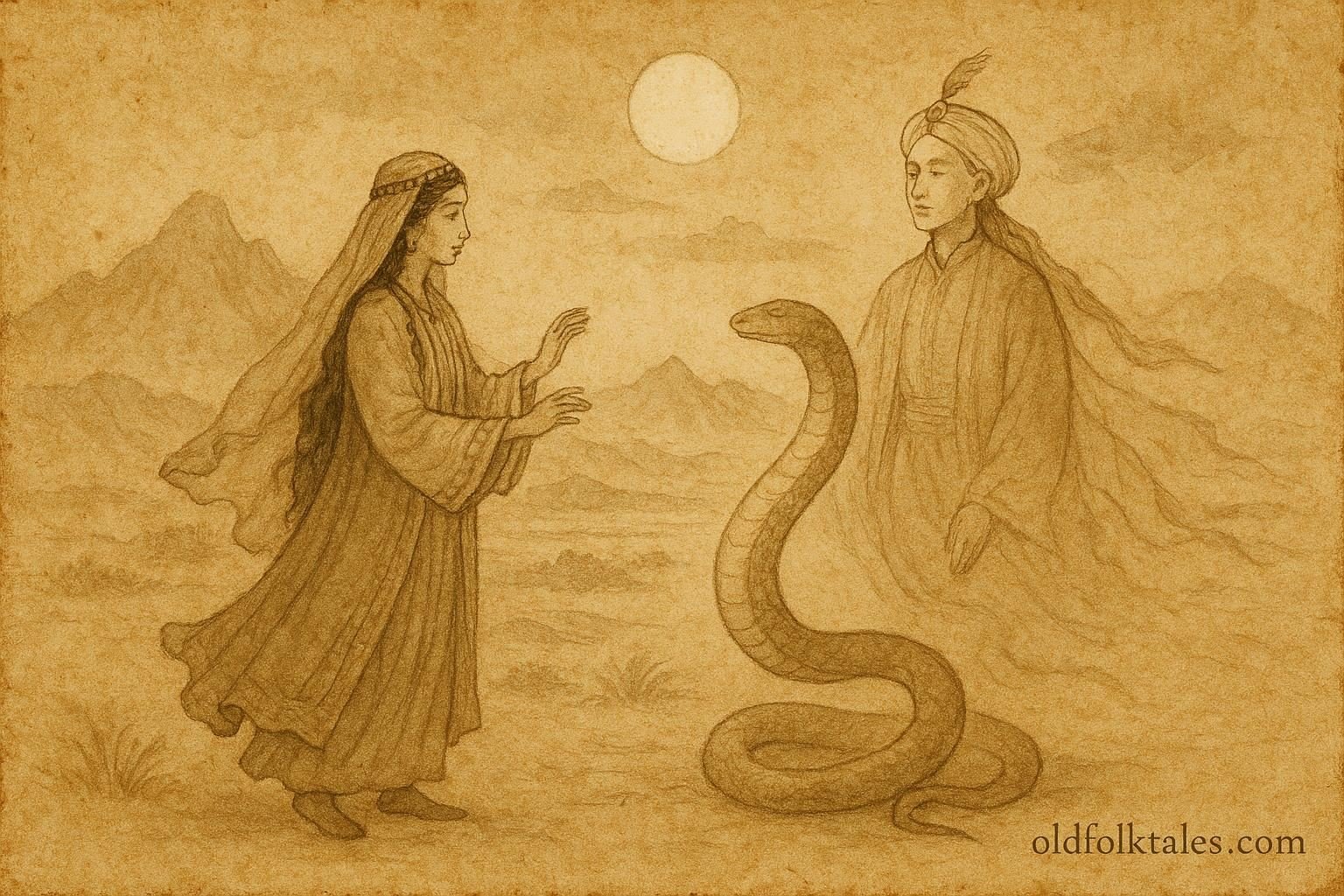
In a quiet village near the wide Uzbek steppe, where the land stretched beneath endless sky and travelers followed ancient paths between mountains and desert, there lived a poor man and his daughter. Though their home was modest, the girl was known for her gentle spirit, patience, and respect for fate. She worked beside her father each day, accepting life’s hardships without complaint.
One season, while gathering firewood beyond the village boundary, the father encountered a great snake resting beneath a tree. Terrified, he froze, but the snake did not strike. Instead, it spoke with a calm human voice. It declared that it was no ordinary creature, but a prince cursed by fate. In exchange for sparing the man’s life and granting his family protection, the snake asked for the man’s daughter as his wife.
Fear weighed heavily on the father’s heart, yet fate had already spoken. When he returned home and told his daughter what had occurred, she listened quietly. Though frightened, she understood that promises made under divine or supernatural forces could not be broken. With humility and resolve, she agreed to honor the bond.
The snake led her far from her village to a hidden palace nestled between rocky hills. By day, her husband appeared only as a great serpent, coiled silently beside her. But at night, when darkness covered the land and lamps glowed softly, the snake shed his skin and became a handsome young man. He spoke gently and treated her with kindness, explaining that his curse bound him to this form until fate was fulfilled. He warned her never to reveal his secret or destroy the snake skin, for such an act would bring ruin.
Time passed, and the woman learned to look beyond appearances. She no longer feared the serpent form, for she knew the truth hidden beneath it. Peace filled their home, and her loyalty remained unbroken.
Eventually, she longed to visit her family. The prince allowed it, warning her again to guard his secret. When she returned to her village wearing fine clothes and bearing gifts, her relatives were astonished. Suspicion soon followed admiration. Pressed by family members, she revealed her husband’s secret in a moment of weakness. They urged her to burn the snake skin so the prince would remain human forever.
Against her husband’s warning, she gave in. That very night, the curse deepened. The prince vanished without a trace, leaving behind an empty palace and silence heavier than stone.
Overcome with grief and guilt, the woman set out to restore what she had lost. She crossed deserts scorched by the sun and climbed cold mountain paths where the wind cut like knives. Along the way, she met creatures of the land who tested her character. She shared her last bread with the hungry, showed kindness to strangers, and endured hardship without bitterness.
At last, her patience and humility were rewarded. She reached the place where the prince was held by the power of the curse. Through perseverance and unwavering loyalty, she fulfilled the conditions required to break it. When she found him again, the curse shattered completely, and he was freed from the serpent form forever.
Together, they returned to the world, bound not by fear or illusion, but by trust and understanding. Their story spread across villages as a reminder that true sight comes from the heart, not the eyes.
Moral Lesson
This Uzbek folktale teaches that love rooted in loyalty, patience, and trust can overcome fear and illusion. True character is revealed not by appearance, but by faithfulness and moral responsibility.
Knowledge Check
-
Q: Why does the prince appear as a snake?
A: He is under a supernatural curse tied to fate and moral testing. -
Q: What promise does the woman make?
A: To honor her marriage and protect her husband’s secret. -
Q: What causes the prince to disappear?
A: Interference from outsiders and the destruction of the snake skin. -
Q: How does the woman restore her husband?
A: Through perseverance, humility, kindness, and loyalty during her journey. -
Q: What does the snake symbolize in Uzbek folklore?
A: Hidden truth, fate, and the testing of moral character. -
Q: What is the central lesson of the tale?
A: Appearances can deceive, but trust and faith reveal deeper truth.
Source: Uzbek oral folklore; preserved in fairy-tale cycles.
Cultural Origin: Uzbekistan (Uzbek folk tale)