
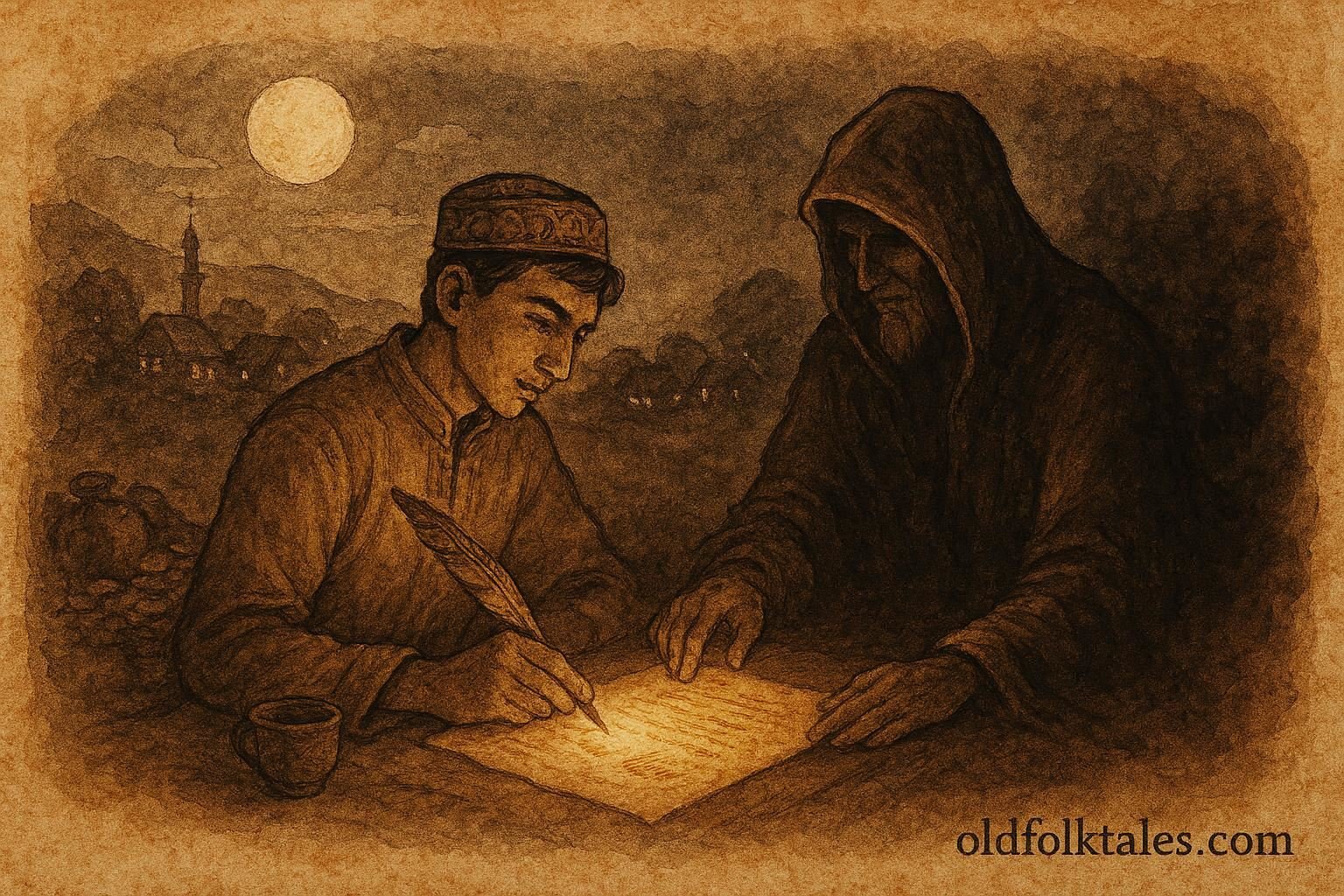
In an Uzbek town resting between wide steppes and narrow market streets, there lived a young man whose heart was full of ambition. He was neither poor nor wealthy, neither famous nor forgotten. What set him apart were his dreams, dreams of living honorably, of earning respect through honest work, and of becoming someone his parents and neighbors could admire. Each night, he fell asleep believing that patience and effort would one day reward him.
Yet as the years passed, his dreams remained distant. Others prospered more quickly. Merchants returned from distant cities with heavy purses, and musicians and storytellers were praised in crowded squares. Watching them, the young man began to feel restless. His dreams of virtue seemed slow and uncertain, while wealth and recognition appeared swift and shining.
Explore ancient tales from Thailand, Cambodia, and the Philippines in Southeast Asian Folktales.
One night, as he wandered through the quiet streets under a pale moon, he met a mysterious merchant. The man’s clothes were fine but strange, untouched by dust, and his eyes gleamed with knowing amusement. He spoke softly, as though he already understood the young man’s desires.
The merchant offered him a bargain. He carried a parchment contract unlike any the young man had seen. If the young man agreed to sell his dreams, his devotion to honesty, humility, and moral purpose, the merchant promised him immediate wealth and fame. Gold would fill his house, and his name would be spoken with admiration across the town.
The young man hesitated. His dreams had guided him since childhood. But temptation pressed hard against his doubt. Telling himself that virtue could wait, he signed the contract.
By morning, his life had changed. His house overflowed with riches, his clothes were embroidered with fine thread, and people who once passed him without notice now greeted him with smiles and envy. Doors opened easily. Praise followed him like a shadow.
At first, the young man believed the bargain wise. Yet as time passed, something within him began to erode. He found himself lying without thought, exploiting others for gain, and abandoning promises when they no longer served him. His laughter grew hollow, and his nights restless. Friends drifted away, uneasy in his presence. Those who remained sought only his wealth, not his company.
His health declined, and his joy vanished. Surrounded by luxury, he felt more alone than ever before. The dreams he had sold, of living with integrity and purpose, no longer visited his sleep. Without them, his success felt empty and brittle, like gold that crumbled when touched.
At last, despair overcame pride. The young man sought redemption, searching for a way to reclaim what he had lost. He wandered beyond the town, humbled and weary, until he encountered a wise elder, some say a supernatural guide, others a divine messenger, who listened silently to his confession.
The elder told him that dreams, once sold, are not easily returned. But sincere regret, paired with perseverance and humility, could earn a second chance. The young man was set upon a long path of restitution. He gave away his ill-gotten wealth, repaired harms he had caused, and learned again to live honestly, without expectation of reward.
Only when his heart had fully turned from ambition toward virtue did his dreams return. They came quietly, not as promises of fame, but as steady guides. Though he never regained his former riches, he recovered something far greater, peace, respect, and a life rooted in truth.
Thus the town remembered his story, not as a warning against dreams, but as a lesson on the danger of abandoning them.
Explore ancient tales from Thailand, Cambodia, and the Philippines in Southeast Asian Folktales.
Moral Lesson
This folktale teaches that ambition without integrity leads to emptiness and loss. True success comes from holding fast to moral values, for wealth gained at the cost of virtue brings sorrow rather than fulfillment.
Knowledge Check
1. What does the young man sell to the mysterious merchant?
His dreams of virtue, honesty, and moral purpose.
2. What does he gain in return for the bargain?
Immediate wealth, fame, and social recognition.
3. Why does his success ultimately fail to satisfy him?
Because it lacks integrity, leading to isolation and inner emptiness.
4. Who helps him seek redemption?
A wise elder or supernatural guide representing moral wisdom.
5. What must the young man do to reclaim his dreams?
Show humility, repent sincerely, and live honestly without greed.
6. What core value of Uzbek folklore does this story emphasize?
That moral integrity is more valuable than material success.
Source: Uzbek oral narrative tradition; recorded in regional folktale anthologies
Cultural Origin: Uzbekistan (Uzbek folklore)








