In the wooded hills of the Chouf District, where oak and pine trees rose above terraced slopes and birds nested safely among the branches, there lived a small sparrow. She had built her nest carefully in the crook of a sturdy tree, lining it with grass and feathers. There she tended her chicks, shielding them from the sun by day and the cold by night. Though her body was small, her devotion was vast, and her song each morning carried gratitude for the shelter the tree provided.
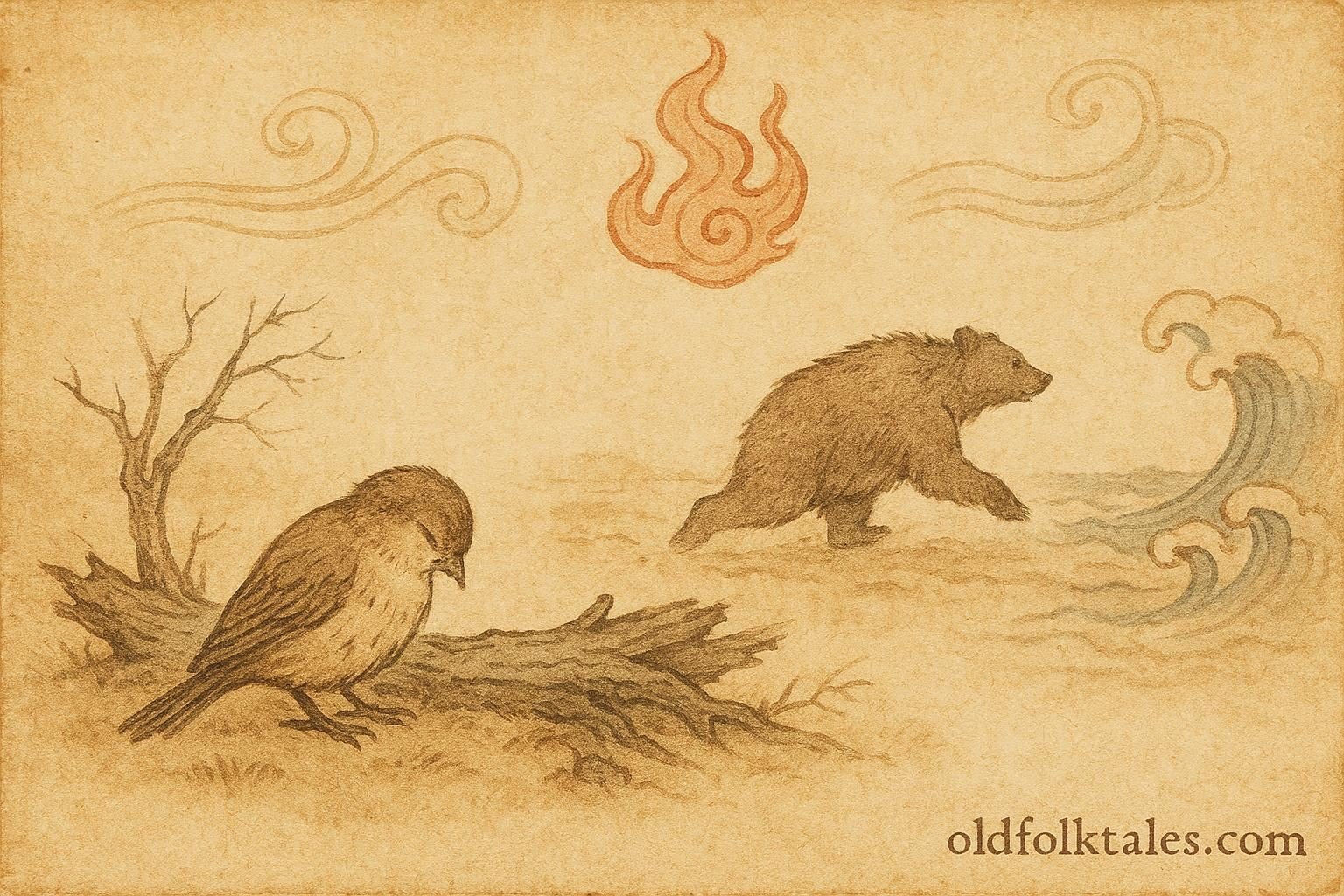
One day, a great bear came lumbering through the forest. He was strong and careless, concerned only with his own hunger and comfort. Seeing the tree that held the sparrow’s nest, he uprooted it without thought, tearing it from the earth as if it were nothing more than a weed. The tree fell, the nest was destroyed, and the sparrow’s helpless chicks were killed.
The bear moved on without regret, but the sparrow remained, circling the broken branches and calling out in grief. Her sorrow soon turned to resolve. She knew she could not challenge the bear by strength, yet she believed that injustice should not go unanswered. Carrying her pain with her, she set out to seek justice.
First, the sparrow flew to the sea. Hovering above the waves, she told her story and asked for help. The sea listened, but replied that it could do nothing unless the fire would first agree to act. The sparrow thanked the sea and flew onward.
She next approached the fire, where flames flickered and crackled. Again she told her tale of loss. The fire answered that it would help only if the wind agreed to assist first. Though weary, the sparrow did not despair. She continued on her journey.
She then sought out the wind, which swept across the hills and valleys. The wind heard her plea and said it would act only if the mouse would help. The sparrow, now nearly exhausted, searched until she found a small mouse hidden among stones and roots. To the mouse she told everything: the nest, the chicks, the fallen tree, and the careless bear.
The mouse listened closely. Though small and easily overlooked, he agreed to help without condition. That night, while the bear slept, the mouse crept quietly to him and gnawed at his nose. The bear awoke in agony, roaring and thrashing as blood flowed from the wound.
As the bear bellowed in pain, the wind rose and blew pepper into his injured nose. The burning grew unbearable. The bear ran blindly through the forest, desperate for relief. In his panic, he passed near the fire, which leapt up and burned his fur, adding to his torment.
Driven by pain and fear, the bear fled toward the sea, believing its waters would cool his wounds. He plunged into the waves, but the sea, now fulfilling its part of the chain, rose and swallowed him. The bear sank beneath the water and did not return.
When the forest grew quiet again, the sparrow returned to the place where her nest had been. Though her loss could not be undone, justice had been served. The weak, united through cooperation and reciprocity, had overcome the strong. From that day on, the tale was told among villages and valleys, reminding all who heard it that strength alone does not grant the right to destroy, and that even the smallest voice may find power when others stand with it.
Moral Lesson
This folktale teaches that injustice can be overcome through unity and cooperation. Though the sparrow was weak alone, the combined efforts of many brought justice against a greater force.
Knowledge Check
1. What tragedy begins the story?
A bear uproots a tree, destroying a sparrow’s nest and killing her chicks.
2. Why can the sparrow not confront the bear directly?
Because of her small size and lack of physical strength.
3. Which helper agrees to act without conditions?
The mouse.
4. How does the chain of revenge unfold?
Mouse injures the bear, wind worsens the wound, fire burns him, and the sea drowns him.
5. What type of folktale is this story classified as?
A chain tale based on reciprocity.
6. What cultural lesson does the story emphasize?
That collective action allows the weak to achieve justice against the powerful.
Source
Adapted from Folktales of Lebanon by Anis Frayha, Tale #12, collected from Ain el Delb, Chouf District. American University of Beirut, 1953.