In a quiet village surrounded by green rice fields and winding paths, there lived an elderly couple whose simple life reflected two very different hearts. The old man was gentle and humble, waking each morning before sunrise to tend his small garden and repair tools for neighbors. His wife, however, was sharp tempered and impatient. Though their home was modest, she always wished they had more and complained often about the hardships of their daily life.
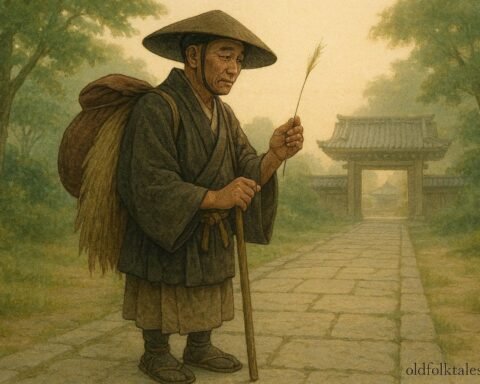
One bright summer morning, as the old man swept the garden path, he heard a faint chirping sound near the bamboo grove. Kneeling to investigate, he found a tiny sparrow with soft brown feathers and bright curious eyes. The poor creature trembled from hunger and exhaustion. Feeling compassion, the old man carried the sparrow into the house, fed it rice grains, and gave it fresh water. The sparrow soon fluttered about happily, chirping in gratitude. The old man felt warmth in his heart, as though the little bird had brought a small blessing to his home.
The wife, however, was not pleased. She disliked anything that distracted her husband or used their limited food supply. When she saw the bird eating from their rice bowl, she scolded the old man for being foolish. But he ignored her harsh tone, choosing instead to care for the sparrow with gentle patience.
Explore desert legends and palace tales in our Western Asian Folktales archive.
One afternoon, while the old man was away gathering firewood, the sparrow accidentally ate a small portion of the wife’s precious starch paste. Furious, she seized the bird and cut its tongue before throwing it out of the house. When the old man returned and learned what had happened, he felt a deep sorrow pierce his heart. The little bird he had cared for had vanished in pain, and there was nothing he could do to undo the cruelty.
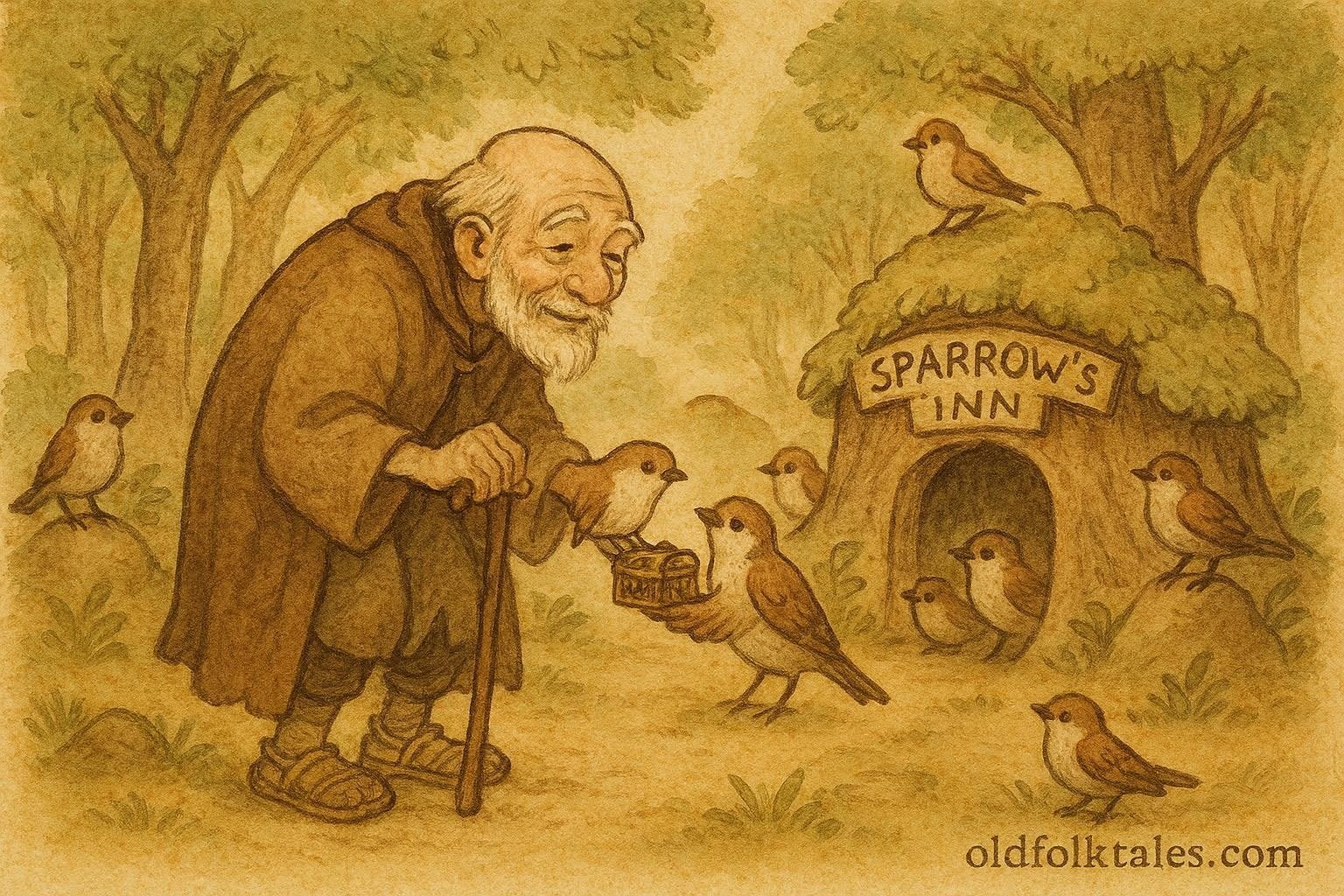
Not wanting to give up hope, the old man set out the next morning to search for the sparrow. He walked through the village, crossed a shallow stream, and followed a path into the forest. Birds sang overhead as sunlight filtered through the leaves. After a long walk, he heard a familiar chirping. Guided by the sound, he soon reached a clearing where a small wooden gate stood adorned with delicate decorations made of straw.
To his amazement, the sparrow appeared, healthy and lively, surrounded by other sparrows who welcomed the old man warmly. The sparrow explained that this was the Sparrow’s Inn, a home for birds who cherished kindness. The little sparrow thanked the old man for saving its life and invited him to stay for a feast. The old man was treated with great respect, served delicious food, and entertained with cheerful dances performed by the sparrows. Their joy filled the clearing with laughter like soft wind through bamboo.
When he prepared to return home, the sparrows offered him a parting gift. They showed him two boxes, one small and one large. They encouraged him to choose whichever he wished. Humble and unassuming, the old man selected the small box, believing it was more appropriate for someone of simple nature. The sparrows thanked him again and wished him peace on his journey home.
Back at his cottage, he opened the box with his wife watching eagerly. Inside, he discovered glittering gold coins, silken fabrics, and small treasures that shimmered like sunlight on water. The old man gasped in amazement. The sparrows had rewarded his kindness far beyond anything he could have imagined.
The wife’s eyes, however, widened not with gratitude but with greed. Instead of appreciating the blessing, she scolded her husband for choosing the smaller box and demanded to know where he had found such riches. Burning with envy, she decided she would visit the Sparrow’s Inn herself to obtain an even greater reward.
The next morning, she hastened into the forest, following the directions the old man had given her. When she arrived, the sparrows recognized her sharp tone and restless manner, yet they welcomed her out of respect for the old man. She immediately demanded the large box, showing no interest in their hospitality or gratitude for the reward.
The sparrows reluctantly allowed her to take the larger box, but warned her not to open it until she reached home. Impatient and driven by greed, she ignored them and opened the box right in the forest. To her horror, dark spirits and grotesque creatures burst out, swirling around her with shrill cries. Terrified, she fled through the trees, stumbling back toward the village with the monsters chasing her until they finally vanished in the shadows.
Breathless and trembling, she collapsed at her doorstep. Though the creatures had disappeared, the fear they brought remained. The old man helped her inside, not with anger but with quiet sorrow. Her greed had brought ruin upon her, just as his kindness had brought blessings.
From that day on, the wife softened her harsh ways, having learned that fortune comes not from desire but from a gentle and grateful heart. The sparrow did not return to their home, but the memory of its kindness stayed with the old man all his days, reminding him that compassion is always rewarded in the end.
Moral Lesson
The Sparrow with the Cut Tongue teaches that kindness brings blessings while greed invites misfortune. Those who act with compassion create harmony around them, but those who let anger and desire guide their choices ultimately harm themselves. The story encourages patience, gratitude, and the understanding that good deeds always return in their own time.
Knowledge Check
- Why did the old man care for the sparrow in the first place?
He found it hungry and weak and helped it out of compassion. - What caused the wife to become angry with the sparrow?
It accidentally ate her precious starch paste. - How did the old man find the Sparrow’s Inn?
He followed the bird’s chirping into the forest until he reached its gate. - Why did the old man choose the small box?
He was humble and believed the small box suited his simple nature. - What happened when the wife opened the large box too early?
Monsters and frightening spirits burst out and chased her. - What is the main theme of the story?
Acts of kindness bring reward while greed leads to punishment.
Source
Adapted from National Diet Library, 2011.
Cultural Origin: Edo-period household folklore