Long ago, in the sun-drenched lands of Anatolia, there ruled a mighty padishah whose kingdom stretched across green valleys and golden plains. Yet beneath all his wealth and wisdom lay one deep sorrow, he and his sultana were childless. Every night, the sultana prayed beneath the moon, her whispered pleas rising like incense to the heavens.
At last, her prayers were answered. A kind-hearted dervish appeared at the palace gates and gifted her a pomegranate. “Share this with your husband,” he said, “and joy will bloom in your house.” The padishah and his wife ate the fruit together, and before long, the sultana bore twins, a prince and a princess. But happiness often draws envy, and nearby lived a jealous witch who despised their joy.
Discover more East Asian Folktales from the lands of dragons, cherry blossoms, and mountain spirits.
The Curse of the Witch
On the day the twins were born, the witch disguised herself as a nursemaid and crept into the nursery. Whispering a dark spell, she transformed the baby prince into a stag and vanished into the forest before anyone could stop her. When the sultana awoke and saw the empty cradle, her heart shattered. The padishah ordered the entire kingdom to search, but the child was never found.
Years passed. The lost prince, now the Stag-Prince, wandered the wilderness. Though bound by the witch’s curse, his soul remained pure. His golden antlers glimmered like sunlight through leaves, and he often lingered near villages, drawn by music and laughter, memories of his lost home.
Meanwhile, his twin sister, now a beautiful young maiden, grew up in quiet sorrow. One day, while walking through the woods, she saw a stag with eyes that mirrored her own. She followed it until it stopped at the edge of a shimmering lake. The stag bowed his head gently, and she felt an inexplicable connection.
When she told her father, the padishah dismissed it as imagination, but the sultana’s heart knew otherwise. “Go, my daughter,” she said softly. “Follow your heart’s knowing. Perhaps fate is guiding you.”
The Sister’s Journey
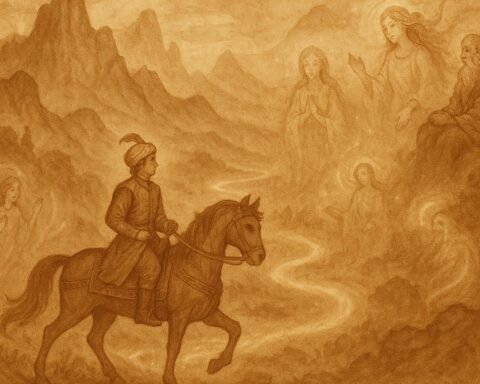
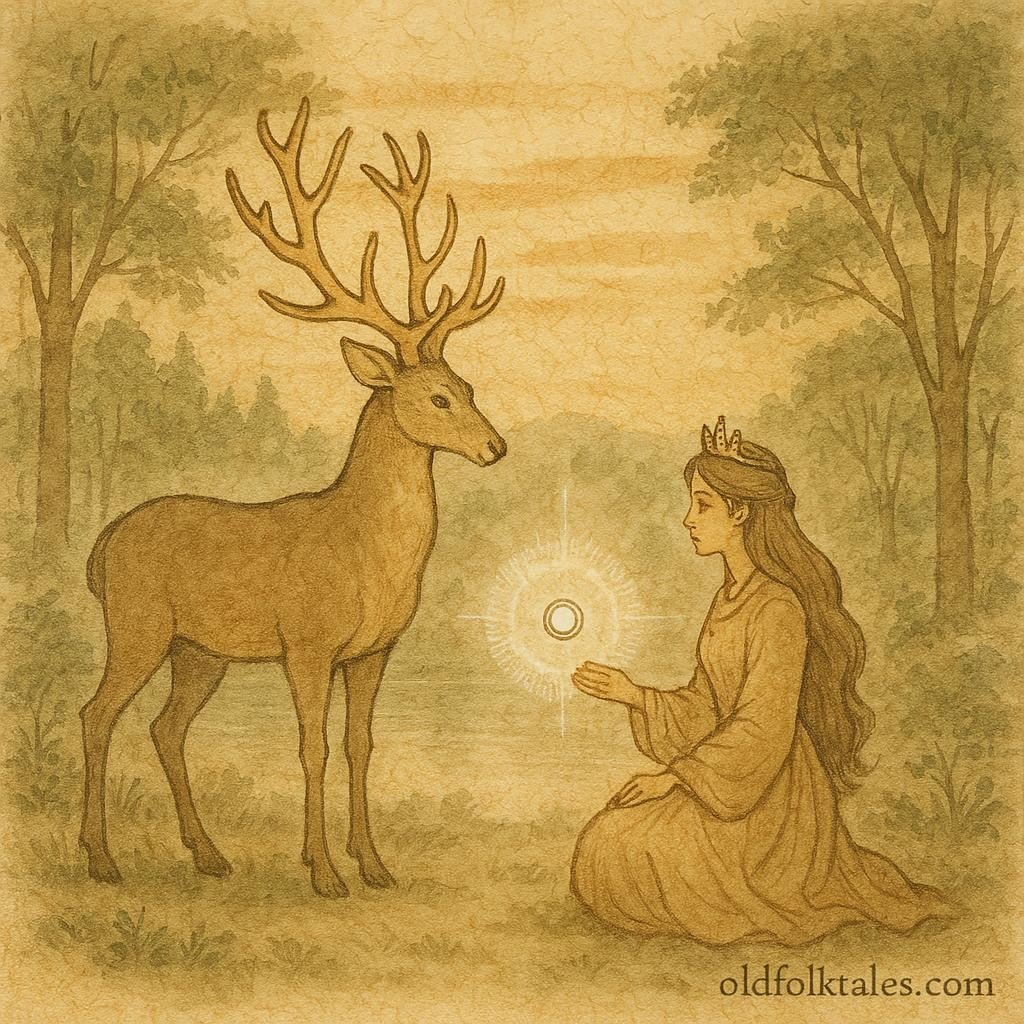
Carrying a small bundle of bread and her mother’s ring, the princess set off into the forest. Days turned into nights, and exhaustion pressed upon her shoulders. Finally, beneath a crescent moon, she stumbled upon a hidden clearing. There stood the stag, watching her silently.
As she approached, tears filled her eyes. “Brother,” she whispered, “if you are truly my kin, may this ring prove it.”
The stag stepped forward, and when the ring touched his antlers, the forest shivered with light. The curse weakened, though not yet broken. He could not speak, but he pressed his head against her hand in recognition. From that moment, the two stayed together in the forest, the sister building a small hut where they lived in peace.
The Jealous Queen
News of the mysterious girl and her golden stag reached a nearby king. Curious, he rode to the forest and found her spinning wool outside her hut. Her beauty and gentleness moved him deeply, and he asked her to become his queen.
The princess agreed, on one condition: “My brother must live beside me in peace, for he is all the family I have.” The king, kind at heart, accepted. Soon, they were wed, and the stag wandered freely through the palace gardens.
But as time passed, jealousy took root once more. The palace servants whispered cruel lies, that the queen was a witch who kept a bewitched animal for evil purposes. The king, torn between love and suspicion, demanded proof.
The Breaking of the Curse
When the witch who had cast the original spell learned that the siblings had found happiness again, she returned in fury. One stormy night, she entered the palace disguised as an old healer. She offered the king a potion to “reveal the truth.” But when she poured it near the stag, the liquid burst into light, and the stag’s antlers began to shimmer.
The queen recognized the witch and seized a silver dagger from the table. “Your lies end here!” she cried. She struck the witch’s hand, spilling the rest of the potion onto the floor. The magic rebounded, breaking the curse at last.
Before the king’s astonished eyes, the stag transformed into a handsome young man, his sister’s twin. The witch shrieked and vanished in smoke, defeated by the purity of their love and loyalty.
Peace Restored
The padishah, upon hearing the miracle, came with the sultana to see their long-lost son. Tears of joy flowed as the family reunited. The young prince, now restored, became a symbol of faith and honour. The kingdom celebrated for seven days and seven nights, their songs echoing through the hills.
From that day onward, the tale of the Stag-Prince was told across Anatolia, a story of how loyalty and truth can break even the darkest spells.
Explore desert legends and palace tales in our Western Asian Folktales archive.
Moral Lesson
This Turkish folktale teaches lessons on loyalty, love, and the power of truth. It reminds us that bonds of family and purity of heart can overcome jealousy, deceit, and misfortune.
Knowledge Check
1. Who cast the curse on the Stag-Prince?
A jealous witch who envied the padishah’s happiness.
2. What animal was the prince transformed into?
A stag with golden antlers, symbolizing purity and endurance.
3. How did the princess recognize her brother?
By the matching ring and the feeling of kinship in his eyes.
4. What finally broke the curse?
A spilled potion that revealed the witch’s deceit and restored truth.
5. What moral does the story teach?
That loyalty, love, and truth triumph over envy and falsehood.
6. Where does this folktale originate?
From Anatolia, collected in Turkish Fairy Tales and Folk Tales by Ignácz Kúnos (1901).
Source: Turkish Fairy Tales and Folk Tales, collected by Dr. Ignácz Kúnos (1901), translated by R. Nisbet Bain.
Cultural Origin: Anatolia (Turkey).