Long ago, in the vast grasslands of Mongolia, there lived a poor herdsman named Batu. His life was simple but filled with hard work, guiding his small flock of sheep and goats across the rolling steppe. Each night, he would sleep beneath the stars, dreaming of a better life, yet never imagining how fate itself would intervene.
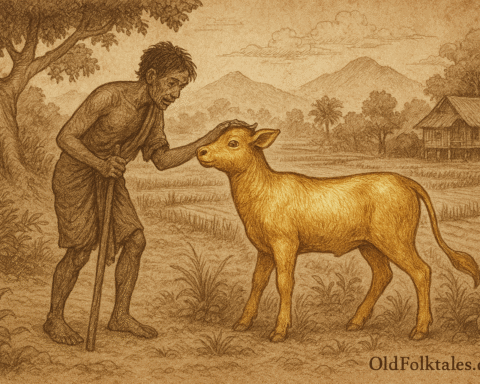
One night, Batu had a remarkable dream. A magnificent golden horse appeared to him, its mane flowing like molten sunlight and hooves ringing like crystal bells. The horse spoke without words, showing him visions of wealth, honor, and happiness. Batu awoke with a heart full of hope and a sense that this vision was not merely a dream, but a calling.
Determined, he set out across the steppe, following the direction shown to him in his dream. The journey was harsh. Cold winds whipped the plains, snow covered the trails, and hunger gnawed at his belly. Wild wolves prowled nearby, and other herders, envious of Batu’s vision, attempted to mislead him or steal his provisions. Yet Batu’s determination never wavered. He treated the animals with care, shared his meager food with strangers in need, and remained honest in every exchange.
After many days and nights, Batu arrived at a hidden valley glimmering in the sunlight. There, beside a crystalline stream, grazed the most splendid golden horse he had ever seen. Batu approached with reverence, bowing low. To his amazement, the horse spoke, revealing itself as a divine being sent to test the hearts of mortals.
The horse explained that those who were greedy, cruel, or impatient would never be able to claim it. Only those who persevered with honesty, humility, and patience could earn its trust. Batu, trembling but sincere, expressed his devotion not for wealth but for goodness and duty. The golden horse nuzzled him gently, acknowledging his pure heart.
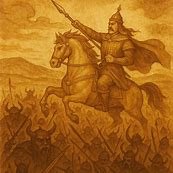
With the golden horse by his side, Batu returned to his village. Wherever he rode, prosperity followed. His flocks multiplied, crops thrived, and he earned the respect of the people. Yet he never forgot the lessons of his journey. He treated neighbors and strangers alike with kindness, and his honesty became known across the steppe.
Meanwhile, those who had tried to cheat or deceive Batu found their schemes undone. The divine horse’s presence seemed to bring fortune to the virtuous and misfortune to the greedy. Through this, the villagers learned that true wealth and honor are earned through integrity and perseverance, not cunning or cruelty.
Batu’s story spread far and wide. Bards sang of the golden horse, of the humble herdsman who remained steadfast in adversity, and of the divine justice that rewarded patience and a pure heart. Generations later, Mongolian children would hear the tale and learn the value of honesty, humility, and courage, understanding that fortune favors not the reckless, but the virtuous.
Discover more East Asian Folktales from the lands of dragons, cherry blossoms, and mountain spirits
Moral Lesson
The Story of the Golden Horse teaches that perseverance, honesty, and humility are rewarded, while greed and deceit bring misfortune. True virtue is recognized and honored, even by forces beyond the human world.
Knowledge Check
-
Who was Batu, and what did he dream of?
Batu was a poor herdsman who dreamed of a magnificent golden horse that would bring him fortune and honor. -
What challenges did Batu face on his journey?
He faced storms, hunger, wolves, and deceitful rivals trying to mislead or rob him. -
How did Batu prove his worth to the golden horse?
He remained patient, humble, honest, and kind throughout the journey. -
What lesson did the golden horse teach?
That only those with pure hearts, perseverance, and integrity can earn true rewards. -
How did Batu’s life change after finding the horse?
He gained prosperity, respect, and the ability to help others, while the greedy faced misfortune. -
What does the story reflect about Mongolian cultural values?
It emphasizes virtue, perseverance, honesty, and respect for divine justice, reflecting moral lessons central to Mongolian folklore.
Source
Adapted from The Story of the Golden Horse (Altan morin-u üliger), oral tale collected from Mongol bard Damrin of Baɣarin West Banner, published by the University of Cologne, Institute of Linguistics, 2018.
Cultural Origin
Mongolia (Inner Mongol oral folklore)