In the older quarters of Kuwait, before electric lamps lined the streets and water flowed easily into every home, wells were the heart of neighborhood life. Among them was Bir al-Tawaya, an old well known to every child and elder alike. By day it was ordinary, a place of laughter and voices. By night, however, it fell silent, and stories clung to it like shadows. It was said that after sunset, unseen beings wandered near such wells, testing the wisdom of those who dared to come near.
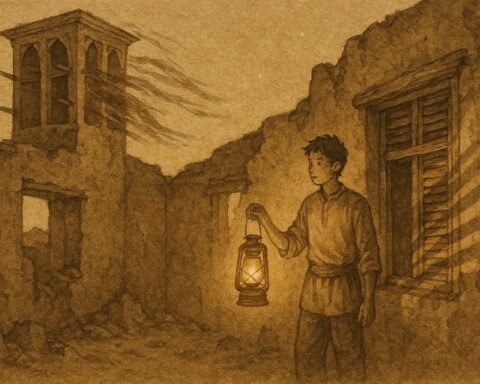
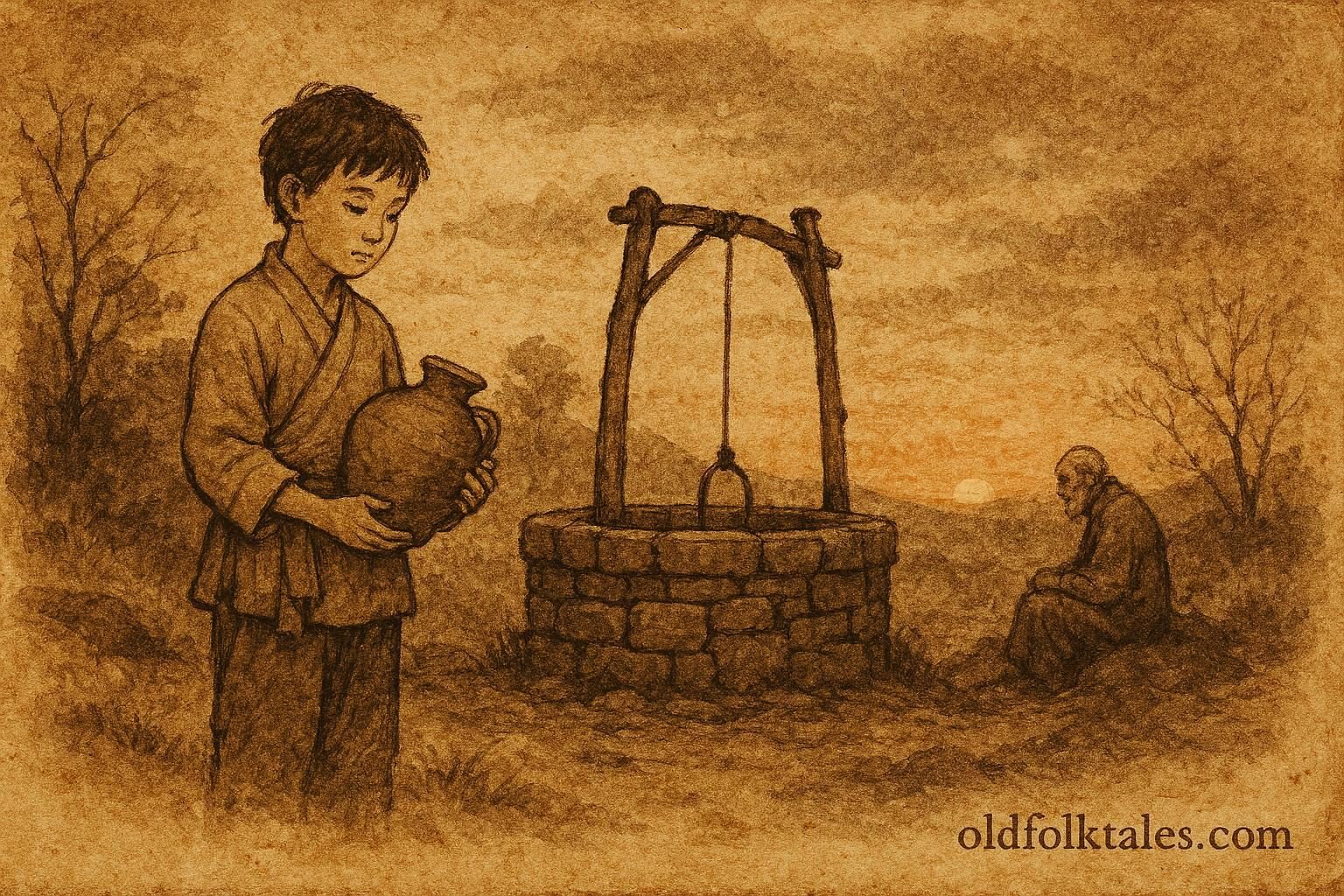
One evening, a young boy was sent to fetch water. The moon had not yet risen, and the air was thick with darkness and quiet. Though he had heard the warnings many times, the household needed water, and the boy obeyed. Carrying his clay jar, he walked carefully through the narrow paths, listening to his own footsteps and the distant rustle of palm leaves.
When he reached the well, he noticed an old woman seated nearby. Her back was bent, her clothes worn, and her voice trembled as she spoke. She greeted the boy gently and asked why he had come so late. Though polite, the boy felt uneasy. Something in her presence did not belong to the night, nor to the place.
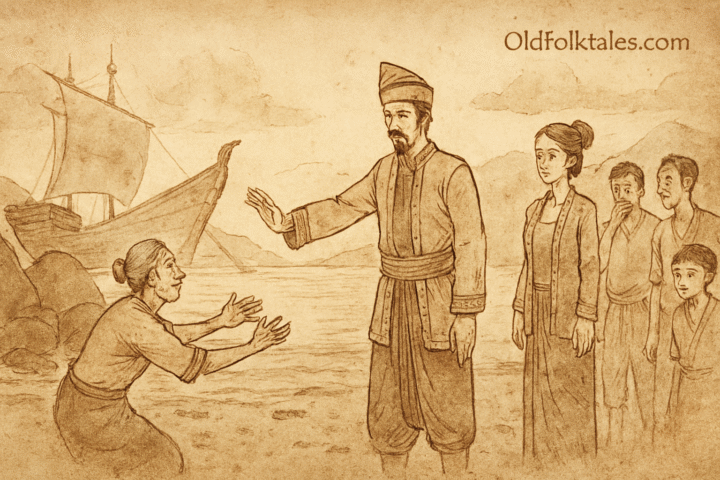
As the boy lowered his bucket, the woman moved closer and offered to help. She suggested that he follow her home, promising warmth and food. The boy remembered the stories told by elders, of the Ghoul (الغول), a shape-shifting creature that appeared as the weak and helpless to lure the unwary. Keeping his fear hidden, the boy decided to rely on his mind rather than his legs.
He smiled and said, “Before I go, help me with something I cannot understand. How can one carry water in a sieve without losing a single drop?”
The old woman froze. Her eyes narrowed, and she muttered, trying to answer the impossible question. The boy continued to speak, asking her to explain and insisting that she demonstrate it for him. The riddle confused and delayed her, just as he intended. While she struggled with the nonsense task, the boy quietly stepped back.
Then, from far across the rooftops, came a sound that filled the night, the Adhan, the call to the morning prayer. Its first notes rose clear and strong through the still air. At that sound, the old woman let out a low cry. Her form wavered, her shadow stretched unnaturally, and before the boy’s eyes, she vanished like smoke touched by light.
The boy ran home, heart pounding but feet steady. By the time he reached his door, the sky had begun to pale. When he told his family what had happened, they listened gravely and thanked God for his safety. From that day on, the story was told again and again, to warn children of the night, to praise clever thinking, and to remind all who heard it that faith and wisdom protect when strength alone cannot.
Moral Lesson
This folktale teaches that intelligence, presence of mind, and faith are stronger than fear. Those who remain calm, think clearly, and trust in spiritual guidance can escape even the most dangerous situations.
Knowledge Check
1. Where does the story take place?
Near an old neighborhood well, commonly called Bir al-Tawaya, in Kuwait.
2. Who does the boy encounter at the well?
A Ghoul disguised as an old woman.
3. How does the boy avoid being trapped?
He distracts the Ghoul with a clever riddle about carrying water in a sieve.
4. What causes the Ghoul to disappear?
The sound of the Adhan at dawn.
5. What lesson was this story meant to teach children?
To avoid going out at night and to rely on cleverness and faith.
6. What cultural belief is reflected in the Ghoul’s behavior?
That ghouls vanish at dawn and fear prayer and daylight.
Source & Cultural Origin
Source: Compiled in حكايات شعبية من الكويت (Folktales from Kuwait) by Thuraya Al-Baqsami; also found in oral collections by the Center for Research and Studies on Kuwait (CRSK).
Origin: Kuwait — a traditional cautionary folktale emphasizing vigilance, wisdom, and spiritual protection.