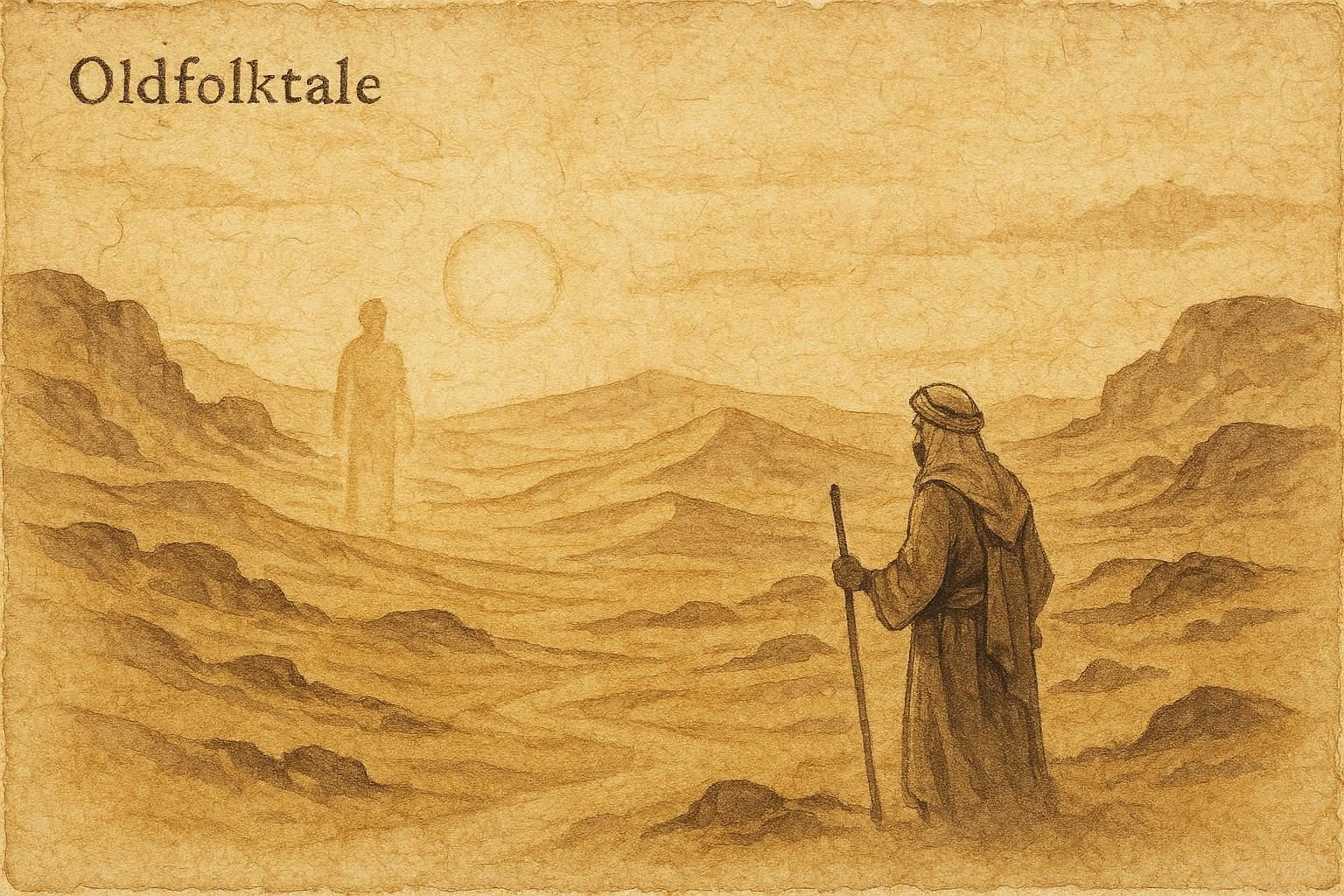
In the interior of Qatar, beyond the familiar paths of settlements and wells, the desert stretches wide and unforgiving. Its sands and rocky plains appear silent, yet the Bedouin know that the desert speaks. It tests those who cross it, not only in body but in mind. Among the many stories told around evening fires, none is more cautionary than the tale of the Hutayf.
Long ago, a lone traveler set out across the desert, moving through regions known today as Murwab and the rocky southern lands. He traveled with purpose, accustomed to long journeys and open horizons. Yet even the most experienced wanderer knows that the desert changes without warning. The sun burns away certainty, and distance blurs the familiar.
As the traveler walked, the air grew still. Then he heard a voice.
It was gentle and familiar, calling his name. It sounded like someone dear to him, a voice tied to memory and comfort. The sound drifted across the sand, rising and falling as if carried by the wind. The traveler stopped. His heart tightened with confusion. No one should have been there.
The Bedouin elders say that this is how the Hutayf begins its work.
The traveler followed the voice, stepping away from his path. With every call, the sound shifted slightly, always just ahead. The land seemed to change as well. Stones appeared where none had been, and the horizon felt farther away than before. Doubt crept into his thoughts. He realized then that the desert was not guiding him toward safety but drawing him deeper into uncertainty.
Suddenly, the voice fell silent. In its place stood a figure. Its shape was human, yet wrong in subtle ways. This was the Hutayf, a desert ghoul known across the Arabian Peninsula. In Qatari tellings, it appears not as a roaring monster but as something quieter and more dangerous. It feeds on confusion, isolation, and fear.
The Hutayf spoke calmly. It did not rush or threaten. Instead, it challenged the traveler. Some say it proposed a riddle. Others say it demanded a race across the open land. Whatever the challenge, the purpose was the same. To break the traveler’s focus and draw him into panic.
The traveler remembered the teachings passed down by his people. In the desert, strength alone is useless. Panic shortens breath. Fear clouds direction. He steadied himself, whispering words of faith and grounding his thoughts in patience. He did not answer hastily. He listened carefully, measuring each word and movement.
When the Hutayf attempted to confuse him with shifting forms and deceptive speech, the traveler responded with calm reasoning. When it tried to lure him into speed, he refused to rush. In some tellings, he answered the riddle not with clever tricks but with clarity and humility. In others, he agreed to the race but chose endurance over haste, trusting that steady steps would outlast reckless pursuit.
The Hutayf grew restless. Its power depended on disorientation, and the traveler would not give it that. As the sun lowered and shadows stretched across the desert, the ghoul’s form weakened. At last, it vanished, leaving only silence and the open land.
The traveler found his way back to the true path. When he reached safety, he shared his story so that others would recognize the signs. The elders listened and nodded, for they had heard similar accounts before. The Hutayf was not merely a creature but a warning. It embodied the danger of losing one’s sense of self in the vastness of the desert.
Among Bedouin communities, the tale became instruction as much as entertainment. Children learned that voices in the desert cannot always be trusted. Adults were reminded that faith, composure, and clear thought are the strongest protections against both physical and mental peril.
To this day, when the wind carries strange echoes across the sands of Qatar, some remember the Hutayf and steady their steps.
Moral Lesson
This folktale teaches that survival in harsh environments depends on mental clarity and faith. Fear and haste can be deadlier than any physical threat, while calm judgment preserves life.
Knowledge Check
-
What is the Hutayf in Qatari folklore?
A shapeshifting desert ghoul that lures travelers by mimicking familiar voices. -
Where is the story traditionally set?
In the interior deserts of Qatar, including regions like Murwab and the rocky south. -
How does the Hutayf attempt to trap travelers?
By causing confusion through false voices, riddles, or challenges. -
What allows the traveler to survive the encounter?
Composure, faith, patience, and clear thinking rather than physical strength. -
What real danger does the Hutayf symbolize?
The psychological threat of disorientation, fear, and desert madness. -
Why was this story important in Bedouin culture?
It taught survival skills and mental discipline necessary for desert life.
Source: Adapted from “The Tale of the Hutayf” (حكاية الهتيف), preserved in Bedouin oral tradition of Qatar, documented in Folktales from the Arabian Peninsula by Nadia Jameel Taibah and Qatar National Library narrative archives.