In a quiet village set among the stony hills of Jordan, there lived a poor farmer whose life was shaped by the rhythm of soil and seasons. His land was small, his harvest modest, and though he worked from dawn until the evening call to prayer echoed through the valleys, his efforts barely sustained him. Still, he was known as an honest man, patient and reflective, one who listened carefully to dreams and signs, as many villagers did.
One night, after a long day beneath the sun, the farmer dreamed of a bridge in a distant city. In the dream, the bridge arched over a dry ravine, its stones worn smooth by centuries of footsteps. Beneath it, a voice whispered that a great treasure lay buried there, waiting for the one brave enough to seek it. When he awoke, the image clung to him with unusual clarity.
He dismissed the dream as a passing fancy. But the next night, the same dream returned, unchanged. And the night after that, it came again, vivid and insistent. Each time, the bridge appeared exactly the same, and each time the voice spoke with certainty. Among the people of the land, repeated dreams were not ignored lightly. They were often seen as guidance, or even a test.
At last, the farmer resolved to follow the dream. With little more than bread, water, and hope, he set out for the distant city. His journey took him across plains and rocky paths, through villages unfamiliar to him, until at last he reached the city named in his dream. There, just as he had seen in his sleep, stood the bridge.
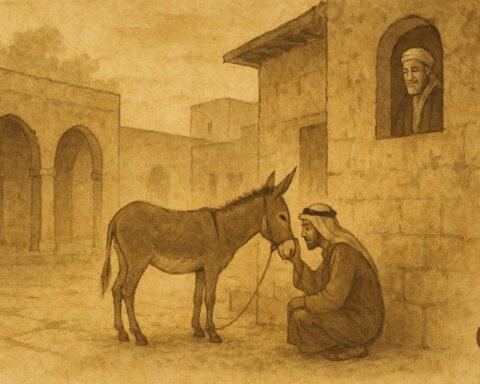
He lingered beneath it, pacing slowly, uncertain where to dig or how to begin. His movements did not go unnoticed. A guard responsible for watching the bridge approached him, suspicious of the stranger’s lingering presence.
“What are you doing here?” the guard demanded.
Hesitantly, the farmer explained his dream and the treasure he believed lay beneath the bridge. The guard burst into laughter, loud and mocking.
“You traveled all this way because of a dream?” he scoffed. “If I were foolish enough to chase dreams, I would be rich by now.”
Seeing the farmer’s disappointment, the guard continued, half amused and half dismissive. “I myself have a dream that visits me again and again. In it, I see a treasure buried under a rock in a village far from here. But I am not a fool. I know dreams are empty things.”
The farmer listened carefully as the guard described the village, the land, and the rock. With each detail, his heart began to race. The rock the guard mentioned stood on his own land, a large stone he had passed every day without a second thought.
The farmer said nothing. He thanked the guard quietly and turned back toward home.
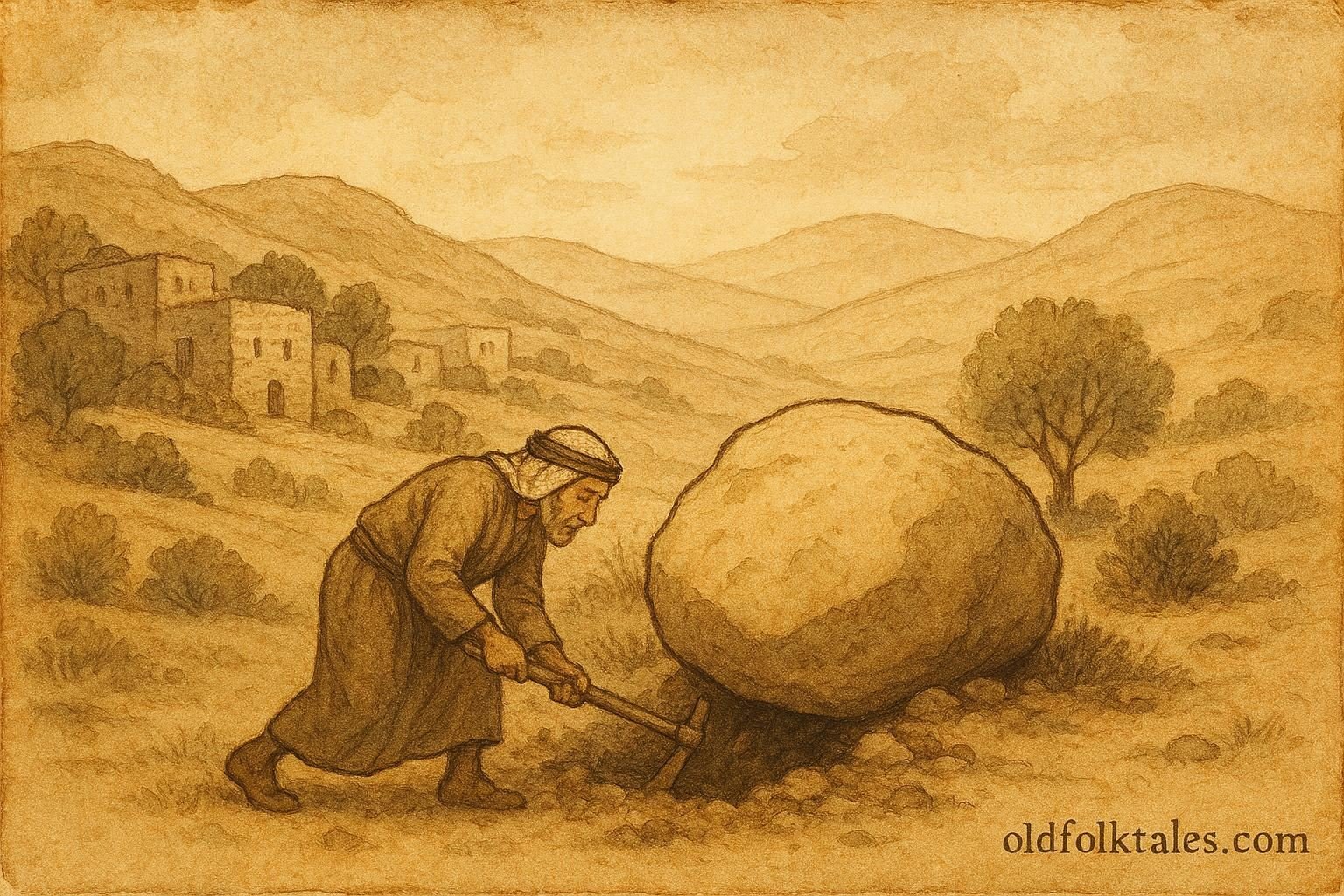
When he returned to his village, the land looked different to him, as though it had been waiting for his understanding. He walked straight to the rock the guard had described, a broad, weathered stone half-buried in the earth. With trembling hands, he began to dig.
Before long, his tool struck something solid that was not stone. He cleared the soil away and uncovered a hidden cache filled with ancient coins and valuables, more wealth than he had ever imagined. The treasure had been beneath his own feet all along.
The farmer used the wealth wisely. He repaired his home, cared for his land, and supported those in need. But he never forgot the lesson of the dream or the journey it had required.
Moral Lesson
This folktale teaches that what we seek far away is often already within our own reach. Wisdom, contentment, and fortune are frequently rooted in one’s own land, awaiting recognition rather than escape.
Knowledge Check
1. Why does the farmer decide to leave his village?
He follows a recurring dream that suggests a treasure lies beneath a bridge in a distant city.
2. What role does the guard play in the story?
The guard unknowingly reveals the true location of the treasure through his own dismissed dream.
3. What does the bridge symbolize in the tale?
The bridge represents false distance and misdirection, drawing the farmer away from his true source of wealth.
4. Where is the actual treasure found?
Under a rock on the farmer’s own land in his village.
5. What cultural belief influences the farmer’s actions?
The belief that recurring dreams carry meaning and guidance.
6. What is the central lesson of the story?
True fortune is often found at home, not in distant pursuits.
Source and Cultural Origin
Source: Adapted from a Jordanian folktale collected by Al-Qadah, associated with tale type ATU 1645.
Origin: Jordan, featuring regional landmarks such as Amman and Kerak.