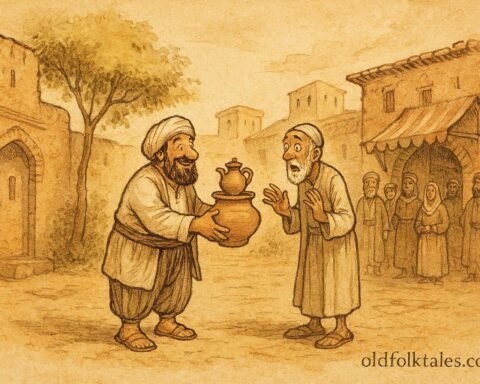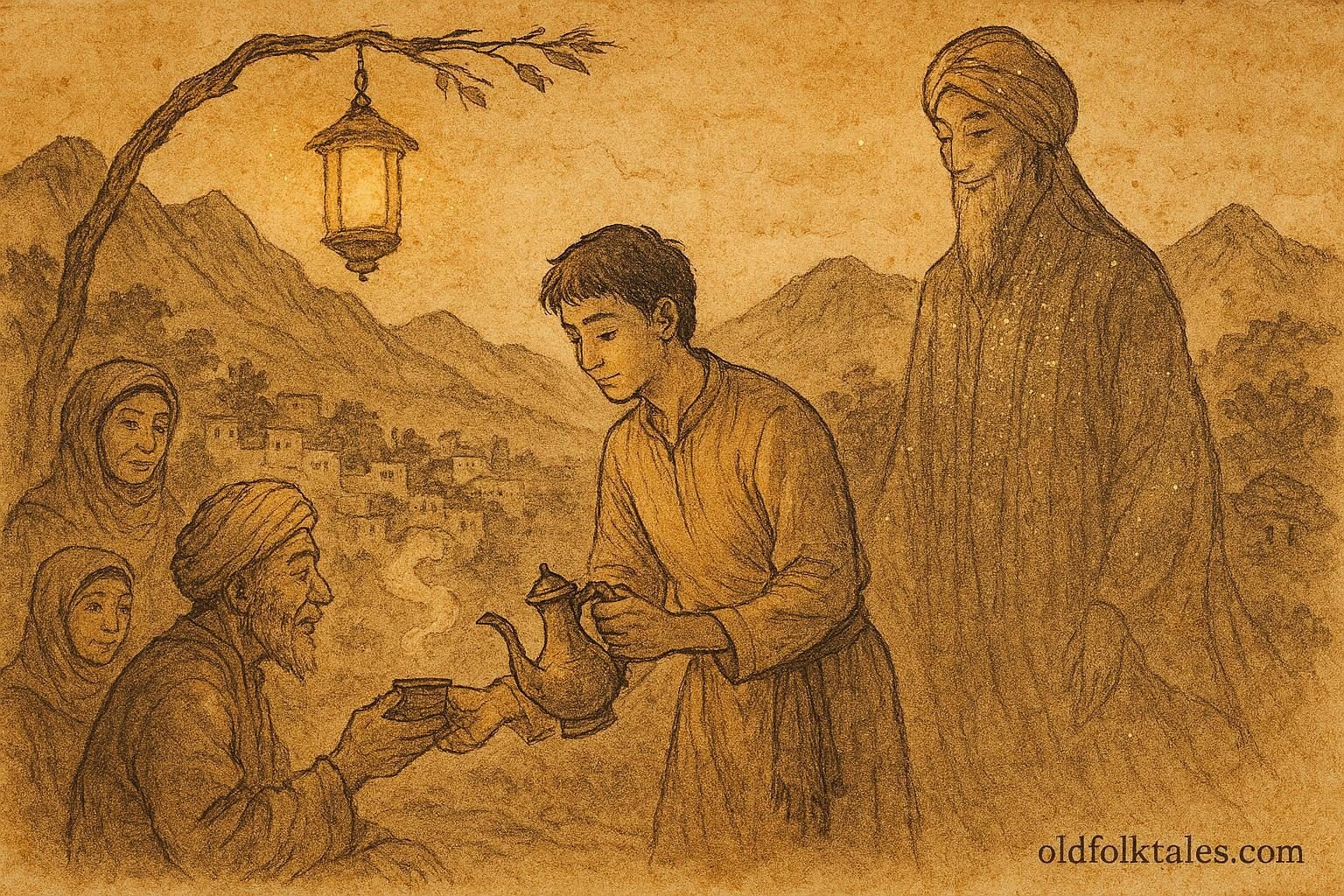
In the rugged mountain villages of Ta’if in the Hijaz, there lived two brothers, Hasan and Khalid. When their father passed, he left them a family heirloom: a finely crafted Dallah, an Arabic coffee pot that had served countless generations. Hasan, the elder, was proud and ambitious. He claimed the Dallah for himself, hiding it in the corner of his home, while Khalid, the younger and gentler of the two, accepted only a small sack of green coffee beans.
Hasan soon discovered that no matter how carefully he brewed the coffee, it tasted bitter and harsh. The aroma never carried the warmth or hospitality that he had expected. Meanwhile, Khalid roasted his humble beans over a small fire, sharing his modest coffee freely with anyone who passed by his door. Travelers, neighbors, and children from the village would gather, drawn by the inviting smell and the younger brother’s cheerful generosity.
One moonlit night, a mysterious traveler appeared at Khalid’s doorway. Dressed in flowing robes that shimmered faintly under the lantern light, he introduced himself politely and requested a cup of coffee. Khalid welcomed him without hesitation, offering the last of his roasted beans. The traveler drank with deep satisfaction and smiled, revealing a voice that seemed to ripple like wind across the mountains.
“I am a jinn,” the traveler said, “and I have watched your heart, Khalid. Your humility and generosity have brought you true wealth. I bless your Dallah: it shall now brew enough coffee for any number of guests, and its aroma will inspire harmony and reconciliation among those who drink it.”
From that night onward, Khalid’s coffee pot became a source of joy and prosperity. Villagers came from afar to enjoy his coffee, each cup carrying the subtle magic of goodwill. Hasan, consumed by bitterness and greed, could not enjoy the Dallah he had hoarded. His coffee remained sour, and his house was silent and empty, while Khalid’s home echoed with laughter, stories, and the clinking of cups.
Over time, Hasan realized that no amount of wealth or possession could replace the warmth of shared generosity. Though he never fully reconciled with his brother, the villagers learned a lasting lesson: hospitality and humility are greater treasures than gold.
Moral Lesson: True wealth is measured not by possessions but by generosity, humility, and the bonds we cultivate with others.
Knowledge Check
-
Who were the main characters in the folktale?
Hasan and Khalid, two brothers from the Hijaz region. -
What item did the brothers inherit from their father?
A Dallah, a traditional Arabic coffee pot. -
Why did Hasan’s coffee taste bitter?
Because of his greed and lack of generosity. -
How did Khalid’s approach to coffee bring him prosperity?
By sharing generously, his humility attracted visitors and blessings. -
What cultural value does this story emphasize?
Hospitality (karam) and humility as true wealth. -
Where does this folktale originate?
From the mountain villages of Ta’if in the Hijaz, Saudi Arabia.
Source & Cultural Origin: Adapted from Saudi Arabia: Folk Stories & Folk Songs (bilingual edition), Hijaz region, Saudi Arabia.